
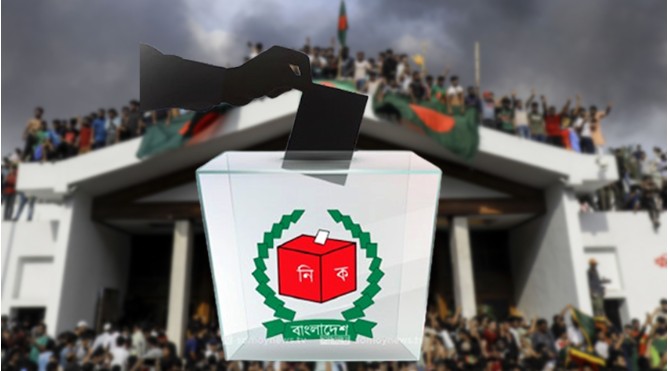
After years of elections marked by boycotts and crackdowns on the opposition, Bangladesh is heading into what many observers call its first truly competitive national election since 2009.
The vote on February 12 comes after the removal of former prime minister Sheikh Hasina in a 2024 uprising. Her party, the Awami League, is now banned, reversing the political balance that dominated the country for 15 years, according to a Reuters report.
Young activists who played a key role in toppling Hasina say the election offers a real choice for voters in the Muslim-majority nation of about 175 million people.
The Bangladesh Nationalist Party (BNP) is widely expected to win the election, though it faces a strong challenge from a coalition led by Jamaat-e-Islami. A new political party driven by Gen-Z activists has aligned with Jamaat after failing to turn its street movement into broad electoral support.
BNP acting chairman Tarique Rahman told Reuters that his party, which is contesting 292 of the 300 parliamentary seats, is confident of winning enough seats to form a government.
Analysts say a clear outcome is crucial to restore stability after months of unrest following Hasina’s ouster, which disrupted major sectors such as garments, Bangladesh’s largest export industry.
“This election matters because a divided result could prolong uncertainty,” said Parvez Karim Abbasi, executive director of the Centre for Governance Studies in Dhaka. He added that young voters, who make up about one-quarter of the electorate, could play a decisive role.
Across the country, election posters and banners now feature BNP’s paddy sheaf symbol and Jamaat’s scales, a sharp contrast to past polls dominated by the Awami League’s boat symbol.
Opinion polls suggest Jamaat may achieve its strongest-ever electoral showing, even if it does not win outright.
Regional Stakes: China and India
The election result is also expected to shape Bangladesh’s foreign relations. Analysts say China’s influence has grown since Hasina, seen as close to India, fled to New Delhi, where she remains.
While India’s influence appears to be declining, the BNP is viewed as relatively more comfortable with New Delhi than Jamaat. Analysts say a Jamaat-led government could move closer to Pakistan, though Jamaat insists it is not aligned with any country.
BNP leader Tarique Rahman has said his party would pursue friendly relations with all nations that serve Bangladesh’s interests.
Economy and Voter Concerns
Bangladesh faces high inflation, low foreign reserves and slowing investment. Since 2022, it has sought major external financing, including funds from the IMF and World Bank.
A recent survey of voters found that corruption is the top concern, followed by inflation. Analysts say Jamaat’s reputation for cleaner politics has helped its appeal more than its religious ideology.
Despite the competition, BNP’s Tarique Rahman remains the frontrunner to lead the next government. If the Jamaat-led alliance wins, its chief Shafiqur Rahman could emerge as prime minister.
For first-time voters like 21-year-old Mohammad Rakib, the priority is simple.
“People couldn’t vote freely before,” he said. “I hope whoever wins will let people speak freely and vote without fear.”
Source: https://www.observerbd.com/news/565529