
With just 10 days left until Bangladesh’s national election on February 12, voters are staying quiet, making the outcome hard to predict. Many say people are cautious after a long wait to vote freely. Over 45 million young voters aged 18-35 (per National Youth Policy 2017) will join, many casting their first ballot since 2009 due to past controversial polls. Analysts predict youth votes could decide the government, favoring parties promising real change.
But youth are split by ideology, as seen in recent university student elections and the 2024 uprising. They united against autocracy in the July movement but returned to party lines afterward. So, their 45 million votes won’t form a single bloc and may not tip the scales.
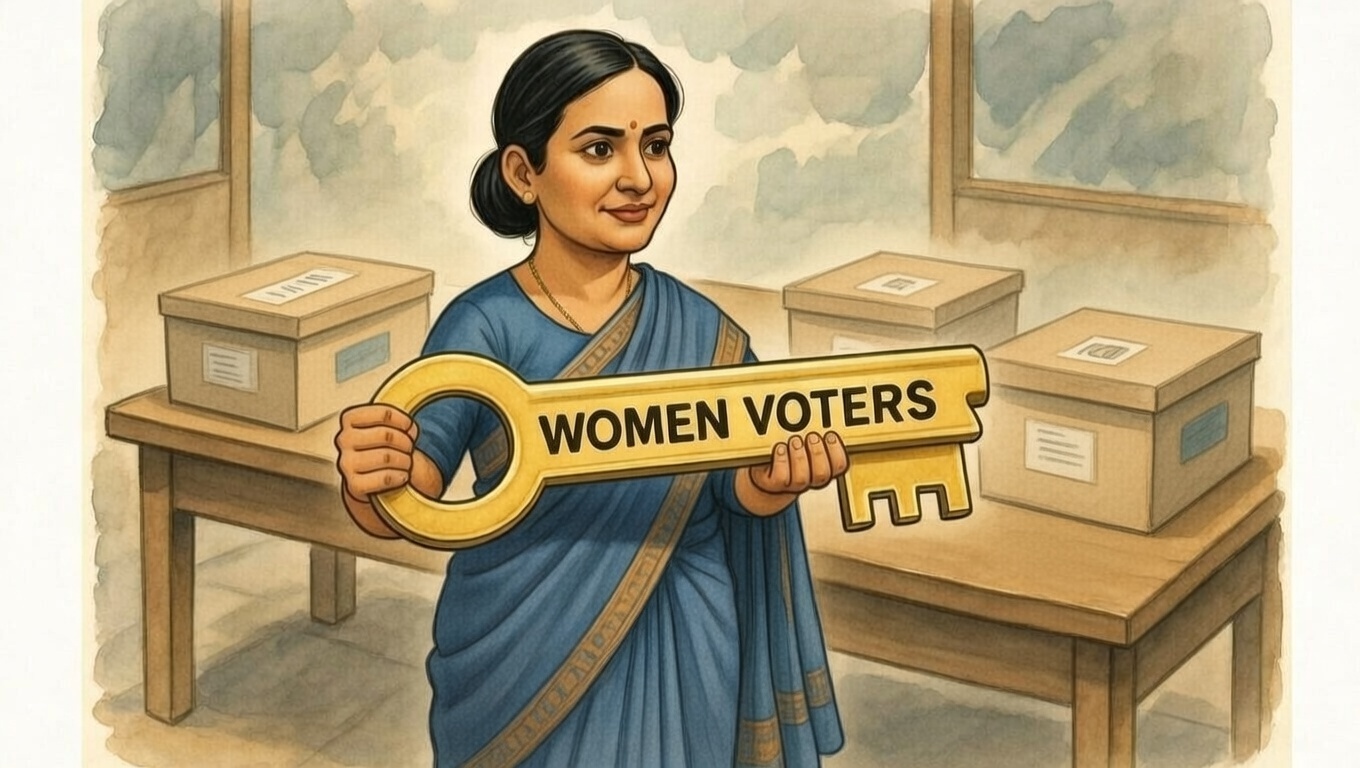
Women voters number 62,879,042—nearly half the total—but female candidates are scarce. Of 1,981 candidates in the 13th parliamentary election, only 80 are women (4.04%). Transparency International Bangladesh (TIB) notes 3.38% of party-nominated candidates and 10% of independents are women. Clause 22(b)-(d) of the July National Charter 2025 requires 5% women nominees (rising to 33% later), but it’s not yet in force. Shockingly, 35 of 51 contesting parties have zero women candidates.
Still, women’s turnout won’t drop. Past “neutral” elections (1991, 1996, 2001) prove women decide winners:
| Election | BNP Vote Share | Women’s Support for BNP | Outcome |
|---|---|---|---|
| 1991 | 31% (144 seats) | 57% | BNP wins government |
| 1996 | 33% | 35% (down 22% from 1991) | Awami League wins |
| 2001 | 41% | 57% | BNP wins two-thirds majority |
In 2001, BNP edged Awami League overall (41% vs. 40%), but women gave BNP the edge despite men leaning Awami League. Ordinary women—urban/rural, educated/uneducated—share similar views shaped by daily struggles, voting alike across these polls.
Women have led Bangladesh’s movements: 1990s pro-democracy push, 2018 Road Safety, 2024 quota reform to anti-autocracy uprising. In 2024, they marched, led protests, fed demonstrators, and aided the injured. Yet post-movement, violence and abuse against women rose, with little recognition or improvement.
As election day nears, women’s silent views on safety and change will shape results. They rarely err in big moments. The key to power rests with them—watch February 12 to see who gets it.