

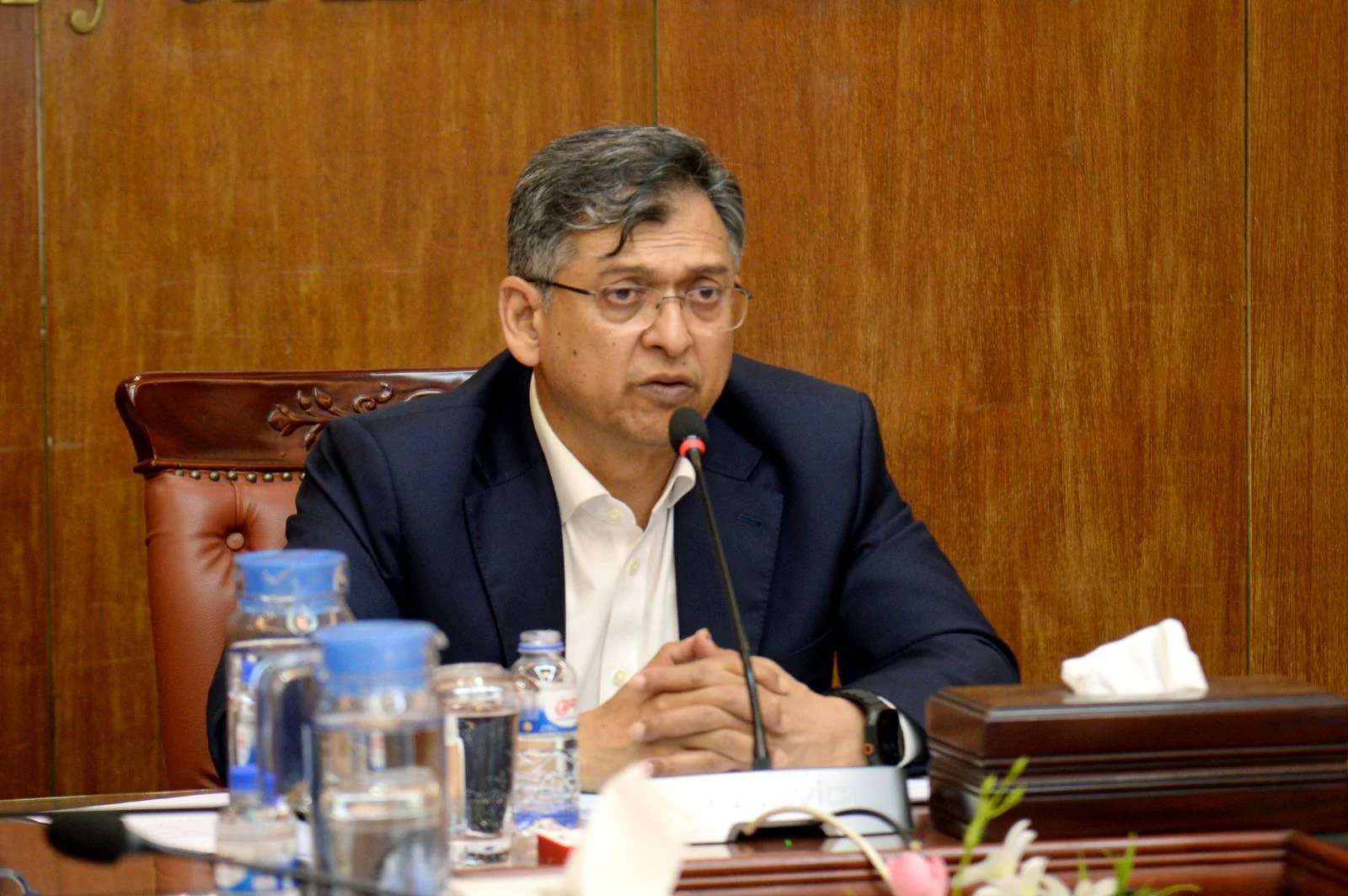
Home Minister Salahuddin Ahmed has said the government is committed to permanently ending enforced disappearances and taking effective measures to prevent extrajudicial killings, deaths in custody and politically motivated persecution in Bangladesh.
He said the government would take necessary initiatives to address the demands of victims’ families, including justice, rehabilitation, compensation and state recognition for those subjected to enforced disappearance.
“The government wants to ensure that such a period never returns to Bangladesh. The mal-culture and crime of enforced disappearance must end forever. There must never again be enforced disappearances, extrajudicial killings or politically motivated persecution in the country. Deaths in police and prison custody must also stop,” he said.
The minister made the remarks while briefing journalists at the Parliament Media Centre following the ninth meeting of the Special Committee on Constitutional Amendment of the 13th Jatiya Sangsad. The meeting was held at the Cabinet Room of Parliament.
Salahuddin, who chairs the committee, said the meeting heard accounts from family members of people who experienced enforced disappearance, killings and torture during the Awami League government’s 17-year rule. Relatives of people who remain missing and representatives of those who returned after being disappeared also shared their experiences.
The Liberation War Affairs Ministry, Mayer Daak and several organisations helped ensure the participation of 48 representatives, he said.
Family members described their suffering, prolonged uncertainty and demands for justice and rehabilitation. Their accounts deeply moved committee members, with several participants becoming too emotional to complete their statements, the minister added.
According to Salahuddin, the families primarily called for effective safeguards against future enforced disappearances, speedy and fair trials in related cases, assistance and rehabilitation for families of people who have remained missing for years, and official state recognition of victims.
He said the Prevention and Remedy of Enforced Disappearance Act contains provisions for compensating victims. Under the law, courts may order the confiscation and sale of assets belonging to those responsible to provide compensation to affected families.
If the accused have no assets or their assets are insufficient to cover the compensation, the state can provide the necessary financial assistance, he said.
The law also provides for the care and management of the property of people who have been missing for a prolonged period. Such property may be managed with court approval, he added.
Referring to Article 32 of the Constitution, which protects the right to life, Salahuddin said any action that violates this right is unconstitutional.
He said the existing law contains detailed provisions addressing enforced disappearance, adding that the government would consider enacting additional legislation if necessary to prevent such crimes.
Responding to a question about investigations into allegations of enforced disappearance, the minister said a law enforcement agency would not investigate allegations against itself. Instead, another law enforcement agency would be assigned to conduct the investigation.
He said the law defines investigation procedures and accountability mechanisms and distinguishes between departmental disciplinary violations and criminal offences. Criminal allegations would be prosecuted under existing laws, while departmental violations would be handled through the relevant disciplinary procedures.
Salahuddin said the July Mass Uprising had raised public expectations for a Bangladesh where human rights are protected and every citizen receives justice.
He said the committee would recommend incorporating necessary safeguards into the Constitution, while other measures could be implemented through relevant laws and regulations, depending on their nature.
On opposition criticism and protests over the constitutional amendment process, the minister said opposition members could have presented their demands and opinions at committee meetings so that their views could be considered.
He said the committee had received constitutional amendment proposals from constitutional experts, lawyers, representatives of the Supreme Court Bar Association, teachers, editors and professionals from various fields. The proposals would be compiled and discussed at subsequent meetings, although no final decision had been reached.
Regarding the caretaker government system, Salahuddin said it should be reintroduced. However, the committee would examine different proposals concerning the formation process, scope of responsibilities, timeline and the roles of the relevant search committee or Election Commission.
He added that further proposals could emerge during parliamentary debates after the constitutional amendment bill is placed before Parliament.
Committee members attending the meeting included Law Minister Md Asaduzzaman, Zainul Abedin, Information and Broadcasting Minister Andaleeve Rahman, State Minister for Expatriates’ Welfare Md Nurul Haque and State Minister for Social Welfare Farzana Sharmin.
During the meeting, parliament members Sanjida Islam, Humam Quader Chowdhury, Anisur Rahman and Mst Tahsina Rushdi, who have personal or family experiences of enforced disappearance, recounted their experiences of torture and being denied legal protection and justice.
They emphasised the need for effective measures to ensure that such incidents never recur.
The secretary of the Bangladesh Parliament Secretariat, the secretary of the Ministry of Law, Justice and Parliamentary Affairs, and other senior officials concerned were also present.
