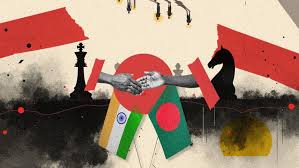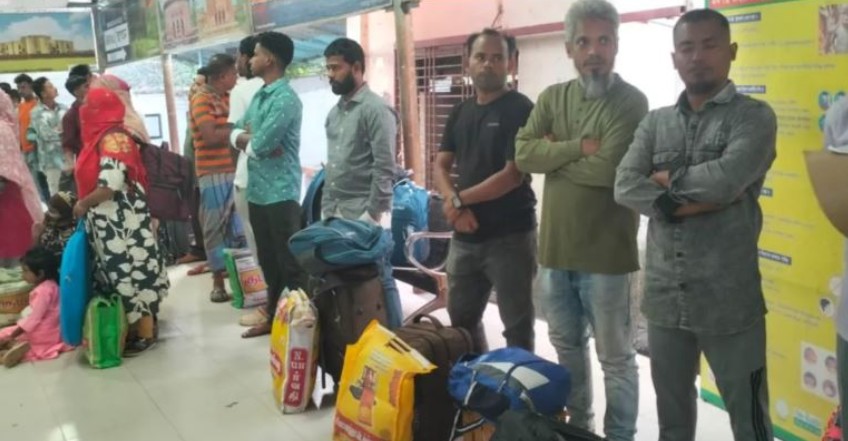

A manufactured humanitarian crisis is unfolding at Bangladesh’s border with India, and the world must pay attention. What began as BJP campaign rhetoric has metastasized into a systematic, state-sponsored program of forced expulsions, unilateral “push-ins” that violate diplomatic norms and inflict human suffering on hundreds of innocent people.
The numbers tell a stark story. Between May 2025 and January 2026, approximately 2,400 to 2,500 individuals were targeted in forced push-in maneuvers. In recent weeks, Border Guard Bangladesh intercepted 21 coordinated eviction attempts, preventing the forced entry of more than 200 men, women, and children. Since June 3 alone, 186 people were stopped across 18 separate incidents.
This is not accidental border tension. This is deliberate policy.
Following the BJP’s electoral victory in West Bengal, the new state government pivoted instantly from the previous administration’s resistance. Within a month, nearly 5,000 alleged irregular migrants were deported, triggering aggressive sweeps at Benapole and Hakimpur. In Assam, now the policy laboratory for exclusion—30,000 people have been declared “foreigners” through the National Register of Citizens, with hundreds systematically pushed toward the Bangladesh border since mid-2025. Tripura, under nearly a decade of BJP rule, has maintained persistent border raids throughout 2025 and 2026.
The mechanism is what India calls “double-engine governance”: seamless coordination between New Delhi and state capitals, armed with the sweeping Immigration and Foreigners Act of 2025, bypassing traditional verification protocols entirely. Border enforcement has become a domestic political weapon.
The humanitarian consequences are severe. When BSF fails to force people into Bangladesh, they are often taken back but most are not allowed to re-enter India. These individuals now live in inhumane conditions in open areas, stranded between two nations, denied basic rights, and abandoned by the state that expelled them.
Bangladesh’s response has been measured and diplomatic. The government raised the issue through formal channels, convened the 57th DG-level BGB-BSF conference in New Delhi, and prepared BGB to resist illegal push-ins across 26 vulnerable districts along the 4,156-kilometer border. Foreign Affairs Minister Shama Obaed correctly noted that formal repatriation procedures exist, India should follow them.
But diplomatic discussions alone cannot stop a strategy driven by domestic political gain. The BJP’s electoral expansion has transformed border enforcement into a political tool, creating a profound geopolitical crisis that threatens regional stability.
The international community must ask: when does border enforcement cross into human rights violations? When does political strategy become a humanitarian catastrophe? The answer is clear: when unilateral expulsions bypass diplomatic protocols, when people are treated as political problems to be “deleted,” and when hundreds of innocent men, women, and children are left stranded in open areas without protection.
Bangladesh stands on principles of sovereignty, respect, and diplomatic dignity. But the world must recognize this crisis. This is not merely a bilateral dispute. This is about how nations treat human beings at their borders. And currently, India’s eastern borderlands are failing that test.
The crisis has risen to the top of India-Bangladesh bilateral agenda. It threatens regional stability. And unless India respects diplomatic protocols and formal repatriation procedures, it will continue to strain relations with its neighbor.
Borders should protect nations. They should not be weaponized to force people out without reason, without process, and without humanity. The world must hold India accountable.
India
There is a particular kind of diplomatic cynicism that does not announce itself. It arrives quietly, at the border, in the dead of night, dressed not as hostility but as bureaucratic necessity. What India is doing along its frontier with Bangladesh right now fits that description precisely.
The Border Security Force has been attempting to push undocumented individuals into Bangladeshi territory across more than ten locations at once. From Jhenaidah in the south to Sylhet in the east to Panchagarh in the north, the pattern is too coordinated, too simultaneous, to be dismissed as isolated incidents of poor judgment by personnel on the ground. This is policy. The only question worth asking is whose.
West Bengal’s chief minister has provided part of the answer, publicly confirming that thousands excluded under the Citizenship Amendment Act have already been forced across, with hundreds more in holding facilities awaiting the same fate. India’s own officials, in other words, are not even pretending this is anything other than what it is, a deliberate transfer of unwanted populations across an international border without documentation, without consent, without legal basis.
Bangladesh has responded with restraint that, frankly, India does not deserve. Over a dozen formal protests have been filed. The Home Minister has asked, with considerable diplomatic patience, that India simply follow the procedures that already exist. The Border Guard has turned back every attempt. A bilateral meeting of senior border officials has already taken place. None of it has made any difference. The push-ins continue.
This matters beyond the immediate humanitarian concern, though that alone should be sufficient. It matters because it is happening at precisely the moment when both governments were publicly committed to a reset. The collapse of Sheikh Hasina’s government in 2024 left relations in a difficult place. The BNP’s election victory earlier this year created an opening. Ministerial visits followed. Water-sharing talks, long frozen were back under discussion. The language from both capitals was, for once, conciliatory.
Against that backdrop, the border incidents are not a coincidence. They are a message. Analysts who have described the push-ins as leverage ahead of high-stakes negotiations are not being uncharitable toward India. They are simply reading the situation as it is. The timing, the scale, and the continuation of push-ins even after diplomatic engagement has taken place all point in the same direction.
Some have suggested this reflects a division within the Indian state rather than a unified strategy that West Bengal’s newly elected BJP government and the BSF are operating with a degree of autonomy that New Delhi’s central government does not fully endorse. That interpretation, while possible, offers cold comfort. If India cannot control what its own border force does, that is a governance failure of the first order. If it can but chooses not to, that is something worse.
What is not in doubt is the effect. Every push-in attempt that Bangladesh repels is another data point in an emerging portrait of a neighbor that speaks the language of partnership while acting on entirely different instincts. Bangladesh has extended goodwill. It has opened channels. It has shown, repeatedly, that it is willing to work within established frameworks to manage a relationship that carries enormous consequence for both countries.
India’s response has been to keep crossing the line.
A new chapter, both governments said. But a new chapter requires both parties to turn the page. Right now, only one of them is trying.
Bangladesh and India to Hold Bilateral Talks to Restore Cooperation
Bangladesh and India are preparing to hold a series of bilateral meetings in the coming weeks as both countries work to restart cooperation and improve relations after months of strained ties.
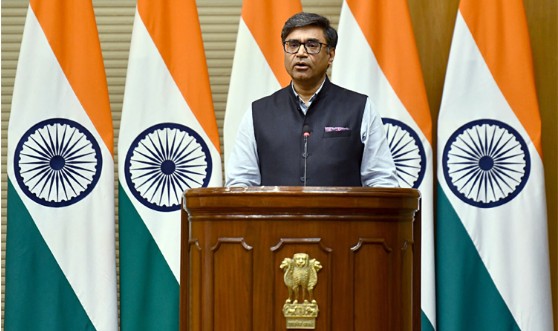
Indian Foreign Secretary Vikram Misri said that New Delhi has already begun reactivating all channels of engagement with Dhaka, and discussions are taking place at the ministerial level.
He said, “We are getting down to reactivating all tools of bilateral relations. Contacts are being made at the ministerial level,” while speaking to a visiting Bangladeshi media team at India’s Ministry of External Affairs in New Delhi on Monday.
Misri said there are more than 40 official cooperation mechanisms between the two countries, covering areas such as water sharing, trade, border management, security, connectivity, and consular affairs. Many of these were inactive during Bangladesh’s interim administration after last year’s political change.
He added that relations faced challenges during that time, but India is now re-engaging after the formation of an elected government led by BNP.
“Meetings are being scheduled. Results will be known in the coming weeks and months,” he said.
He described India’s approach as constructive, positive, and practical, focusing on people-centered relations.
Misri also highlighted that Bangladesh and India share a border of more than 4,000 kilometres and 54 shared rivers. He said Bangladesh is India’s largest trading partner in the region.
He added, “We want to progress and modernize our economic partnership with Bangladesh.”
On visa services, he said India is working to fully restore visa operations for Bangladeshi citizens, and further updates will come soon.
He also said trade issues will be among the first topics of discussion, aiming for benefits for businesses and people in both countries.
Regarding projects under India’s Line of Credit (LoC), he said both sides will review Bangladesh’s priority projects and discuss future funding plans.
On water sharing, he said the Joint Rivers Commission will continue technical talks on pending issues, including renewal of the Ganges Water Treaty and the long-pending Teesta agreement.
Responding to questions on regional relations, Misri said Bangladesh is free to manage its own foreign relations. He also expressed hope that mutual interests between Dhaka and New Delhi will be protected.
Diesel Import via Bangladesh–India Pipeline Begins, 7,000 Tonnes in Transit to Parbatipur
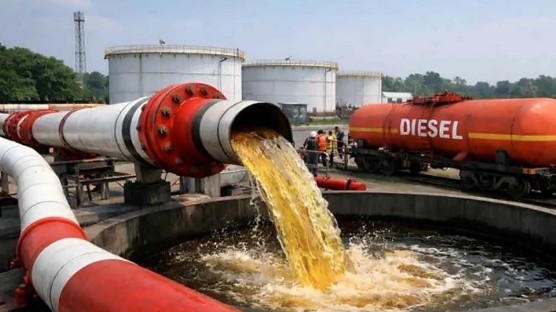
Pumping of 7,000 metric tonnes of refined diesel imported from Numaligarh Refinery Limited has commenced through the Bangladesh–India Friendship Pipeline.
The fuel is being transported to the depot of Padma Oil Company Limited in Parbatipur, Dinajpur.
Kazi Md. Robiul Alam, Manager (Operations) at Meghna Petroleum Limited, stated that pumping began at approximately 8:30 pm Bangladesh time from the refinery in Assam. He said the shipment of 7,000 metric tonnes is expected to take around 65 hours to reach the Parbatipur depot after pumping starts.
He also confirmed that there is no shortage of diesel in the country at present, with sufficient stock available and supply remaining stable. In the next phase, an additional 5,000 metric tonnes of diesel will be imported.
A total of 25,000 metric tonnes of diesel import has been planned for the current month, of which 13,000 metric tonnes have already been received in two consignments.
An additional 8,000 metric tons of diesel has reached Dinajpur’s Parbatipur Railhead Oil Depot through the India-Bangladesh Friendship Pipeline from Numaligarh Refinery Limited in India.
Officials confirmed that the fuel consignment was officially received early Saturday.
Kazi Md Robiul Alam, Manager (Operations) at Meghna Petroleum Limited, said the unloading of the shipment was completed late at night and preparations are now underway for the next delivery.
With this latest supply, Bangladesh has started receiving its planned fuel imports for April through the pipeline, reflecting ongoing progress in energy cooperation between the two countries.
Another 5,000 metric tons of diesel is expected to arrive on April 17 through the same pipeline.
Officials added that a total of 40,000 metric tons of fuel is scheduled to be imported in April through four separate consignments.
33 Bangladeshis return home via Benapole after serving jail in India
A total of 33 Bangladeshi nationals returned home through the Benapole check post on Sunday evening after serving three years in jail in India.
They were handed over to Bangladesh immigration authorities at the Benapole border.
Officer-in-Charge of Benapole Immigration Police, Syed Mortaza, said the individuals had entered India illegally around three years ago in search of jobs with the help of local brokers.
They were later arrested by Kolkata police and sentenced by a court to three years’ imprisonment for illegal entry.
After completing their jail terms, Indian authorities handed them over to Benapole immigration police.
The returnees were later handed over to a representative of a human rights organisation in Jashore to facilitate their safe return to their respective families.
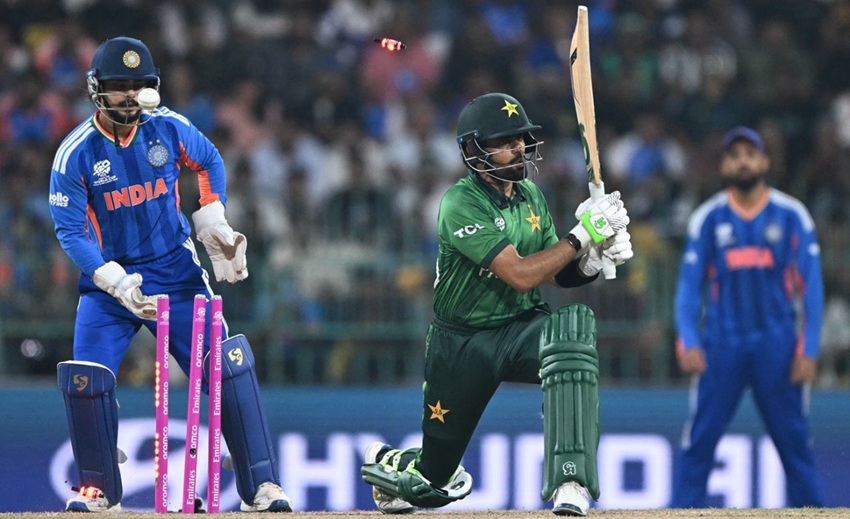
India Beat Pakistan by 61 Runs, Enter Next Round of T20 World Cup
India defeated Pakistan by 61 runs on Sunday to qualify for the next round of the T20 World Cup in a high-stakes clash.
Led by Suryakumar Yadav, India posted 175-7 after a strong start powered by Ishan Kishan, who scored a brilliant 77. In reply, Pakistan were bowled out for 114 in 18 overs.
The win marked India’s third consecutive victory in the tournament.
The match went ahead after uncertainty earlier in the week, when Pakistan reversed a decision to boycott the game. Tensions were visible at the toss, where the captains did not shake hands.
India welcomed back opener Abhishek Sharma, who had missed the previous matches due to illness, but he was dismissed early. Pakistan captain Salman Ali Agha surprised many by opening the bowling himself, trapping Sharma lbw.
Pakistan relied heavily on spin, using three spinners in the powerplay. India reached 52-1 after six overs. Kishan, however, counterattacked with an explosive knock, reaching his second straight fifty of the tournament in just 27 balls.
Saim Ayub ended Kishan’s 40-ball innings and later claimed three wickets to keep Pakistan in the contest. India were 92-2 at the halfway stage but could not fully capitalize in the death overs, finishing at 175-7.
Pakistan’s chase faltered quickly. Hardik Pandya removed opener Sahibzada Farhan for a duck, while Jasprit Bumrah struck twice in one over to leave Pakistan struggling at 13-3.
Despite a fighting 44 from Usman Khan, Pakistan never recovered. Axar Patel delivered the decisive blow by having Usman stumped, sealing a comfortable Indian victory.
With the result, India advanced to the next round, while Pakistan’s campaign suffered a major setback.