

Every country tells a story about itself. The story Bangladesh tells or rather, the story it argues over, cuts to something fundamental: not just who governs, but who belongs.
Ziaur Rahman’s answer to that question was deceptively simple. He called it Bangladeshi nationalism, and four decades on, it remains one of the most consequential and least understood ideas in the country’s political life.
The misunderstanding usually starts in the same place. Critics frame it as a rejection of Bengali identity; a political maneuver designed to distance Bangladesh from its liberation inheritance. But that reading collapses under scrutiny. Ziaur Rahman never disputed that Bangladeshis are Bengali in language and in cultural temperament. What he disputed was the assumption that language alone could bear the full weight of national identity for a sovereign, plural state.
It is worth sitting with that distinction, because it is not a small one.
When Bangladesh emerged in 1971, it inherited not just a flag but a country, a country that included, alongside its Bengali-speaking majority, the Chakma, Marma, Tripura, Mro, Bawm, and dozens of other communities across the Chittagong Hill Tracts, each with languages, histories, and ways of life that Bengali cultural nationalism had no natural vocabulary to accommodate. A national identity that could not speak to them without asking them to dissolve into the majority was not a national identity at all. It was a majority identity with national pretensions.
This is where Bangladeshi nationalism did its most serious philosophical work. Ziaur Rahman proposed a civic identity, rooted not in ethnicity or language but in shared citizenship, shared territory, and a shared stake in the country’s future. His now-famous bouquet metaphor was not decorative. It made a precise argument: that a nation, like a bouquet, draws its strength from the distinctiveness of its parts, not from forcing every flower into the same shape. A Chakma could remain fully Chakma. A Marma would lose nothing of cultural life. A Bengali would surrender no part of linguistic heritage. All would be, and feel, Bangladeshi.
That is harder to build than it sounds and Ziaur Rahman knew it. His pragmatism showed in the way the philosophy extended outward. Rather than tethering Bangladesh to a single regional patron, he opened diplomatic and economic relationships across the Muslim world, China, the United States, and the broader developing world. The early architecture of the remittance economy, the expansion of Bangladesh’s international footprint, the deliberate cultivation of strategic space, all of it was an expression of the same underlying instinct: that a country confident in a secure, composite identity can engage the world on its own terms.
Scholar B K Jahangir, in his rigorous study of Bangladeshi nationalism, argued that in a society of this complexity, single-identity nationalism does not unify, it privileges. Durable cohesion, he contended, requires a political framework expansive enough to hold different communities, regions, and traditions without demanding that any of them disappear. The philosophy Ziaur Rahman articulated was precisely such a framework.
The bouquet, in other words, was not a metaphor for sentimentality. It was a metaphor for statecraft.
That is why the idea keeps returning. In an era of intensifying identity pressure, geopolitical competition, and the constant temptation to define nations by what or whom, they exclude, the question Ziaur Rahman posed remains the right one: how does a diverse society hold together without becoming coercive? His answer was incomplete, as all political philosophies are. But it pointed toward something that many countries, far larger and more powerful than Bangladesh, are still searching for a nationalism that draws its strength not from uniformity, but from the dignity of difference held in common.
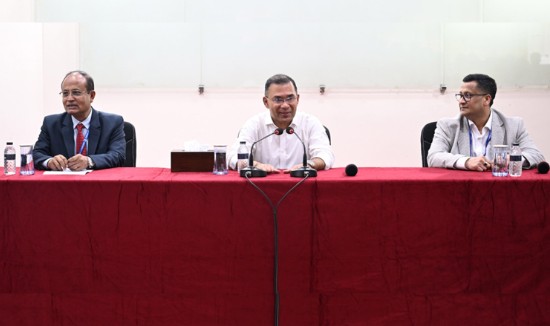
Prime Minister Tarique Rahman called on students to play an active role in creating a stable political environment to move the country forward.
He made the remarks while exchanging views with students of University of Dhaka at Professor Muzaffar Ahmed Chowdhury Auditorium of the Social Sciences Faculty on the campus.
The Prime Minister also advised students to learn a third language alongside Bangla and English to increase employment opportunities in different countries around the world.
Around 156 students participated in the programme where Tarique Rahman answered questions on government plans initiatives education corruption employment and politics.
Responding to a question from Kaberi Azad a master’s student of the Department of Drawing and Painting he said political stability is necessary for institution building and sustainable national development.
He said people often expect rapid change but development must be achieved gradually within a stable environment. He urged students to build public opinion in favour of political stability through social media and other platforms.
According to the Prime Minister political parties will continue political activities but parliament should remain the main centre of politics.
“We have done many things through street politics. But now stability must come. Politics should move to parliament. Nothing can be built simply through street agitation,” he said.
He stressed the importance of discussion dialogue and careful decision-making for nation building and urged university students to remain vocal whenever necessary.
Earlier the Prime Minister inaugurated a daylong national workshop at the Nabab Nawab Ali Chowdhury Senate Bhaban on the DU campus.
The University Grants Commission organised the workshop titled “Transforming Higher Education in Bangladesh: Roadmap to Sustainable Excellence” to make higher education more modern inclusive and sustainable.
Speaking about democratic education Tarique Rahman said the government has started taking school students to parliament so they can learn about democratic institutions.
Recalling his visit to the British Parliament he said he wanted to introduce a similar system in Bangladesh if given the opportunity to lead the government.
He said students from schools in Dhaka are already visiting parliament and later students from other districts will also get the chance to observe parliamentary sessions and learn about its history and legacy.
At the beginning of his speech the Prime Minister said returning to Dhaka University after 35 years made him feel nostalgic.
He also encouraged students to think not only about what Bangladesh can do for them but also what they can do for Bangladesh.
Replying to another question from Mobashsheruzzaman Hasan a postgraduate student of Islamic History and Culture he acknowledged the shortage of dormitories and library facilities at universities across the country.
The Prime Minister blamed corruption and misuse of public resources after 2008 for many of the country’s present problems. He referred to alleged irregularities in projects including the Rooppur Nuclear Power Plant and said money laundering over the years deprived students of better facilities.
He said achieving complete zero tolerance against corruption is difficult because corruption has become deeply rooted but his government is trying to curb it.
Highlighting public awareness issues Tarique Rahman said many people still do not consider wasting water violating traffic rules or cutting trees as immoral acts and stressed the need to change public mindset.
Speaking about the global ranking of Dhaka University he said the institution has not yet reached the international position it deserves.
According to him political affiliation received more importance than merit in teacher recruitment in previous years. He urged the university administration to prioritise academic results merit and research achievements during recruitment.
Responding to another question on the use of Bangla in education the Prime Minister said maintaining connection with the mother tongue depends largely on family values and mindset.
He shared his experience of raising his daughter Zaima Rahman abroad while keeping her connected to Bangladeshi language and culture.
He said many families prefer speaking English with children studying in English-medium schools which reduces the use of Bangla and called for changing this practice.
DU Vice-Chancellor ABM Obaidul Islam Professor Md Morshed Hasan Khan and leaders of Chhatra Dal attended the programme.
At the event the DU Vice-Chancellor and Professor Morshed Hasan Khan presented a crest to the Prime Minister.
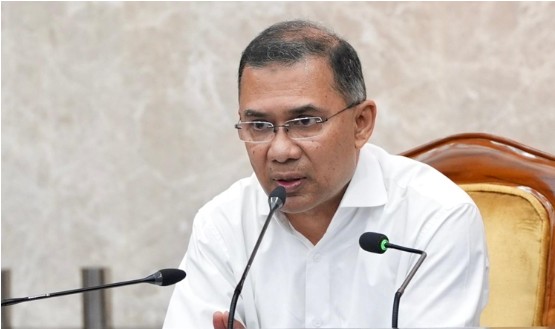
Prime Minister Tarique Rahman directed police officials to treat offenders strictly as criminals regardless of their political identity while reaffirming the government’s zero-tolerance stance against corruption terrorism and misrule.
Speaking to senior police officers at Shapla Hall of the Prime Minister’s Office on the occasion of Police Week 2026, he said police members may face pressure because of political influence while carrying out anti-corruption and anti-terrorism duties but they should not consider anyone’s political identity.
“Whoever commits a crime must be treated as a criminal,” he said adding that the law must be applied equally to all citizens.
The Prime Minister said police are not protectors of any individual or political party rather protectors of the law and must work in service of the state and the people.
Tarique Rahman who is also chairman of the ruling BNP said the government will not compromise on corruption terrorism and misrule and described police as essential to building a strong accountable lawful and people-friendly state.
He said police officers are directly responsible for maintaining law and order across the country and if they successfully perform their duties the government will move closer toward building a safer Bangladesh.
Highlighting changes in crime patterns because of technology and globalization the Prime Minister said police responsibilities are now broader than before and no longer limited to cities or districts.
He said transnational organised crime has become a global reality and every police officer now needs multiple skills and a professional mindset regardless of rank or posting.
Warning against compromising professionalism for promotions or preferred postings he said temporary personal gain should never come at the cost of professional integrity.
The Prime Minister reminded officials that no government or administrative position is permanent and urged police members to treat the meeting as a commitment toward improving future law and order management.
He said there is no alternative to an efficient brave honest and impartial police force and added that people usually turn to police first in times of danger.
Referring to the situation after August 5 he said police have strategically handled difficult situations over the last one and a half years and successfully controlled mob violence in many cases.
Tarique Rahman said the government wants to transform Bangladesh Police into a truly people-friendly and trusted force because citizens often see police as a reflection of the government itself.
He stressed that relations between police and citizens should remain both lawful and humane and said officers must remain alert to prevent communal unrest and sabotage while ensuring democratic political rights.
Reaffirming the government’s commitment to its election manifesto and the July Charter he said every promise made before the people will be implemented without confusion.
The Prime Minister said the government aims to bring every citizen regardless of political belief under the protection of the state’s social security framework.
He described public safety as the police’s first responsibility and said officers must perform their duties with sincerity seriousness and professionalism to build an efficient and dynamic police force.
The premier also linked crime with economic inequality saying the government has already taken several initiatives to reduce disparity and strengthen social and economic security.
He said honesty merit and efficiency will remain the key principles in police recruitment transfers and postings while acknowledging that police work is not limited to fixed hours.
According to him people judge the government largely through police behaviour and activities and the state expects honesty justice professionalism humanity and public service from police members.
He said the slogan “Amar Police Amar Desh Sobar Agee Bangladesh” would become truly meaningful if police uphold these values.
The programme began with recitations from religious scriptures while a documentary highlighted the sacrifices and contributions of police during the Liberation War national crises and modernization efforts taken by Shaheed President Ziaur Rahman and former Prime Minister Khaleda Zia.
Police officials later placed several demands before the Prime Minister and assured that Bangladesh Police remains ready to support the government in maintaining peace and order.
Home Minister Salahuddin Ahmed Home Secretary Manzur Morshed Chowdhury Inspector General of Police Md Ali Hossain Fakir and Additional IGP AKM Awlad Hossain also addressed the event.
Later the Prime Minister joined a photo session with police officers in front of the Tiger Gate of the PMO.
Earlier he inaugurated the four-day Police Week-2026 through a colourful ceremony at Rajarbagh Police Lines in the capital.
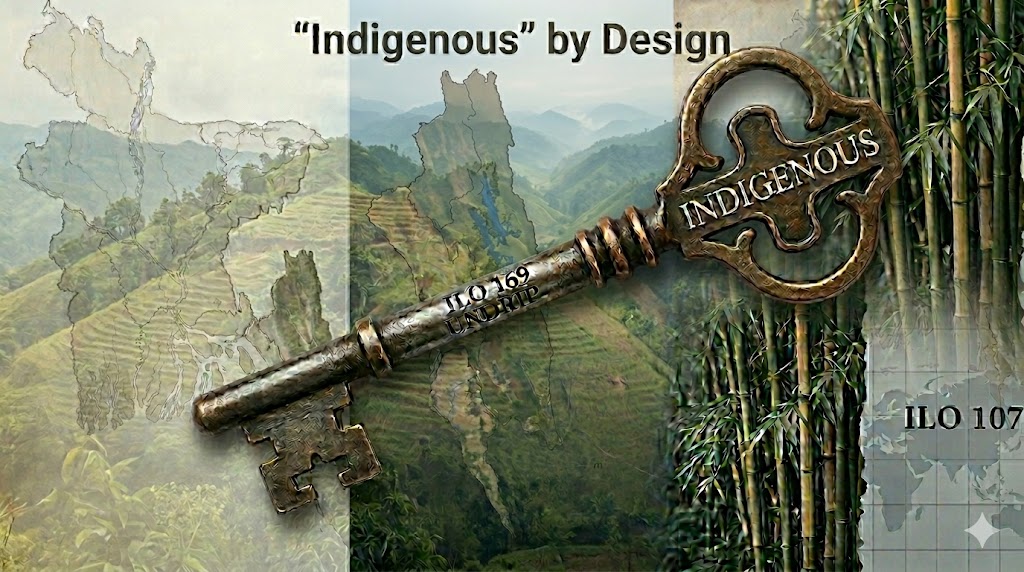
Words, in the right legal context, function less like language and more like keys. They open doors that argument alone cannot. In the Chittagong Hill Tracts of Bangladesh, one such word has been quietly inserted into a decades-long political contest: indigenous. Its substitution for the less freighted tribal is not semantic housekeeping. It is strategy.
To understand why, one must first appreciate what the distinction actually means in international law not rhetorically, but structurally. The ILO’s Convention 169 draws a careful line between two categories of peoples. Tribal communities are defined by cultural distinctiveness: separate social organization, separate economic life, governance through custom rather than national statute. Indigenous peoples carry an additional and far more consequential qualification prior occupancy. They are those who inhabited a territory before the imposition of colonial boundaries or the formation of the modern state, and who have maintained their own political and social institutions across that rupture. The anthropologist Lewis Morgan framed it even more starkly: indigenous peoples are those whose origins and migrations leave no recoverable historical trace. They did not arrive. They were already there.
This is precisely where the Hill Tracts claim grows complicated. The historical record imperfect as all such records are places the arrival of the region’s various hill communities between the sixteenth and eighteenth centuries, in successive and traceable movements. Different groups, different routes, different centuries, but a chronology nonetheless. A people with a chronology have, by definition, an origin elsewhere. And a people with an origin elsewhere do not meet the threshold that international law has set for indigeneity. They meet the threshold for something equally legitimate, equally worthy of protection but categorically different.
None of this would carry particular urgency were it merely an academic disagreement. It became politically charged on September 13, 2007, when the United Nations General Assembly adopted the Declaration on the Rights of Indigenous Peoples. UNDRIP is not a treaty with binding enforcement mechanisms, but its moral and legal weight is considerable. Recognition under its framework confers international legitimacy on land claims, creates obligations for signatory states, and critically provides a platform from which sub-national groups may address international bodies directly, partially bypassing the state itself. The declaration turned a classification question into a question of sovereign consequence.
That the advocacy for indigenous status in Bangladesh intensified markedly after 2007 is a matter of observable record. The sequence matters. It suggests that what appears to be a grassroots assertion of cultural identity is, at least in part, a calibrated legal maneuver one in which the vocabulary of human rights is deployed to achieve ends that human rights language alone cannot fully account for.
Bangladesh’s response has been characteristically understated but firm. The government ratified ILO Convention 107, the older and less expansive instrument. It has not ratified Convention 169. It has not endorsed UNDRIP. Critics read this as evasion. A more defensible reading is that Dhaka recognizes something that the advocates prefer to leave unexamined: that the reclassification they seek would not merely update a label. It would restructure, in law and in precedent, the relationship between a sovereign state and a portion of its own territory.
The hill communities of the Chittagong Hill Tracts possess cultures of genuine distinction languages, traditions, and social arrangements that have survived pressures most societies could not withstand. Their claim to recognition, to protection, to full participation in the political life of the country, is neither trivial nor easily dismissed. But recognition of cultural distinctiveness and recognition as an indigenous people are different instruments with different consequences. Conflating them, whether through carelessness or calculation, does no service to the communities whose interests are supposedly at stake and considerable service to those whose interests lie elsewhere.
In the end, the argument is not about a word. It never is. It is about what the word unlocks.
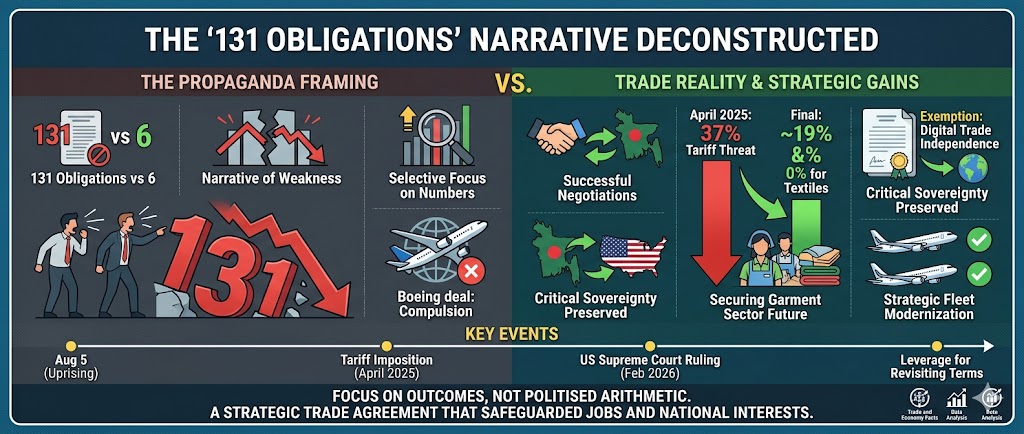
When political opponents run out of legitimate arguments, they resort to arithmetic. The “131 obligations versus 6” framing currently circulating in Bangladesh’s public discourse is a masterclass in exactly that numbers stripped of context, deployed as propaganda. It deserves to be dismantled clearly.
Trade agreements are not symmetrical by design. They are structured around who is seeking market access and who is granting it. Every tariff schedule, every compliance timeline, every sector-specific commitment generates a numbered clause. That is the mechanics of international trade law, not evidence of subjugation. When Bangladesh secured an exemption that both Malaysia and Cambodia failed to obtain the right to negotiate digital trade agreements with third parties without prior American consultation it demonstrated precisely the kind of diplomatic competence that its critics claim was absent. That fact has received almost no coverage. Its absence from the debate is telling.
The economic context matters enormously and is being consistently ignored. In April 2025, the United States imposed a 37 percent reciprocal tariff on Bangladeshi goods under Executive Order 14257. For a country where the readymade garment sector employs over four million workers and constitutes the overwhelming majority of export revenue, that figure was not an abstraction it was an existential threat. The interim government entered negotiations immediately, worked the process, and returned with a rate of 19 percent, subsequently reduced further, alongside a zero-tariff mechanism for textiles. To characterize that outcome as weakness requires either ignorance of the baseline or deliberate misrepresentation of it. Neither reflects well on those making the argument.
The Boeing controversy follows the same pattern of selective memory. Biman Bangladesh Airlines was operating an ageing, inefficient fleet an operational reality that existed entirely independent of this agreement. The question before the current government was never whether to purchase aircraft but which manufacturer under what terms. Embedding that procurement within a broader trade negotiation, where it contributed to reducing bilateral trade imbalance and thereby strengthening Bangladesh’s overall position at the table, reflects strategic thinking rather than compulsion.
The US Supreme Court’s February ruling striking down the IEEPA-based tariff architecture has been weaponized by critics as retrospective proof that negotiations were unnecessary. This is an intellectually dishonest argument. Governments do not have the luxury of negotiating in hindsight. The tariff threat was legally operative and economically real at the moment Bangladesh acted. Furthermore, the ruling does not void the bilateral framework it introduces legal ambiguity that Bangladesh’s negotiators can now exploit to revisit specific terms from a position of greater leverage. The government’s critics have somehow transformed a potential diplomatic advantage into a talking point against the very people who created the conditions for it.
What unites these criticisms is not economic analysis. It is political motivation. The most vocal opposition to this agreement comes from quarters with a vested interest in undermining the legitimacy of the post-August 5 order forces that have consistently sought to recast a popular democratic uprising as foreign interference. The trade deal has become a vehicle for that project. Portraying a framework designed to protect millions of Bangladeshi garment workers as an instrument of national betrayal is not dissent. It is the deliberate manufacture of confusion in service of a political agenda that has already been rejected by the Bangladeshi people once.
Bangladesh entered a negotiation under genuine pressure, extracted meaningful concessions, preserved critical sovereign flexibilities, protected its primary industry, and maintained its most important bilateral trade relationship. That is not the record of a government that failed its people. It is the record of one that understood what was at stake and acted accordingly.