
Bangladesh’s parliament grounds have lately hosted a curious diplomatic choreography. Chinese drones illuminated Manik Mia Avenue to mark the July uprising and the friendship between the two nations. Days later, an American military band performed at the same site in tribute to the building’s architect. Read separately, these are cultural gestures. Read together, they form a small case study in how middle powers manage the attentions of great ones without becoming instruments of either.
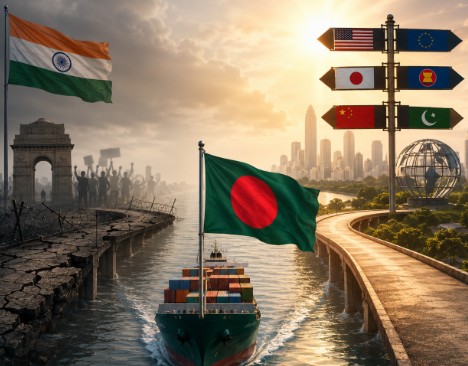
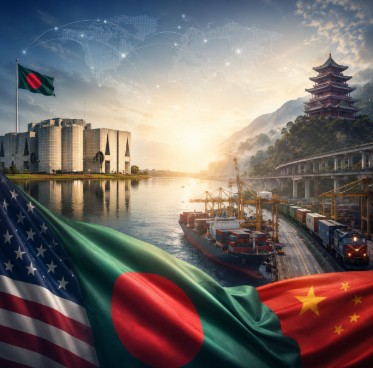
China has revived its proposal for an economic corridor linking Bangladesh to Yunnan province through Myanmar, a project consistent with the country’s long-standing eastward orientation and its ambition to move beyond garment exports and remittances toward manufacturing diversification. Almost simultaneously, the reciprocal trade agreement with Washington has opened firmer access to the American market. The conventional expectation in such moments is that a state must choose its patron. Bangladesh has instead treated the two openings as compatible rather than competing, a position that requires more discipline than alignment does.
This is the practical content of the government’s Bangladesh First doctrine. American cotton can enter Bangladeshi mills. Chinese machinery can drive production. Finished goods can move toward whichever market rewards them best. The underlying logic is sound: dependence on a single power is the actual strategic risk, not simultaneous engagement with several. Bangladesh’s policy has been built around avoiding that dependence rather than courting the comfort of a singular alliance.
The more demanding test lies in Myanmar, through whose Rakhine state any corridor to Yunnan must pass. It is here that the government’s position carries the most weight. Rather than separating connectivity from the unresolved fate of more than a million Rohingya sheltering in Bangladesh, the state has made clear that infrastructure ambition cannot be divorced from questions of repatriation, citizenship and safe return. Other regional actors with interests in Rakhine have found ways to work around this question. Bangladesh has chosen instead to hold its leverage in reserve, treating the corridor as an instrument for extracting humanitarian commitments rather than a prize to be accepted on its own terms.
None of this occurs in ideal conditions. Rakhine remains volatile, other powers are already entrenched there, and every decision Bangladesh makes will continue to be read through the strategic interests of larger states. Yet a government capable of hosting both Chinese and American symbolism on the same grounds, securing tangible economic openings from each, and still declining to trade away the Rohingya question in the process, is exercising a form of statecraft that deserves to be understood on its own terms rather than dismissed as improvisation.
The deeper principle at stake was never a matter of choosing between Beijing and Washington. It was the harder discipline of preserving strategic autonomy while keeping both relationships intact, and that is the balance the current government has managed to sustain.
deskreport
Prime Minister Tarique Rahman said public confidence in Bangladesh’s healthcare system can be fully restored through compassionate treatment, professionalism and a stronger sense of responsibility among doctors and healthcare workers.
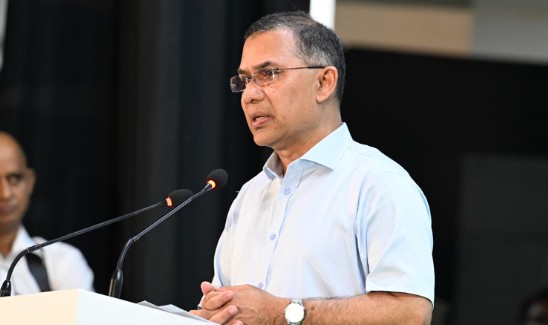
He made the remarks while addressing a views exchange meeting titled “DMCians’ Thoughts on the Modernisation of Bangladesh’s Healthcare System” at the Dhaka Medical College (DMC) auditorium on the occasion of the institution’s 81st founding anniversary.
Prime Minister’s spouse Dr. Zubaida Rahman attended the programme as the special guest.
Humane Care Key to Restoring Trust
The Prime Minister said punctuality, accountability and compassionate behaviour toward patients are essential for strengthening the country’s healthcare system.
“Many people from this country are going abroad for medical treatment. As a result, five billion US dollars leave the country every year for treatment expenses,” he said.
“Why can’t we provide that treatment in our own country? Why can’t we earn the trust of our people? This cannot be achieved through the enforcement of law. Only doctors can fully restore the people’s confidence and trust through their humanitarian approach and proper treatment. Therefore, I urge doctors to be more humane in earning the trust of patients,” he added.
Focus on Preventive Healthcare
The Prime Minister said the government has already started recruiting 100,000 health workers, with 80 percent of them being women, to provide family-based preventive and primary healthcare services at the grassroots level.
“A healthy nation is not built by hospitals alone. Rather, physical well-being depends largely on family awareness, a clean neighbourhood and environment, health advice, safe food, regular exercise, and responsible citizenship,” he said.
Referring to the principle that “Prevention is better than cure,” he said the government aims to take healthcare services directly to people’s doorsteps through timely advice on nutrition, vaccination, maternal health, child development, diabetes, hypertension, kidney disease, heart disease and cancer.
Record Health Budget
Highlighting the government’s healthcare priorities, Tarique Rahman said the current national budget has allocated Tk 69,409 crore for the health sector—the highest allocation in the country’s history after education.
He said the allocation represents 1.02 percent of GDP, with a long-term target of increasing health expenditure to 5 percent of GDP over the next five years.
The Prime Minister also noted that the government has reduced or withdrawn VAT and taxes on several essential medical products, including dialysis filters, heart stents, heart valves, pacemakers, oxygenators, peripheral vascular stents, radiofrequency ablation fibres, intraocular lenses and selected raw materials used in cancer treatment.
Expanding Hospital Capacity
Tarique Rahman announced that the government has decided to gradually upgrade every upazila hospital to 101 beds.
He said only five upazilas currently have 100-bed hospitals, forcing many patients to seek treatment in major cities.
To improve healthcare delivery, he said all existing 31- to 51-bed hospitals will be upgraded in phases, while rooftop solar power systems will be installed to ensure uninterrupted electricity supply.
Child Healthcare and Medical Workforce
The Prime Minister said child healthcare remains a priority, adding that the government has taken steps to quickly operationalise five specialised children’s hospitals, including newly built 200-bed hospitals in Barishal and Rajshahi.
He said the initiative would decentralise specialised paediatric healthcare services and make them accessible outside the capital.
To strengthen the healthcare workforce, Tarique Rahman said the recruitment process for 5,000 additional MBBS doctors has already begun, alongside efforts to fill vacant positions for doctors, nurses, pharmacists, medical technologists, midwives and other healthcare professionals.
He also announced that 10 Ansar personnel will be deployed at every upazila health complex to enhance security for hospitals and healthcare workers.
Preserving DMC’s Legacy
Describing Dhaka Medical College as a “living history” and a “witness to time,” the Prime Minister said the institution has played a significant role not only in medical education but also in the Language Movement of 1952, the Liberation War of 1971, the anti-autocracy movement of 1990, and the 2024 mass uprising.
“This campus has not only produced some of the finest doctors at home and abroad; it has also produced teachers, researchers, social leaders, freedom fighters and noble individuals who did not hesitate to sacrifice their own lives and interests to save the lives of others,” he said.
Earlier in the day, the Prime Minister formally inaugurated DMC Day-2026 by releasing balloons and pigeons at Shaheed Milon Chattar and later participated in an open discussion with teachers, doctors and students, who called for preserving the institution’s heritage and transforming Dhaka Medical College into a world-class centre for medical education, research and healthcare.
Dhaka: UNICEF has expressed deep concern over a deadly landslide in the Rohingya refugee camps in Cox’s Bazar that claimed the lives of at least four girls, warning that the ongoing monsoon season continues to pose serious risks to children and families living in the camps.
In a statement issued on Thursday (July 9), the UN children’s agency said the landslide occurred on Wednesday in Camp 5. While at least four girls were confirmed dead, the full extent of the damage is still being assessed.
“UNICEF mourns the reported loss of at least four girls’ lives. Our thoughts are with the children, their families, and everyone affected by this tragic incident,” the statement said.
The agency noted that the tragedy came just one day after flash floods and landslides killed nine people, including children, in the Rohingya camps on July 7.
UNICEF said the back-to-back disasters underscore the severe dangers posed by the monsoon season to refugees living in highly vulnerable conditions.
It warned that persistent heavy rainfall continues to increase the risk of flooding and landslides throughout the camps, threatening lives and disrupting access to essential services.
The organisation said it and its humanitarian partners have been closely monitoring the situation since the emergency began and are coordinating with the Government of Bangladesh and other relief agencies to support ongoing response efforts.
UNICEF also reaffirmed its readiness to provide life-saving assistance and protection to affected children and families as needs are identified.
Reiterating its commitment to the Rohingya response, the agency said it will continue working with the Government of Bangladesh and humanitarian partners to help keep children safe throughout the monsoon season while ensuring continued access to essential services, including healthcare, safe drinking water, child protection, psychosocial support and education wherever possible.
Dhaka: Prime Minister Tarique Rahman visited BNP Media Cell Convener Professor Dr. Moudud Hossain Alamgir Pavel, who is undergoing treatment at a hospital in the capital.
The Prime Minister visited Continental Hospital (formerly United Hospital) in Gulshan at around 4:00 pm and enquired about Prof. Pavel’s health condition, according to Prime Minister’s Deputy Press Secretary Md. Suzauddhowla Sujon Mahmud.
During the visit, Tarique Rahman spoke with the physicians treating Prof. Pavel and was briefed on the patient’s latest medical condition.
The Prime Minister wished Prof. Pavel a speedy recovery and directed the authorities concerned to ensure that he receives the highest standard of medical care.
Prof. Pavel fell ill after experiencing severe chest pain at his residence in Bogura on Thursday and was initially admitted to TMSS Hospital.
On Friday afternoon, he was airlifted to Dhaka by an air ambulance and admitted to Continental Hospital, where he is currently receiving treatment under the supervision of Professor Dr. NAM Momenuzzaman.
Army Deployed to Seven Chattogram Upazilas for Flood and Landslide Response
Bangladesh Army personnel have been deployed to seven upazilas in Chattogram district to assist in rescue and relief operations following deadly floods and landslides, according to an ISPR press release issued on Friday.
The troops have been deployed under the “In Aid to Civil Power” arrangement to support the local administration in responding to the disaster.
Under the deployment, the 10th Infantry Division has been assigned to Lohagara, Satkania, Chandanaish and Banshkhali upazilas.
Meanwhile, the 24th Infantry Division has been deployed to Boalkhali, Hathazari and Fatikchhari upazilas.
According to the ISPR, army personnel will carry out rescue operations for stranded and waterlogged residents while also assisting in emergency relief efforts in the flood-affected areas in coordination with the civil administration.
Prime Minister Tarique Rahman on Saturday said the government is working to enhance the capacity of district and upazila-level hospitals to improve access to quality healthcare services across the country.
He made the remarks while attending the 80th anniversary programme of Dhaka Medical College (DMC).
During a question-and-answer session at the beginning of the programme, physicians highlighted various challenges facing the country’s health sector and discussed a number of ongoing issues with the Prime Minister.
Responding to their observations, Tarique Rahman outlined the government’s plans to strengthen healthcare services and improve medical facilities nationwide.
He also urged doctors to provide healthcare services with the same level of dedication in rural areas as they do in urban centres, stressing that expanding quality medical services outside the capital is essential to reducing the country’s dependence on Dhaka-based healthcare facilities.
Earlier, at around 10:15 am, the Prime Minister inaugurated a tree plantation programme on the Dhaka Medical College campus as part of the institution’s 80th anniversary celebrations.
His spouse, Dr. Zubaida Rahman, accompanied him during the visit.
Bangladesh Highlights Climate Resilience, Water Security and Innovation at UN SDG Forum
Dhaka: Bangladesh has highlighted climate resilience, water security, innovation-driven industrialisation and skills development as key priorities for achieving the Sustainable Development Goals (SDGs) at the High-level Political Forum on Sustainable Development at the United Nations Headquarters in New York.
According to a message received today, Prof. Dr. S. M. Abdul-Awal, Principal Coordinator (SDG Affairs) at the Prime Minister’s Office, presented Bangladesh’s position at the UN forum on Friday.
Addressing the session, Dr. Awal reaffirmed Bangladesh’s long-term commitment to climate adaptation and sustainable water management, highlighting the government’s plan to excavate 20,000 kilometres of canals over the next five years.
He said the initiative is aimed at strengthening irrigation networks, improving rainwater retention, increasing groundwater levels and enhancing drinking water security for both rural and urban communities.
The SDG Affairs Coordinator also emphasized the need for stronger international cooperation on transboundary water management, including support for implementing the Teesta Barrage Project in northern Bangladesh.
In a separate intervention on Sustainable Development Goal (SDG)-9, Dr. Awal said resilient infrastructure, sustainable industrialisation and innovation remain at the core of Bangladesh’s development strategy as the country advances toward graduation from the Least Developed Country (LDC) category.
He stressed the importance of investing in skilled and knowledge-based education, Technical and Vocational Education and Training (TVET), science, technology, engineering and mathematics (STEM), digital infrastructure and entrepreneurship to prepare young people for future employment and build a knowledge-based economy.
Dr. Awal also called on the international community to increase investment in Bangladesh’s agriculture, biotechnology, pharmaceutical, leather, digital and creative industries, saying the country now offers a favourable environment for foreign investment following the restoration of democratic governance through a proper election.
He said these initiatives would help safeguard Bangladesh’s development achievements, generate employment opportunities and promote a more resilient, inclusive and sustainable future.
PM Inaugurates Dhaka Medical College Day-2026 on Institution’s 80th Anniversary
Dhaka: Prime Minister Tarique Rahman today inaugurated Dhaka Medical College (DMC) Day-2026, marking the 80th anniversary of the country’s premier medical institution.
The Prime Minister formally inaugurated the programme by releasing balloons and pigeons at 10:00 am on the Dhaka Medical College campus.
He was accompanied by his spouse, Dr. Zubaida Rahman, an alumnus of Dhaka Medical College and Vice-Chairperson of the Ziaur Rahman Foundation.
As part of the programme, Prime Minister Tarique Rahman and Dr. Zubaida Rahman planted two saplings—an Arjun tree and a Neem tree—on the college campus.
Following the tree plantation, a special munajat was offered seeking eternal peace for those martyred during the July 2024 Mass Uprising.
Later, Health Engineering Department Chief Engineer Brigadier General Mir Sarwar Hossain Chowdhury briefed the Prime Minister on the construction of two new female dormitories for Dhaka Medical College under a project to build 19 modern hostel buildings for medical students.
During the briefing, the Prime Minister sought detailed information about the facilities and amenities that students would receive in the new hostel buildings.
Among those present at the programme were Health Minister Sardar Md. Sakhawat Husain, State Minister for Health Dr. MA Muhit, Prime Minister’s Special Assistant for Health Affairs Dr. SM Ziauddin Hyder, Prime Minister’s Adviser Dr. Zahed Ur Rahman, Health and Family Welfare Ministry Secretary Md. Quamruzzaman Chowdhury, BNP Health Affairs Secretary Prof. Dr. Mohammad Rafiqul Islam, Doctors Association of Bangladesh (DAB) President Prof. Dr. Harun Al Rashid, Director General of the Directorate General of Medical Education (DGME) Prof. Dr. Nazmul Hosain, and Director General of the Directorate General of Health Services (DGHS) Prof. Dr. Pravath Chandra Biswas.
Dhaka Medical College and Hospital (DMCH) began its journey on July 10, 1946, at the former Secretariat and the Faculty of Arts building of the University of Dhaka. The day is observed annually as DMC Day.
This year, the institution completed 80 years of service and entered its 81st year.
Bangladesh charts an independent course as the era of Indian primacy fades
The era of India’s uncontested influence in Bangladesh has reached its logical conclusion, paving the way for a more sophisticated, multi-aligned foreign policy in Dhaka. For over a decade, New Delhi enjoyed unparalleled sway over its eastern neighbor, but the landscape has fundamentally shifted following the major political transition of August 2024 and the subsequent February election. While both governments have signaled a desire to reset their fractured relationship, the path forward is heavily obstructed by unresolved baggage and powerful undercurrents of public opinion.
Chief among these obstacles is the diplomatic standoff surrounding former Prime Minister Sheikh Hasina. Now a convicted criminal sentenced to death for crimes against humanity, her continued asylum in India serves as a direct impediment to normal relations. Dhaka has formally requested her extradition, and New Delhi’s reluctance to comply leaves a gaping wound in bilateral trust. This issue is not merely a legal or bureaucratic hurdle; it is a lightning rod for Bangladeshi public opinion, which soured dramatically during the Hasina period and the post-uprising transition. Across the border, Indian public perception has been similarly warped by a wave of disinformation unleashed during recent state elections. Neither government can afford to ignore these domestic sentiments as they attempt to redefine their ties.
Consequently, Bangladesh’s approach to its regional heavyweight is transitioning to a “slow and steady” calibration, managed deliberately by figures like Foreign Minister Dr. Khalilur Rahman. Rather than reverting to the lopsided alignments of the past, Dhaka is aggressively diversifying its international portfolio. The days of Indian primacy have given way to a calculated balancing act, wherein Bangladesh is actively expanding its economic and security cooperation with the United States; which has paid significant attention to the country’s democratic shift, while simultaneously courting investments from European partners.
This diversification extends deeply into regional and multilateral spheres. By pursuing stronger ties with ASEAN and the D-8 grouping, and by steering negotiations toward an independent trade agreement with Washington, Dhaka is asserting its agency on the global stage. Even potential economic entanglements, such as regional connectivity corridors involving China and Myanmar, are being explored as pragmatic avenues for job creation and export growth. Evolving diplomatically, Bangladesh is proving that engaging with Beijing for economic infrastructure does not have to result in friction with Washington, provided the strategy is managed adeptly.
Ultimately, the changing dynamics between Dhaka and New Delhi signal a healthier, more mature phase of South Asian diplomacy. Bangladesh is no longer content to be viewed through the narrow lens of a single patron’s sphere of influence. By championing a balanced foreign policy and reclaiming its historic role as a proponent of regional multilateralism, Dhaka is charting a sovereign path forward, one defined by independent national interest rather than inherited geopolitical compliance.
Govt Committed to Press Freedom, Responsible Journalism: Information Minister
Dhaka: Information and Broadcasting Minister Zahir Uddin Swapan today said the government is committed to ensuring press freedom, professionalism, accountability and responsible journalism across the country.
“The government does not support unauthorized, amateur or unethical activities in the name of mobile journalism as such kind of journalism can contribute to the spread of misinformation,” he said.
The minister made the remarks while responding to a tabled question from National Citizens Party (NCP) lawmaker M. Abul Hasnat from Cumilla-4 in the Jatiya Sangsad.
He said the government has proposed amendments to the Press Council Act, 1974 to make the law more relevant to the present time and strengthen the Bangladesh Press Council as a more effective and media-friendly institution.
According to the minister, the proposed amendments include provisions for setting minimum educational qualifications for journalists, introducing a journalist registration system similar to that of the Bar Council, and establishing effective measures, including financial penalties, against the publication of false, harassing or unethical news reports.
The proposed reforms also seek to empower the Press Council to initiate investigations on its own and take appropriate action against the dissemination of rumours, fake news, hate speech and content considered contrary to the national interest.
Swapan said the government is also continuing various training programmes to enhance the professional skills and standards of journalists.
Regarding mobile journalism, the minister said the government has not yet taken any decision to introduce a licensing system.
However, he added, the matter may be reviewed in the future in light of changing realities and emerging needs.