

In contemporary geopolitical commentary, the specter of a large-scale military conflict between India and Bangladesh occasionally resurfaces, sometimes as a product of genuine security anxiety, and other times as inflammatory political rhetoric. Yet, while absolute certainty is a luxury foreign to international politics, a cold calculus of South Asian strategic realities reveals that a large-scale Indian invasion of Bangladesh remains highly improbable. Modern warfare has repeatedly demonstrated that raw firepower does not automatically translate into a successful occupation, nor does occupation guarantee strategic gain. For any decision-maker in New Delhi, regardless of bilateral tensions, a military campaign across the border represents one of the least rational options available.
The primary obstacle to any hostile outside force is Bangladesh’s underappreciated, defender-biased geography. The nation sits atop the world’s largest river delta, a labyrinthine network of thousands of rivers, floodplains, and wetlands that severely restricts the mobility of heavy armor and mechanized supply convoys. During the monsoon season, this terrain transitions from challenging to treacherous; flooding washes out infrastructure, degrades lines of communication, and transforms the landscape into an operational nightmare for an army unfamiliar with its fluid dynamics. Compounding this is the topography of the Chittagong Hill Tracts, which provides an ideal environment for protracted defensive and asymmetric operations.
Furthermore, military planners must account for the human element: population density and national consciousness. Housing over 170 million people within a highly compact territory, Bangladesh presents a recipe for unsustainable urban and guerrilla resistance. For Bangladeshis, sovereignty is not an abstract legal concept but a visceral component of national identity forged in the crucible of the 1971 Liberation War. Any foreign encroachment would inevitably trigger a massive mobilization of civil networks, ensuring that an invading force would face a hostile population capable of disrupting intelligence and logistics indefinitely. This resistance would be anchored by the Bangladesh Armed Forces, which have undergone two decades of steady modernization, enhancing their defensive, maritime, and airspace capabilities to impose severe, compounding costs on an adversary from day one.
From a defensive standpoint, India’s own geopolitical environment strongly discourages the opening of a new theater. New Delhi is already burdened with a complex, multi-front security matrix. To the west lies a volatile relationship with Pakistan, characterized by persistent cross-border friction and the long-standing dispute over Kashmir. To the north, a heavily militarized, unresolved border dispute with China across Ladakh and Arunachal Pradesh demands continuous strategic focus and resource allocation. For India to entangle its forces in Bangladesh would be to court catastrophic strategic overextension, a vulnerability that Beijing and Islamabad would be highly likely to exploit through synchronized pressure on India’s existing fronts.
Crucially, India faces a severe internal chokepoint: the Siliguri Corridor. This narrow strip of land, colloquially known as the “Chicken’s Neck,” serves as the solitary overland artery connecting mainland India to its northeastern “Seven Sisters” states. The vulnerability of this corridor means that maintaining a stable, predictable relationship with Bangladesh is a structural necessity for Indian territorial integrity. Any major conflict in the delta would instantly reverberate across the Northeast, exacerbating localized ethnic tensions, threatening vital supply lines, and destabilizing a region that already requires delicate federal management.
Beyond regional dynamics, Bangladesh’s rising economic and maritime weight has integrated it deeply into the global architecture. Situated at the northern apex of the Bay of Bengal, the country sits at the geopolitical crossroads of South and Southeast Asia, a critical junction in the broader Indo-Pacific strategy. Major global actors, including the United States, China, Japan, and the European Union, hold expanding commercial and strategic stakes in Bangladesh. Any unilateral military action by India would immediately spark a high-level international political crisis, inviting severe global backlash, diplomatic isolation, and a rapid flight of foreign capital that would derail India’s aspirations of being recognized as a responsible global leader.
Ultimately, the most damning argument against an invasion is the total absence of a strategic prize. India holds no territorial claims over Bangladesh, nor are there resources or geographic assets that New Delhi cannot more efficiently access through trade and diplomacy. History offers no parallel here; the unique humanitarian and geopolitical variables of 1971 bear no resemblance to the realities of a modern, sovereign Bangladeshi state fully integrated into international economic systems.
For Dhaka, the strategic mandate remains clear: continue to fortify its national position by diversifying global partnerships, modernizing its defense architecture, and maintaining a fiercely independent, balanced foreign policy. An invasion of Bangladesh would not be a victory for an aggressor; it would be a costly, self-inflicted trap, a strategic reality that ensures it remains highly unlikely.

There is a particular sleight of hand that recurs in subcontinental political discourse whenever minority rights are raised across the India-Bangladesh axis. The moment temple attacks in Bangladesh enter the conversation, they are deployed not as a humanitarian concern demanding accountability but as a rhetorical instrument a way of deflecting scrutiny from what Muslims in India have been living through. Equivalence is asserted. The conversation is neutralized. And both minorities are quietly abandoned in the process.
The equivalence does not survive contact with evidence.
The most elementary problem is one of scale, and it is so large that it should give any serious analyst pause before the comparison is even attempted. India’s Muslim population exceeds 220 million, a figure larger than Bangladesh’s entire population. The Hindu community in Bangladesh numbers somewhere between 14 and 15 million, constituting roughly 7% of the country. To invoke these two communities as symmetrical minorities, equally persecuted, equally deserving of parallel condemnation, is not comparative analysis. It is arithmetic evasion.
But the more consequential asymmetry is not numerical. It is structural.
Hindus in Bangladesh occupy a position within the state’s institutional architecture that is, by most available measures, stronger than their demographic share would predict. Estimates of their representation across the civil service, judiciary, and learned professions place them significantly above that 7% baseline, in some sectors, between 20 and 25%. Durga Puja is not a quietly tolerated observance; it is a nationally visible celebration, covered extensively by state and private media alike, supported by administrative security arrangements. More tellingly, no legislative or judicial process in Bangladesh has ever placed a Hindu citizen’s right to belong, their fundamental claim to nationality, under formal contestation. Whatever vulnerabilities the community faces, and they are real, they exist within a framework that does not interrogate their citizenship.
In India, that framework has itself become the problem.
The Citizenship Amendment Act and the proposed National Register of Citizens did not emerge from a vacuum. They arrived in a political climate already shaped by years of documented hostility toward Muslim identity in public space, harassment over dietary practice, coercion around religious expression, the long shadow of Babri Masjid’s demolition and the judicial and political treatment that followed. What the CAA-NRC framework added was something categorically more serious: the legislative possibility that Muslim citizenship could be made conditional in ways that the citizenship of no other community could. The scale of the response; Shaheen Bagh, mass mobilizations across every major Indian city, was not disproportionate. It was a rational reaction to a structural threat.
The institutional data reinforces what the political record suggests. Muslim representation in India’s elite administrative and police services has remained stubbornly between 3 and 5%, against a population share of 15%. This disproportion has persisted across decades and across governments of varying ideological orientations. It is not an anomaly or an oversight. It is a pattern and patterns of this duration reflect something embedded in the architecture of the state itself.
To raise these facts is not to argue that Hindus in Bangladesh face no hardship. Attacks on temples have occurred and been documented. Land appropriation, social intimidation, and episodes of communal violence are part of the community’s lived experience, and the Bangladeshi state’s obligation to protect its minority citizens is a serious one that admits no equivocation. Acknowledging this is not a concession to the deflection argument, it is what intellectual honesty requires.
What intellectual honesty equally requires is the refusal to treat these two situations as morally or structurally equivalent. One community confronts vulnerability of a social and physical kind, within a constitutional order that does not dispute its belonging. The other confronts that vulnerability and, increasingly, the more corrosive anxiety of wondering whether the state itself regards it as fully, unambiguously a part of the nation it inhabits.
That is not the same predicament. Insisting that it is does not protect either minority. It produces a symmetry of rhetoric that serves only those who prefer that neither question be answered.
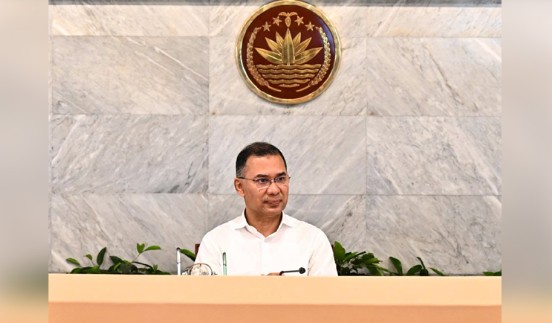
Prime Minister Tarique Rahman has assured local and foreign investors of full government support for the revival of closed and loss-making state-owned factories, saying the government is committed to creating opportunities for investment and industrial growth.
“We want you to move forward and prosper. We will support you in every possible way,” the Prime Minister said while addressing a roadshow for investors at his office in Tejgaon.
The event was jointly organized by the Ministries of Industries, Textiles and Jute, and the Bangladesh Investment Development Authority (BIDA) to attract investment for the revival of non-performing and closed factories across the country.
Addressing business leaders and investors, Tarique Rahman said the primary responsibility of an elected government is to remove obstacles and create pathways for development.
“However, the government alone cannot accomplish this task. The reality is that we cannot solve all problems at once. But it is possible to address them gradually and systematically,” he said.
Referring to the lengthy discussions held during the event, the Prime Minister called for collective efforts to overcome challenges facing the industrial sector.
“There are problems and there are challenges. But we have also realized that if we all work together, we can overcome these difficulties,” he added.
During the roadshow, detailed information on 44 state-owned factories was presented to investors. The presentations included information on factory locations, existing infrastructure, transportation facilities, investment incentives and opportunities for production expansion.
Business representatives later took part in an open discussion session, where they raised nearly 50 questions regarding investment opportunities, policy support and operational issues. Relevant government officials responded to the queries.
Finance and Planning Minister Amir Khosru Mahmud Chowdhury, Commerce, Industries and Textiles and Jute Minister Khandakar Abdul Muktadir, BIDA Executive Chairman Chowdhury Ashik Mahmud Bin Harun, Bangladesh Bank Governor Md Mostaqur Rahman and Prime Minister’s Principal Secretary ABM Abdus Sattar attended the programme.
Senior officials from various ministries and divisions were also present.
Leading business groups, including PRAN-RFL, ACI Limited, Walton, Meghna Group of Industries, Runner, T.K. Group, BRAC, Nabil Group, Square Group, Transcom Group, Akij Group and Lal Teer, participated in the event.
Representatives from several Japanese companies and organizations, including Marubeni Corporation, Toyota Tsusho Corporation, Sumitomo Corporation, MUFG Bank, Mitsui & Co., Sojitz Asia, JETRO Bangladesh and the Embassy of Japan in Bangladesh, also attended the roadshow.
Officials said the initiative is part of the government’s broader effort to attract investment, generate employment and bring underutilized industrial assets back into productive use.

Railways Minister Shaikh Rabiul Alam has announced that direct train service between Dhaka and Pabna will begin in August this year.
Speaking to journalists in Pabna on Saturday, the minister said all necessary preparations are progressing and the required locomotive for the new service is already ready.
“The necessary locomotive for operating the Dhaka-Pabna train service is already ready. A number of new coaches are scheduled to arrive in the country next month and once the coaches are received, direct train service between Pabna and Dhaka will be launched on a priority basis in August,” he said.
Earlier in the day, the minister attended an exchange-of-views meeting with government officials and local representatives at the Pabna Circuit House auditorium.
Rabiul Alam said the government plans to launch train services on two new routes in August. The direct Dhaka-Pabna service will be introduced first, followed by a direct Dhaka-Khulna train service.
He also reiterated the government’s commitment to improving public transport services across the country.
“No particular group will receive preferential treatment. The highest priority will be given to public interest and the expectations of the people,” the minister said.
Highlighting future transport plans, he said an international-standard multi-modal transport system would soon become visible in Bangladesh.
Regarding the relocation of the Kazirhat ferry terminal, Rabiul Alam said the government is committed to implementing the project as quickly as possible, considering both public demand and its wider importance.
Several lawmakers, including Shamsur Rahman Shimul Biswas, Selim Reza Habib and Abu Taleb Mondal, attended the programme along with Deputy Commissioner Aminul Islam, Superintendent of Police Sufi Ullah, senior government officials and local political leaders.

The repeated attempts by India’s Border Security Force (BSF) to push Bangla-speaking Muslims into Bangladesh are creating fresh tensions at a time when both countries need stronger diplomatic engagement and mutual trust.
Reports of men, women and children being forced across the border, often left stranded in no man’s land and exposed to harsh conditions, have raised serious humanitarian concerns. Human rights organizations have criticized these actions, arguing that they violate international human rights standards and established legal procedures.
According to Human Rights Watch (HRW), India has obligations under international conventions to protect the rights of all individuals and prevent discrimination based on race, ethnicity or national origin. The organization has urged Indian authorities to ensure proper verification processes before any deportation takes place.
Concerns have also grown over recent developments in India involving citizenship and voter registration issues. Critics point to the removal of millions of names from voter lists and earlier citizenship verification exercises that left large numbers of Bangla-speaking residents facing uncertainty about their legal status.
Along the border, Border Guard Bangladesh (BGB) has repeatedly intercepted push-in attempts and prevented unauthorized entries. Bangladeshi authorities have maintained that any repatriation process must follow proper verification and established diplomatic procedures.
Bangladesh has consistently stated that individuals claimed to be Bangladeshi citizens should only be accepted after thorough verification and mutual agreement between the two countries. This position reflects international norms governing cross-border repatriation.
Human rights advocates have also called on India to stop unlawful expulsions and work with Bangladeshi authorities to verify citizenship claims through legal and transparent mechanisms. The United Nations has similarly encouraged both countries to address the issue through dialogue and respect for human rights.
According to statements made in parliament, thousands of people have reportedly been pushed into Bangladesh since August 2024, while BGB has managed to prevent or reverse many such attempts.
The situation is particularly concerning because it comes at a time when Bangladesh and India appeared to be moving toward improved relations after a period of political uncertainty. Instead of building confidence, the continued push-in allegations risk creating mistrust and diplomatic friction.
For the sake of regional stability and good neighbourly relations, both countries must address the issue through established diplomatic channels. If concerns exist regarding illegal immigration, those claims should be examined carefully, verified properly and resolved in accordance with international law and humanitarian principles.
Strong bilateral relations cannot be built on actions that create suffering, uncertainty and resentment among vulnerable people. Respect for human dignity, due process and constructive dialogue remains essential for maintaining a healthy and cooperative relationship between Bangladesh and India.
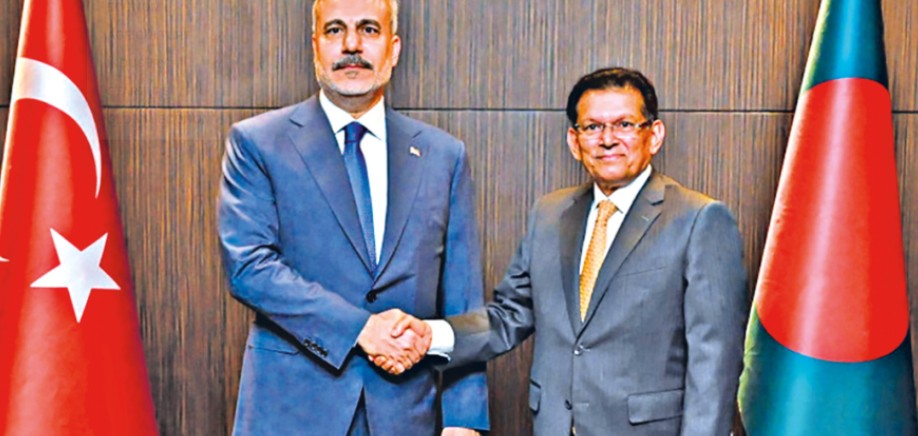
Bangladesh and Türkiye often describe their relationship as brotherly, historic and strategic. The friendship between the two countries is genuine and deeply rooted in history. However, in today’s changing world, warm relations alone are not enough. The challenge now is to transform this historic friendship into a stronger partnership based on trade, investment, defence cooperation, technology, education and people-to-people connections.
The ties between Bengal and the Turkish world go back centuries. Turkish influence reached Bengal in the early thirteenth century and contributed to the development of administration, education and Islamic institutions. The arrival of Hazrat Shah Jalal in Sylhet in 1303 further strengthened spiritual and cultural links that remain important to this day.
These historical connections gained new meaning during Türkiye’s War of Independence. Bengali Muslims closely followed the struggle led by Mustafa Kemal Atatürk. Poets and intellectuals in Bengal saw Türkiye as a symbol of national pride, dignity and progress. As a result, Türkiye continues to enjoy goodwill among many people in Bangladesh.
Modern diplomatic relations began later. Türkiye formally recognized Bangladesh in 1974, and both countries established embassies in the following years. Since then, relations have steadily expanded through high-level visits and cooperation in international forums.
Over the years, leaders from both countries have exchanged visits and strengthened political ties. Bangladesh and Türkiye also became founding members of the Developing-8 (D-8) group, reflecting their shared interest in economic cooperation among developing nations.
Like any relationship, there have been challenges. Diplomatic tensions emerged in 2016 over differing views on war crimes trials in Bangladesh. However, both countries successfully moved beyond those disagreements and restored cooperation. This demonstrated the resilience of the relationship and the willingness of both sides to focus on common interests.
In recent years, Bangladesh and Türkiye have shown a stronger desire to build a more structured partnership. Turkish Foreign Minister Hakan Fidan’s visit to Dhaka in 2026 highlighted efforts to deepen cooperation through regular consultations and stronger institutional mechanisms. Such steps are important because long-term partnerships require practical actions rather than symbolic gestures.
The Rohingya crisis remains one of the most important areas of cooperation. Türkiye has been one of the most visible supporters of Rohingya refugees through humanitarian assistance in Cox’s Bazar. Turkish organizations have provided food, healthcare and other essential services to displaced people.
Bangladesh appreciates this support. However, both countries can do more by working together to keep international attention focused on the crisis and by advocating for the safe, voluntary and dignified return of the Rohingya to Myanmar.
Trade is another area where there is significant room for growth. Bilateral trade currently stands at around one billion dollars, but both countries aim to increase it substantially. Bangladesh mainly exports garments and jute products to Türkiye, while Türkiye exports machinery, cotton, chemicals and industrial materials.
To achieve higher trade volumes, both sides need to improve market access, encourage investment and remove barriers that businesses face. Bangladesh can attract Turkish investment in sectors such as textiles, pharmaceuticals, information technology, renewable energy, shipbuilding and infrastructure.
Defence cooperation is emerging as one of the most promising aspects of the relationship. In recent years, Bangladesh has shown interest in Turkish defence technology, including drones, radar systems and military equipment. Future cooperation should focus not only on procurement but also on training, technology transfer and local manufacturing opportunities.
People-to-people connections are equally important. More Bangladeshi students are studying in Türkiye through scholarship programmes, while tourism and cultural exchanges continue to grow. Expanding academic cooperation, language training, medical partnerships and research collaboration can further strengthen long-term ties.
The broader international environment also makes the partnership more relevant. Türkiye is expanding its role across Asia and the Muslim world, while Bangladesh is emerging as an important economic and strategic player in the Bay of Bengal region. Both countries seek greater economic opportunities, technological advancement and strategic independence.
For this reason, Bangladesh and Türkiye should establish regular mechanisms for cooperation in foreign affairs, defence, trade, education and culture. They should also work together more closely in international forums on issues such as climate change, humanitarian crises, food security and development financing.
Bangladesh can benefit from Türkiye’s industrial and technological experience, while Türkiye can view Bangladesh as an important economic and strategic partner in South Asia.
Bangladesh-Türkiye relations enjoy a unique advantage. They are built on history, strengthened by mutual goodwill and supported by growing strategic interests. The next step is to transform this friendship into a modern partnership that delivers real benefits for both nations.
The future of Bangladesh-Türkiye relations should not depend on shared memories alone. It should be built on practical cooperation, mutual investment and a common vision for growth and development.

Prime Minister Tarique Rahman is set to begin his first overseas tour since assuming office, embarking on a six-day visit to Malaysia and China aimed at strengthening economic cooperation, attracting investment and enhancing regional connectivity.
The Prime Minister will leave for Kuala Lumpur on Sunday afternoon at the invitation of Malaysian Prime Minister Anwar Ibrahim before travelling to China on Monday afternoon at the invitation of Chinese Premier Li Qiang.
Foreign Secretary Asad Alam Siam disclosed details of the visit at a media briefing at the Ministry of Foreign Affairs.
According to the Foreign Secretary, Bangladesh and China are expected to sign between 15 and 17 bilateral instruments during the visit, including 13 Memorandums of Understanding (MoUs), two agreements, one action plan and one protocol.
He said discussions will also cover integrated river management issues, including the Teesta project and the Padma Barrage initiative.
“Bangladesh will discuss integrated river management issues, including Teesta and the Padma Barrage, with China,” he said.
The Foreign Secretary also noted that Bangladesh is considering participation in China’s four major global initiatives, although no final decision has yet been taken.
The Malaysia leg of the tour will focus on expanding trade, labour market cooperation and investment opportunities.
Bangladesh will also seek Malaysia’s support for joining the ASEAN platform.
An MoU on educational cooperation between the two countries is also under consideration.
On June 25, Prime Minister Tarique Rahman is scheduled to hold bilateral talks with Chinese Premier Li Qiang.
The following day, he will meet Chinese President Xi Jinping as part of his official visit to China.
During his stay in China, the Prime Minister will attend the World Economic Forum’s 17th Annual Meeting of the New Champions, commonly known as the Summer Davos Forum.
The forum will be held in the Chinese city of Dalian from June 23 to 25.
The Prime Minister is also expected to hold separate meetings with three world leaders on the sidelines of the forum.
According to the Foreign Secretary, the Prime Minister will travel with a relatively small delegation comprising around 27 to 28 members.
Some delegation members may return after the Malaysia visit, while adjustments to the delegation could be made before the China leg of the tour.
The Prime Minister is scheduled to return to Bangladesh on June 26.
Additional Foreign Secretary AKM Shahidul Karim and other senior officials of the Foreign Ministry were present at the media briefing.
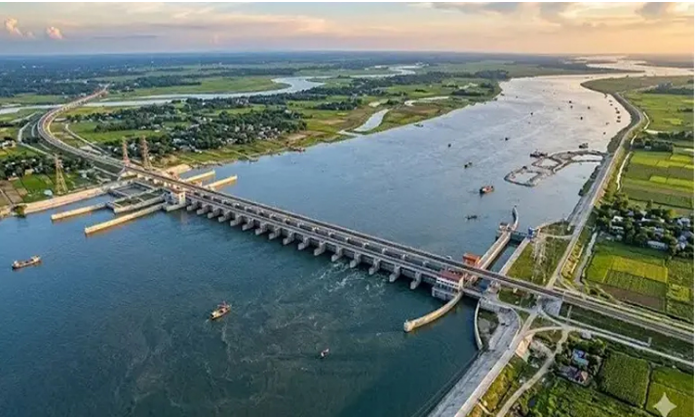
The Padma Barrage Project is emerging as one of Bangladesh’s largest water management and regional development initiatives, with officials and experts expecting it to boost agricultural production, create jobs and transform the economy of the southwestern region.
The government has approved the project at an estimated cost of Tk 34,497 crore to address water shortages, improve river management and revive dying rivers in the region. The project will be financed entirely through domestic resources and is scheduled for completion by June 2033.
State Minister for Water Resources Farhad Hossain Azad said the project is not only about river management but also about improving the lives and livelihoods of millions of people.
“The full potential of the region’s river system could not be utilized due to navigability problems and limited management over the years,” he said.
According to the state minister, the project will improve river management, water conservation, irrigation facilities, riverbank protection and flood control.
He said the initiative is expected to benefit nearly five crore people living in 161 upazilas across 24 districts in the southwestern region.
Major Boost for Agriculture
Agricultural experts believe the project could significantly increase crop production by ensuring a reliable supply of freshwater for irrigation.
More than 200,000 hectares of single-crop land could be converted into double-crop land, while over 100,000 hectares may become suitable for triple-crop cultivation.
The availability of freshwater in coastal and southwestern areas is also expected to improve soil fertility and increase food production.
Researchers estimate that average Boro rice yields could rise from the current 4.5-5 tonnes per hectare to between 6 and 7 tonnes per hectare.
Wheat production could increase from 3.5 tonnes to 4.5 tonnes per hectare, maize production from 8 tonnes to 10-12 tonnes per hectare and potato production from 25 tonnes to 30-35 tonnes per hectare.
Experts estimate that increased agricultural production could directly benefit three to four million people while raising farmers’ incomes by 25 to 40 percent.
Flood Control and River Erosion Protection
The project is also expected to play a major role in addressing river erosion and flood risks in the Padma basin.
According to the Bangladesh Water Development Board (BWDB), hundreds of hectares of agricultural land are lost every year due to erosion along the 341-kilometre stretch of the Padma River within Bangladesh.
Over the past two decades, an estimated 8,000 to 10,000 hectares of farmland have been affected by erosion, while 10,000 to 15,000 families face direct threats from riverbank erosion annually.
Experts say regular dredging, improved flow management and protective structures could reduce erosion rates by 30 to 50 percent.
The project is also expected to provide protection from flooding and river erosion for between two and 2.5 million people while safeguarding farmland, roads, bridges, educational institutions and homesteads.
Improved drainage systems and increased water-carrying capacity could reduce flood risks by 20 to 30 percent, according to water resource specialists.
New Opportunities for Industry and Employment
Officials believe the project will stimulate economic activity across the region through increased agricultural production and agro-based industries.
Experts say the improved availability of water and agricultural raw materials could support the establishment of more than 1,000 small and medium-sized agro-based enterprises.
According to economic analysts, each agro-based enterprise generates employment for 20 to 30 people on average.
Based on these estimates, project-related investments could create between 100,000 and 200,000 new jobs in the long term.
Increased agricultural output is also expected to inject additional income into local economies, benefiting three to four million people directly and indirectly.
Long-Term Regional Development
State Minister for Cultural Affairs and Rajbari lawmaker Ali Newaz Mahmud Khaiyam said people across the southwestern region are eagerly awaiting implementation of the project.
He described the initiative as a long-cherished demand of the region and expressed optimism about its economic impact.
Water resource experts believe the Padma Barrage Project has the potential to become a transformative development initiative by addressing water scarcity, improving agricultural productivity, reducing flood and erosion risks and creating new opportunities for employment and industrial growth.
Officials say the project could play a key role in narrowing regional disparities while strengthening the national economy through improved water management and sustainable development.
Population Reality
Muslims in India constitute one of the largest Muslim populations in the world. According to India’s 2011 official census, Muslims made up 15% of the country’s population, which today is estimated at more than 220-230 million people.
In contrast, Hindus in Bangladesh make up around 7% of the population, numbering approximately 14-15 million people.
In other words, the Muslim population of India is larger than the entire population of Bangladesh. Therefore, their social, political, and cultural presence would naturally be expected to be much greater.
Religious Freedom and Religious Practice
In Bangladesh, Hindus openly celebrate Durga Puja, Janmashtami, Rath Yatra, Kali Puja, Saraswati Puja and other religious festivals. These events receive security support from the state and administration and are widely covered at the national level.
Muslims in India also freely perform prayers, celebrate Eid, undertake Hajj, and operate madrasa education and religious activities. However, in recent years, controversies over the hijab, mosque-temple disputes, objections to the call to prayer (Azan), cow-related issues, and debates centered around religious identity have created concerns within the Muslim community.
Representation and Participation in the Mainstream
One important indicator of the actual condition of a minority community is its participation in the mainstream institutions of the state and society.
Although Hindus constitute around 7-8% of Bangladesh’s population, they have a significant presence in education, medicine, engineering, law, business, universities, the civil service, judiciary, and police. Various studies suggest that minority representation in some levels of the civil service, judiciary, and police ranges between 12-15%, which is nearly double their share of the population. In some professions, their participation is estimated to be as high as 20-25%.
Many secretaries, judges, police officers, doctors, teachers, industrialists, and cultural figures in Bangladesh come from the Hindu community.
On the other hand, although Muslims constitute about 15% of India’s population, their representation in the administration, police, judiciary, and other policy-making institutions has long been lower than their population share. Various studies have found that Muslim representation in the IAS, IPS, and higher government services remains around 3-5%, which is significantly lower than their population proportion—roughly one-fifth of what it would be if representation matched population size.
As a result, Hindus in Bangladesh appear to be comparatively overrepresented in many state and professional sectors relative to their population share, while Muslims in India remain underrepresented in several key state institutions despite being a much larger community.
Security of Places of Worship and Religious Sites
The demolition of the Babri Mosque in India was not merely the destruction of a building; it was a historic turning point that had a long-term impact on the sense of security among Indian Muslims. Since then, legal and political disputes surrounding several mosques, along with cases of mosque demolition or eviction, have attracted international attention.
In Bangladesh, incidents of attacks, vandalism, and arson targeting temples have occurred and are certainly concerning. However, there is no comparable example of a major historic temple being removed or demolished with direct state or court backing. In most cases, the authorities have stated that action would be taken against those responsible.
Citizenship and the State’s Approach
This is perhaps the most significant difference between the two situations.
The controversy surrounding the CAA and NRC in India emerged largely because many Muslims feared that citizenship verification processes could place them at greater risk. Many analysts viewed this as a form of structural pressure on Muslims. The nationwide protests, including the famous Shaheen Bagh movement, were fundamentally driven by concerns over citizenship and equal rights.
In Bangladesh, there has been no comparable state-level debate regarding the citizenship or constitutional status of Hindus. A Hindu citizen does not face the prospect of losing recognition as a Bangladeshi because of his or her religious identity.
Social Behavior and Public Space
Over the last decade, international media have documented numerous incidents in India involving Muslims being forced to chant “Jai Shri Ram,” being harassed over allegations of possessing or consuming beef, or being targeted because of their religious identity. These incidents do not represent the behavior of all Indians, but they are real and documented occurrences.
In Bangladesh, incidents of attacks, intimidation, and harassment against Hindus have occurred. However, there is no widespread, organized national pattern of forcing Hindus to recite Islamic declarations of faith, compelling religious conversion, or systematically forcing religious slogans upon them.
Protests, Assemblies, and Political Activism
In Bangladesh, Hindu groups have organized public rallies, human chains, demonstrations, and protests on issues related to minority rights, security, representation, and specific incidents. Such events generally take place openly.
Muslims in India also organize protests. However, the experience of the anti-CAA and anti-NRC movements demonstrated that large-scale Muslim-centered political protests often face greater political controversy, security scrutiny, and state response.
Media, Rumors, and Narrative Warfare
When attacks against Hindus occur in Bangladesh, a section of the Indian media often presents them as representative of the overall situation in Bangladesh.
Conversely, incidents involving discrimination or actions against Muslims in India are frequently explained as matters of law enforcement, removal of illegal structures, or local disputes, with less attention given to broader patterns and trends.
As a result, both countries experience not only real incidents but also competing narratives and information battles.

Bangladesh’s healthcare sector is set for a major transformation as the government moves ahead with a wide-ranging reform agenda that includes a record health budget, digital health services, large-scale recruitment and the expansion of specialized hospitals across the country.
The proposed FY2026-27 national budget and a series of recent government initiatives outline a comprehensive strategy aimed at building a more accessible, preventive and technology-driven healthcare system while reducing the financial burden on patients.
Record Health Budget
At the heart of the reform programme is a significant increase in healthcare spending.
The government has proposed an allocation of Tk 69,409 crore for the health sector in FY2026-27, almost double the revised allocation of Tk 35,477 crore in the outgoing fiscal year.
The allocation represents approximately 1.01 percent of the country’s Gross Domestic Product (GDP) and reflects the government’s commitment to gradually increasing health expenditure.
Presenting the budget in Parliament, Finance Minister Amir Khosru Mahmud Chowdhury described healthcare investment as a key pillar of human resource development and national prosperity.
Shift Toward Preventive Healthcare
A major feature of the government’s healthcare strategy is a shift from treatment-focused healthcare toward prevention, early diagnosis and community-based services.
Under the plan, modern primary healthcare units will gradually be established in every union and urban ward across the country.
These facilities will be supported by community clinics and trained health workers providing preventive healthcare, maternal and child health services, nutrition support and basic treatment at the grassroots level.
Officials expect the initiative to reduce pressure on hospitals, improve access to healthcare in underserved areas and lower out-of-pocket healthcare expenses.
Recruitment of Doctors and Health Workers
Workforce expansion has emerged as another key priority.
The government has announced the recruitment of 5,000 MBBS doctors to fill vacant positions in hospitals and healthcare institutions.
In addition, plans are underway to recruit 100,000 health workers across the country, with women expected to make up around 80 percent of the workforce.
The expanded workforce is expected to strengthen maternal and child healthcare services, disease prevention programmes and community-based healthcare delivery.
Authorities have also created additional nursing and midwifery positions to support the expansion.
Digital Health Card Programme
Digital transformation is set to play a central role in the future healthcare system.
Under the government’s universal health coverage framework, citizens will gradually receive digital Health Cards linked to an Integrated Patient Management and Referral System.
The platform will allow healthcare providers to access treatment histories, diagnostic reports and prescriptions from any healthcare facility connected to the system.
Health experts believe the initiative will improve continuity of care, reduce duplication of medical procedures and strengthen accountability throughout the healthcare network.
Medical Education Reforms
The government’s reform agenda also includes major changes to medical education and human resource development.
A modern competency-based MBBS curriculum incorporating artificial intelligence and advanced clinical training methods is expected to be introduced by 2030.
Officials say the reforms are designed to prepare future physicians for emerging healthcare challenges while aligning medical education with international standards.
The government also plans to introduce student loan and bank loan facilities for medical and dental students and provide financial support for talented students pursuing higher education abroad.
At the same time, academic buildings, laboratories, libraries, dormitories and training facilities at government medical colleges are set to be upgraded.
Lower Treatment Costs
The proposed budget includes measures aimed at reducing treatment costs for patients suffering from chronic diseases.
The government has withdrawn taxes and VAT on heart stents, dialysis filters and several other critical medical products.
Officials estimate that the price of heart stents could decrease by up to Tk 20,000, while dialysis costs may fall by around Tk 800 per session.
Healthcare analysts say these measures could provide significant relief to thousands of patients and help reduce out-of-pocket medical expenses.
Five New Children’s Hospitals
One of the most significant ongoing initiatives is the operationalisation of five specialized 200-bed children’s hospitals in Khulna, Barishal, Rangpur, Rajshahi and Cumilla.
According to the Health Ministry, the hospitals are expected to begin operations within the next six months.
The facilities will feature intensive care units (ICUs), central air-conditioning systems and advanced diagnostic services.
Officials believe the hospitals will significantly improve pediatric healthcare services outside Dhaka and reduce the need for families to travel to the capital for specialized treatment.
The procurement of furniture and medical equipment has largely been completed and recruitment activities are underway.
Health and Family Welfare Minister Sardar Md Sakhawat Husain recently said the hospitals would provide quality specialized care closer to patients’ homes.
Building a More Accessible Healthcare System
The government’s healthcare agenda combines increased investment, workforce expansion, digital transformation, medical education reforms, lower treatment costs and improved healthcare infrastructure.
Officials hope these initiatives will create a healthcare system that is more equitable, efficient and responsive to citizens’ needs while ensuring that quality healthcare services become increasingly accessible regardless of location or income level.