

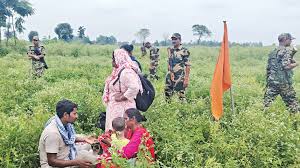
The buses come at night. Hands bound, eyes covered, men and women and children are walked to the edge of Indian territory and shoved across. No paperwork. No process. No accountability. Just bodies, deposited on Bangladeshi soil, and a border fence closing behind them.
This is what India’s Border Security Force has been doing along Bangladesh’s frontier and doing with greater frequency since the BJP swept West Bengal’s assembly elections. It is called a push-in. It is illegal under international law. And Delhi is not only aware of it; Delhi is directing it.
The evidence is not circumstantial. On June 5, India’s foreign ministry spokesman Randhir Jaiswal told reporters that all foreign nationals on Indian soil, Bangladeshis included, would be handled according to Indian law. That is a government spokesman, at a formal briefing, providing diplomatic cover for what its border force is doing in the dark. The BSF does not freelance operations of this scale. Someone gave the order.
What makes this particularly cynical is the timing. Bangladesh’s current government has extended genuine goodwill toward New Delhi since coming to power. Visa restrictions have eased. The temperature between the two capitals had been falling. India’s response has been to escalate push-ins.
This is not neighborly conduct. It is coercion.
The scale of it demands context. Last year, India pushed more than a thousand people across Bangladesh’s borders in a single wave; some blindfolded, some bound. Hidden among them were Rohingya refugees holding valid UNHCR registration cards. People India had no legal or moral authority to expel anywhere, let alone into a country already hosting over a million displaced Rohingya. No formal complaint was lodged with the UN refugee agency. The silence was noticed. The silence was noticed.
This time, Bangladesh’s Border Guard is holding the line. Local communities are standing night watch. Ansar and VDP units have reinforced frontier positions. Every documented push-in attempt in recent weeks has been turned back. The confrontations, some of them captured on video showing BGB officers facing down BSF personnel at the zero line, reflect something the previous government never demonstrated: a willingness to say no.
But resistance at the wire is not enough. Push-ins are not a border management problem that BGB can resolve alone. They are a political instrument, deployed by a government using its own Muslim minority population as a demographic weapon; labelling Indian Muslims as illegal Bangladeshis to satisfy a Hindu nationalist voter base, then literally expelling them across a sovereign border. The logic is as crude as it is dangerous. And it will not stop until Dhaka makes the cost of continuing it higher than the cost of stopping.
History offers a clear guide. In 2003, India attempted a mass push-in at Lalmonirhat. Bangladesh refused entry. The displaced people sat in no-man’s land for nearly two months. When Bangladesh’s foreign minister finally travelled to Delhi for talks, the people at the zero-line vanished before the first meeting began. India understood the message. It always does, when the message is delivered without apology.
Prime Minister Tarique Rahman’s government must deliver that message now; not through back channels, not through West Bengal’s state government, not at the level of border commanders. State to state. Dhaka to Delhi. If a direct call between Prime Minister Rahman and Prime Minister Modi is what it takes, then that call should happen.
The demand is not complicated. Stop the push-ins. Provide guarantees they will not resume. And understand that Bangladesh, unlike its previous government, will not absorb this in silence.
For fifteen years, the Sheikh Hasina administration turned strategic submission to India into something approaching official policy and received, in exchange, deepening dependency and diminishing respect. That chapter is closed. Bangladesh is a sovereign country with a government that was voted in, not installed, and it does not need New Delhi’s permission to defend its own borders.
India is a large neighbor. It is not a supervisor. The sooner that distinction is understood on both sides of the frontier, the better the relationship between these two countries will actually become.
India’s Ugly Border Habit Returns
66
