

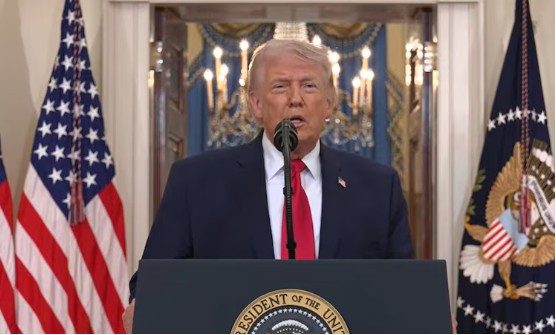
The United States and Iran agreed to a two-week ceasefire on Tuesday, just an hour before a deadline set by President Donald Trump for possible military escalation.
Under the agreement, Iran will temporarily reopen the Strait of Hormuz, a key passage for around one-fifth of the world’s oil supply.
After more than a month of intense attacks by the United States and Israel, Iran described the ceasefire as a victory and confirmed it would enter talks with Washington starting Friday in Pakistan.
Trump said he agreed to pause military action after discussions with Pakistan’s leadership, who urged restraint.
Iranian Foreign Minister Abbas Araghchi confirmed that safe passage for ships through the Strait of Hormuz would be ensured for two weeks, adding that Iran would halt its defensive operations if attacks against it stop.
Pakistan’s Prime Minister Shehbaz Sharif said the ceasefire would take effect immediately and indicated it could extend to other conflict areas, including Lebanon.
There was no immediate response from Israel. Its ongoing military operations in Lebanon have reportedly caused over 1,500 deaths, according to local authorities.
Markets react
Following the announcement, global oil prices dropped sharply by more than 17 percent, while stock markets rose in early trading across Asia.
Trump said the US is close to reaching a long-term deal with Iran, noting that Tehran has proposed a 10-point plan. However, Iran’s publicly stated demands include lifting US sanctions, maintaining control over the Strait of Hormuz and removing US forces from the region.
Escalation before truce
Before the ceasefire took effect, US and Israeli forces carried out strikes on key infrastructure. Israeli Prime Minister Benjamin Netanyahu said railways and bridges linked to Iran’s military were targeted.
Iran reported attacks on infrastructure including bridges near Qom, with casualties confirmed.
In response, Iran had launched missile and drone strikes targeting Gulf countries, affecting stability in states like Qatar, Bahrain, Saudi Arabia and the United Arab Emirates.
Global concern
The rising tensions drew international criticism. Pope Leo XIV called the threats against Iran “unacceptable.”
The conflict, which began on February 28, has disrupted global energy markets and raised fears of a wider regional war.
If the ceasefire holds, it could pave the way for a broader peace agreement, although key disagreements between the two sides remain unresolved.
