


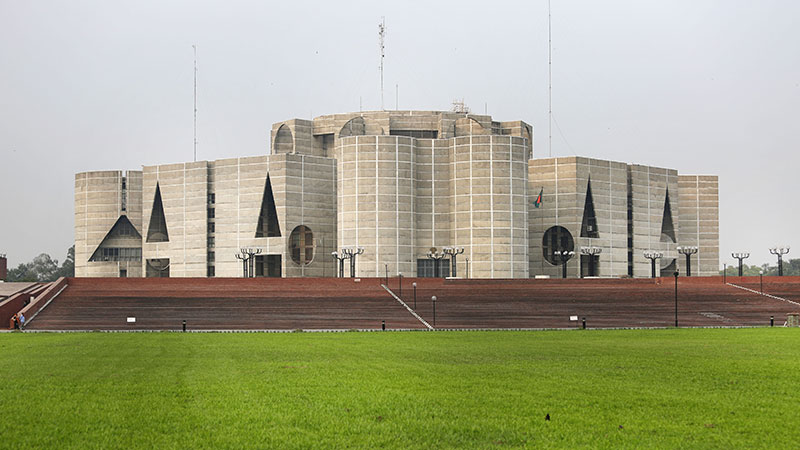
At least 16 countries have accepted Bangladesh’s invitation to send a total of 57 election observers for the country’s 13th general election and the referendum on the July Charter, both scheduled to be held concurrently on February 12.
These observers will join several hundred international observers from the European Union, the Commonwealth, and multiple global organisations promoting democratic governance and human rights, said the CA Press Wing yesterday.
Among bilateral delegations, Malaysia will send the largest contingent with 14 observers, followed by Türkiye, which is dispatching 12 observers.
The Malaysian delegation will be led by Dato Sri Ramlan Bin Dato Harun, chairman of the Election Commission of Malaysia, while the Turkish delegation, comprising several members of parliament, will be led by Mehmet Vakur Erkul, a former Turkish ambassador to Bangladesh.
Other countries that have confirmed the deployment of election observers include Indonesia (5), Japan (4), Pakistan (3), Bhutan (2), Maldives (2), Sri Lanka (1), the Philippines (2), Jordan (2), Iran (1), Georgia (2), Russia (2), Kyrgyzstan (2), Uzbekistan (1), and South Africa (2).
Most notable observers from these countries include Mohammad Jalal Sikandar Sultan, chief election commissioner of Pakistan, and Deki Pema, chief election commissioner of Bhutan.
“We have received confirmation of close to 400 election observers, so far, and we expect a few more countries to confirm the visits of their delegates very soon,” said Lamiya Morshed, senior secretary and SDG coordinator, who is supporting the coordination of election observers.
Former President of Ghana Nana Akufo-Addo will lead the 14-member Commonwealth Observer Group, which includes Jeffrey Salim Waheed, former deputy minister of the Ministry of Foreign Affairs of the Maldives; David John Francis, former foreign minister of Sierra Leone; and Ras Adiba Mohd Radzi, former senator of Malaysia.
The European Union Election Observation Mission (EOM) will be led by Ivars Ijabs, chief observer and member of the European Parliament from Latvia.
The mission will also include at least seven other Members of the European Parliament– Lukas Mandl (Austria), Lor nt Vincze (Romania), Tom s Zdechovsky (Czechia), Leire Paj-n (Spain), Serban Dimitrie Sturdza (Romania), Michael McNamara (Ireland), and Catarina Vieira (Netherlands).
Nearly 2,000 candidates, including representatives from more than 50 political parties and independent contenders, are vying for 300 parliamentary seats.
The election will be held simultaneously with a referendum on the July reform charter.
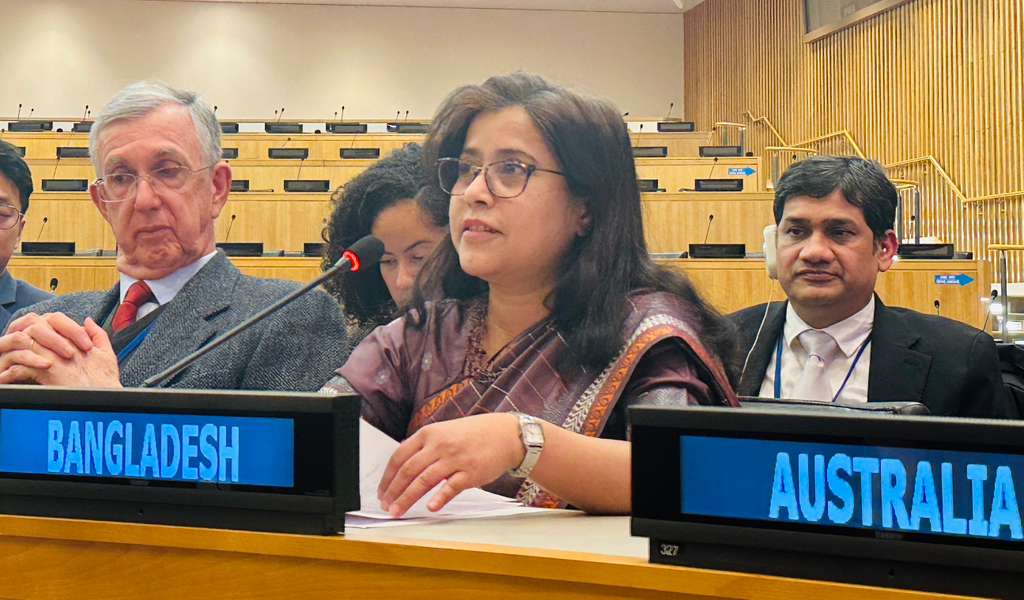
Bangladesh has been elected as the Vice-Chair of the UN Peacebuilding Commission (PBC) for the year 2026.
The election of the five-member bureau of the PBC was held at the UN Headquarters in New York on Thursday, according to a message received here this morning.
Bangladesh assumed charge as Vice-Chair during the first PBC meeting of its 20th session after a brief ceremony.
In a statement, the Bangladesh delegation thanked members of the Commission for reposing their trust and confidence in Bangladesh for this important responsibility and reiterated its commitment to the UN’s peacebuilding efforts and activities as well as its future plans of action.
The members of the Commission during its first meeting of the 20th session elected Morocco as Chair while Germany, Brazil, Croatia and Bangladesh were elected as Vice-Chairs.
On this occasion, the President of the UN General Assembly and Chef de Cabinet, on behalf of the Secretary-General were present and delivered statements emphasizing the role of the PBC.
The Peacebuilding Commission is an intergovernmental advisory body that supports peace efforts in conflict-affected countries.
The Commission is composed of 31 member states, elected from the General Assembly, the Security Council, the Economic and Social Council and the leading troop- and financial- contributing countries to the United Nations system.
Bangladesh has been a member of the Commission since its inception in 2005 and had earlier served the Commission as chair in 2012 and 2022 as vice-chair in 2013 and 2023.
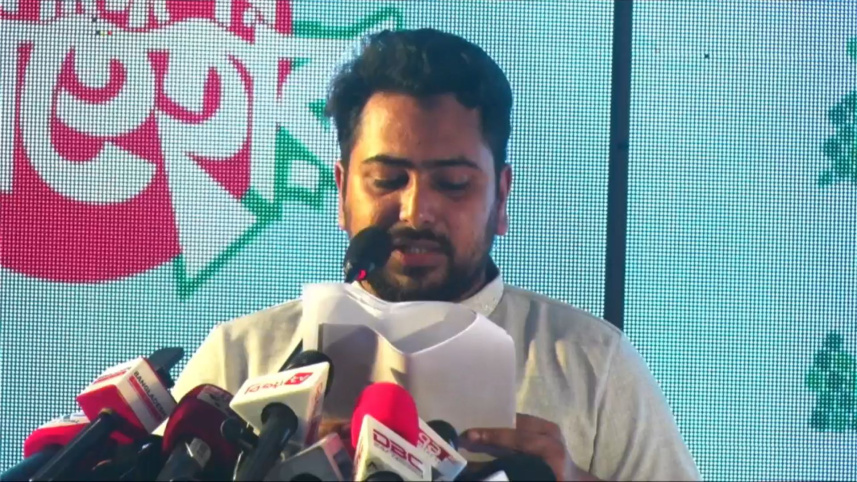
The National Citizen Party (NCP) has announced a 36-point election manifesto, including setting the minimum age to vote as 16 and a minimum wage of Tk 100 per hour.
NCP Convener Nahid Islam unveiled the manifesto in Dhaka’s Lakeshore Hotel this afternoon.
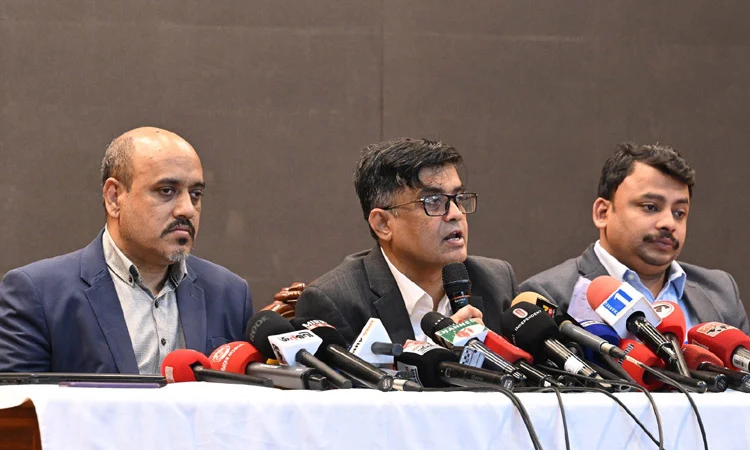
Chief Adviser’s Press Secretary Shafiqul Alam today expressed hope that the security situation would improve with the gradual deployment of security forces ahead of the elections.
“We hope the coming days will be much better. With the gradual deployment of security forces, the situation will further improve, In Sha Allah,” he said, responding to a question while briefing journalists at the Foreign Service Academy here this afternoon.
Chief Adviser’s Deputy Press Secretary Mohammad Abul Kalam Azad Majumder, Senior Assistant Press Secretary Foyez Ahammad and Assistant Press Secretary Shuchismita Tithi were present at the briefing.
The briefing was arranged to share the outcomes of the Council of Advisers’ meeting held with Chief Adviser Prof Muhammad Yunus in the chair.
Replying to another question, Shafiqul Alam said that political parties have so far shown restraint and tolerance while carrying out election campaigns.
Noting that according to police data, so far four people have been killed until today since the formal election campaign started on January 22, he said, “If you compare this with previous elections, though it is tough to reach conclusion as two weeks still left to the polls, you will see that 115 people were killed before elections on January 5 in 2014”.
“In that reality, we believe that there is still a sufficient level of tolerance among the political parties. They are campaigning in a good manner and they are abiding by electoral laws and following the code of conduct,” the press secretary said.
He, however, acknowledged that “a few isolated incidents” have taken place.
Speaking about the violent incident in Sherpur on Wednesday, where a Jamaat-e-Islami leader was killed, Deputy Press Secretary Mohammad Abul Kalam Azad Majumder said the government has already issued a statement condemning the incident.
At the same time, he said, the police administration was instructed to take immediate action, investigate the incident thoroughly, identify those responsible, and arrest them as quickly as possible.
Noting that the law enforcement agencies are currently analyzing video footage of the incident, along with available information and witness testimony, to accurately identify those who are genuinely responsible, Azad said once properly identified, the perpetrators will be arrested and brought to justice.
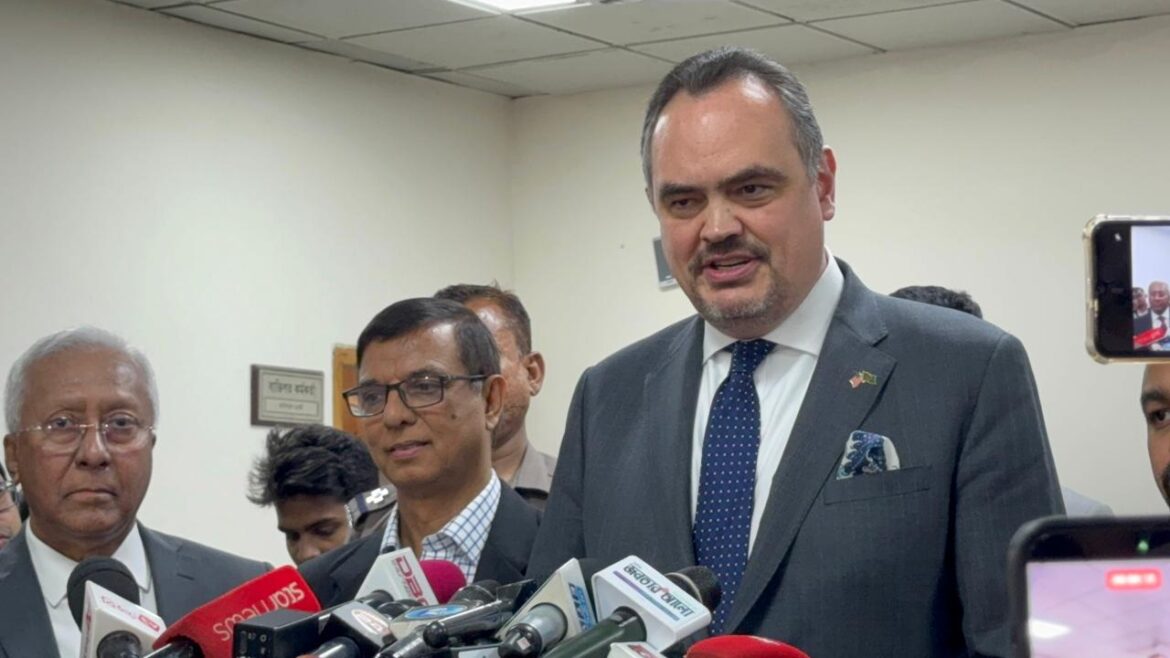
US Ambassador to Bangladesh Brent T. Christensen today said that the United States is ready to work with any government elected in accordance with the will of the Bangladeshi people, reiterating that Washington will not take sides in the country’s upcoming national elections.
The ambassador told journalists after a courtesy meeting with Chief Election Commissioner (CEC) A M M Nasir Uddin at the Election Commission building at Agargaon.
Only the people of Bangladesh have the right to determine the outcome of their elections, he said, adding that the United States would support and cooperate with whatever decision the Bangladeshi electorate makes.
Referring to his meeting with the CEC, the envoy said discussions focused on government’s preparations for the upcoming 13th Jatiya Sangsad election and the referendum.
Christensen also mentioned his recent meeting with the Chief Adviser, saying that he was encouraged by assurances that Bangladesh would see a festive, inclusive and participatory election environment.
“I am very optimistic about the upcoming elections,” he said, adding that he looked forward to observing both the election process and its outcome.
“I hope this will truly be a festive election where all voters can freely express their opinions, and I believe the elections will be conducted very successfully,” he added.
Election Commissioners Abdul Rahmanel Masud, Begum Tahmida Ahmed, Md Anwarul Islam Sarkar, and Brig. Gen. (retd.) Abdul Fazlul M Sanaullah and Election Commission Secretary Akhter Ahmed were present at the meeting.
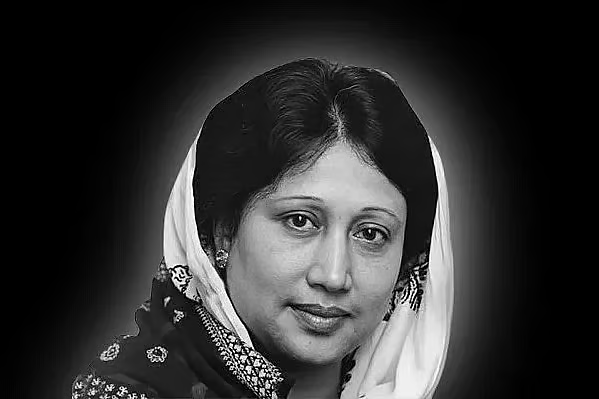
Both Houses of Indian Parliament are scheduled to hold an obituary reference to former Bangladesh Prime Minister Khaleda Zia on the first day of the Budget Session 2026-27.
Khaleda Zia had passed away on the morning of 30 December, 2025, while she was undergoing treatment at Evercare Hospital in Dhaka at the age of 80.
Following the commencement of the session with the President addressing the joint sitting of both the Houses, according to the List of Business in Rajya Sabha, the House will hold obituary references to the passing away of former MPs L Ganesan and Suresh Kalmadi
The Lower House will include the obituary references to former MPs Shalini Patil, Bhanu Prakash Mirdha, Satyendra Nath Brohmo Chaudhury, Suresh Kalmadi and Kabindra Purkayastha.
In Rajya Sabha, the Secretary General is likely to lay on the Table a statement showing the Bills passed by the Houses of Parliament during the 269th Session of the Rajya Sabha and assented to by the President.
The Budget Session of Parliament will commence today with President Droupadi Murmu addressing the joint sitting of the two Houses.
The first part of the session will mainly be devoted to the financial business relating to the Union Budget for 2026-27 and discussion on the Motion of Thanks on the President’s Address.
Essential legislative and other business is expected to be taken up mainly during the second part of the Session.
Meanwhile, the Economic Survey of India will be presented on January 29, followed by the Union Budget 2026-27, to be presented on 1 February.
The Economic Survey document, prepared by the Economic Division of the Department of Economic Affairs in the Ministry of Finance and formulated under the supervision of the chief economic adviser, provides insights into the state of the economy and various indicators for 2025-26 (April-March), as well as an outlook for the next fiscal. (ANI)
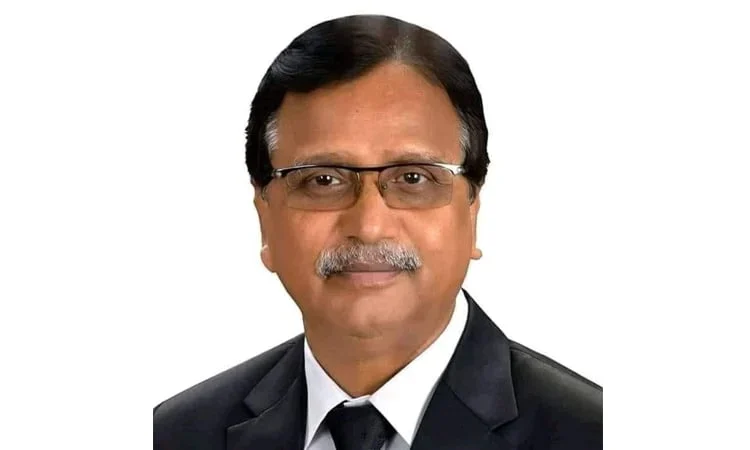
Adviser to the BNP Chairman and Chief Coordinator of the BNP Election Management Committee for Dhaka-17 constituency Abdus Salam today said that the people’s fate will witness significant change if Tarique Rahman becomes the Prime Minister.
Salam made the remarks while addressing a street rally in Dhaka-17 as part of the election campaign for Tarique Rahman.
Referring to Tarique Rahman, he said the BNP chairman has sought prayers from the local community and encouraged them to support him in the upcoming polls.
Salam added that Tarique Rahman had intended to visit the area and address the rally in person, security concerns due to large crowds made it impossible.
“The local residents may not yet fully realize how much their lives could improve if Tarique Rahman becomes Prime Minister. Just as his father and mother worked for the welfare of the poor, he too, Insha’Allah, will continue their mission,” Salam said.
He urged party activists to plan carefully to ensure residents can live peacefully and happily, emphasizing that no words or actions should harm or disturb the people.
Salam also stressed the importance of maintaining party discipline and unity while working for community welfare, noting that all efforts should avoid causing hardship or anger among the residents.
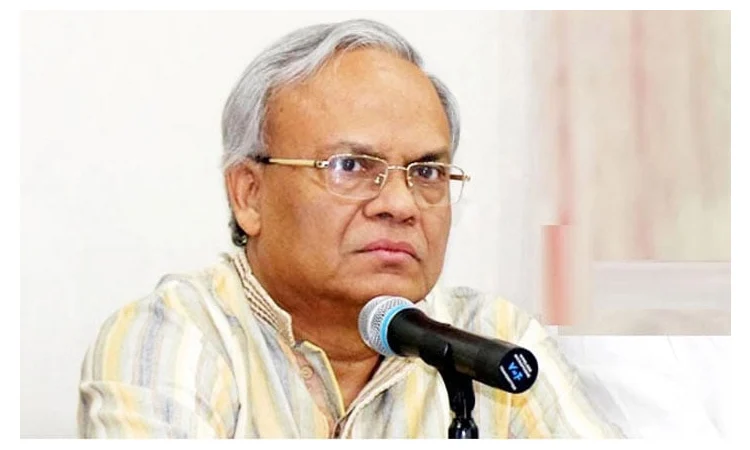
Bangladesh Nationalist Party (BNP) Senior Joint Secretary General Ruhul Kabir Rizvi today said the party’s newly launched election campaign song is designed to resonate with the people and energize the democratic movement ahead of the national polls.
He made the remarks at the launching ceremony of the viral campaign song ‘Dhaner Shish’ held at Banani Club in Dhaka.
Rizvi emphasized the longstanding role of cultural activists in political movements. “History shows that when culture takes the lead, movements can move toward victory,” he said.
Referring to protest songs created during authoritarian periods, he noted that such works inspired people across Bangladesh and even reached West Bengal, serving as a powerful tool of resistance.
“Many artists faced persecution for performing these songs, but their impact was so profound that they helped challenge oppressive systems,” he added.
The BNP leader praised the creators of the campaign song, including music director Ethun Babu and singer Mousumi, saying their efforts had captured the emotion associated with the ‘Dhaner Shish’ symbol.
Highlighting the significance of literature, music, and poetry in social transformation, Rizvi cited cultural figures from Kazi Nazrul Islam to Salil Chowdhury, who historically inspired mass movements, including the 2024 uprising.
He expressed hope that the song would appeal to voters, reinforce the democratic movement, and encourage people to exercise their voting rights.
Music director Ethun Babu, singers Dilruba and Rizia Parvin, actor Shiba Shanu, and other cultural figures attended the event.
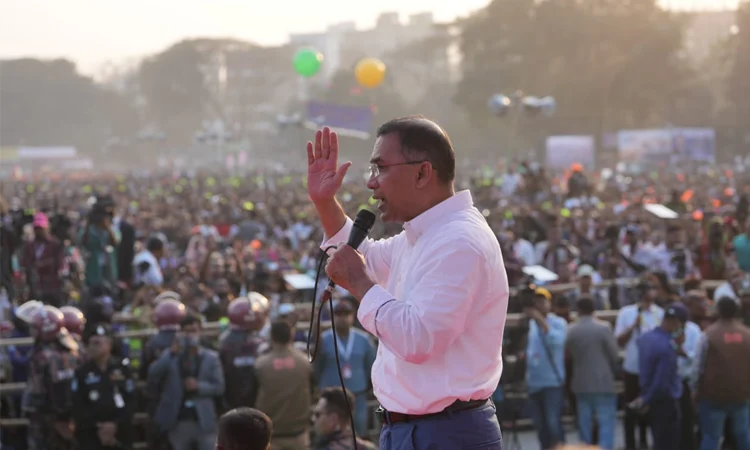
BNP Chairman Tarique Rahman today urged all to stay united like in 1971 to ensure the BNP’s victory in the upcoming 13th Jatiya Sangsad polls slated for February 12.
“To build the desired Bangladesh, there will be only slogan and that is-we will work, we will build the nation, Bangladesh above all, he said adding that everyone must remember that Bangladesh will only progress if we remain united.”
The BNP Chairman made this call at an election rally at the Mymensingh Circuit House ground this afternoon.
Tariqe Rahman said, “There was a war in 1971. The youth, you have read about it in books. The elders, those of our age, have seen and know that the country’s independence was achieved in that war and many people were martyred in that war”.
Subsequently, on August 5, 2024, the students, people, and individuals from all professions of this country protected that independence, he added.
He said that due to the absence of voting rights, fundamental problems in different regions of the country have remained unresolved for a long time.
Although there is a need for reforms in river erosion control, employment generation, bridges and culverts, schools and colleges, roads, and healthcare infrastructure, no effective initiatives have been seen in these areas over the past decade, he said.
“The reason was only one, there was no voting right. So-called midnight elections did not bring real representatives of the people,” he remarked.
The BNP Chairman further said that because voting rights were taken away, employment opportunities for the youth were not created, women’s safety was not ensured, and necessary manpower and medicine were not supplied in the education and health sectors.
“A guardian wants their child to receive a good education and get employment opportunities. Young people want jobs and safe businesses. When people fall ill, they want timely treatment, these are the basic needs of the people,” said Tarique Rahman.
Referring to the Mymensingh region as an agriculture-based area, he said there are huge potentials in agriculture and fisheries, including fish fry cultivation.
“If BNP forms the government, plans will be implemented to increase employment, including exporting fish fry abroad,” he added.
On introduction of a ‘Farmer Card’, he said fertilizers, seeds, and pesticides will be delivered directly to farmers through the cards.
Speaking about women’s empowerment, he said that during the time of Khaleda Zia, free education for girls from class one to class twelve was introduced.
“Continuing that legacy, if BNP forms the government, a ‘Family Card’ will be introduced to support housewives and poor families”.
Regarding the health sector, Tarique Rahman said that district and upazila hospitals will be expanded and village-based healthcare services will be strengthened.
“Arrangements will be made so that mothers and children can receive primary treatment at home,” he said.
On the issue of drugs, Tarique Rahman said the main solution is employment. By making young people skilled through vocational and IT training, they will get job opportunities at home and abroad and stay away from drugs.
Besides, the BNP Chairperson introduced 23 party candidates from Mymensingh, Jamalpur, Netrokona, and Sherpur holding the Sheaf of Paddy.
“I entrust you with the responsibility, please give them the opportunity to serve you by making them victorious,” he told the gathering.
As part of the nationwide election campaign, Tarique Rahman arrived in Mymensingh by road in the afternoon.
Leaders and activists from the four districts of Mymensingh, Jamalpur, Netrokona, and Sherpur gathered at the vast Circuit House ground.
Presided over by convener of the Southern District and candidate for Mymensingh-5 constituency Zakir Hossain Babul, City BNP Member Secretary Rukonuzzaman Sarkar and Joint Convener of the Northern District Motahar Hossain conducted the rally.