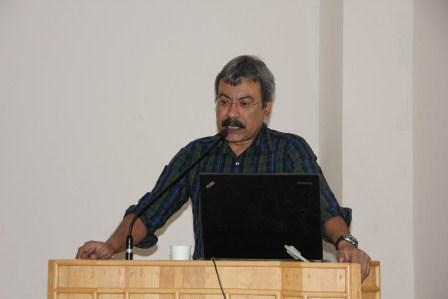

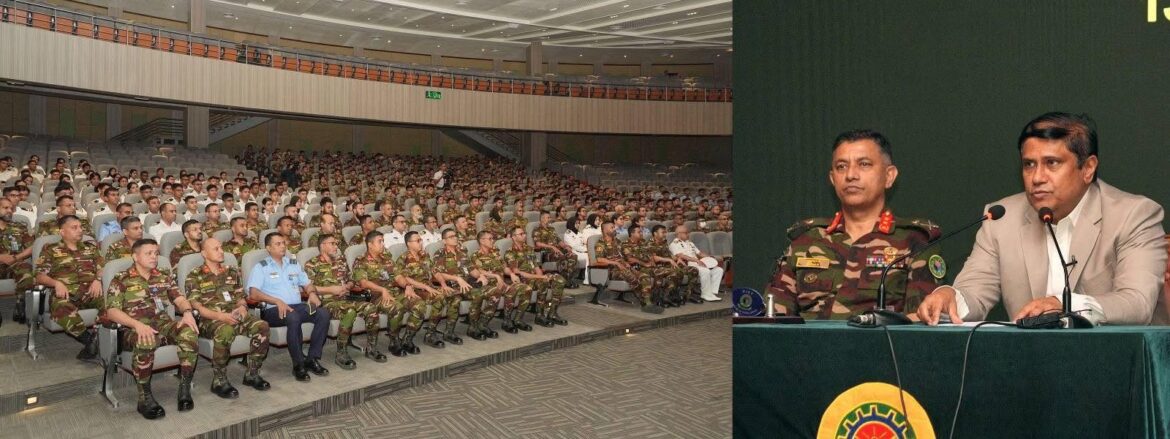
Prime Minister Tarique Rahman’s Defence Advisor, Brigadier General (Retd.) Dr. A.K.M. Shamsul Islam, PSC, delivered a significant address at the Military Institute of Science and Technology (MIST) in Mirpur, urging young military officers to play a proactive role in defending Bangladesh in the modern era.
In his speech titled “Defending Bangladesh in the Current Age – Role of Young Officers”, the Defence Advisor emphasised patriotism, the changing character of warfare, the importance of preserving national history, and the urgent need for technological self-reliance.
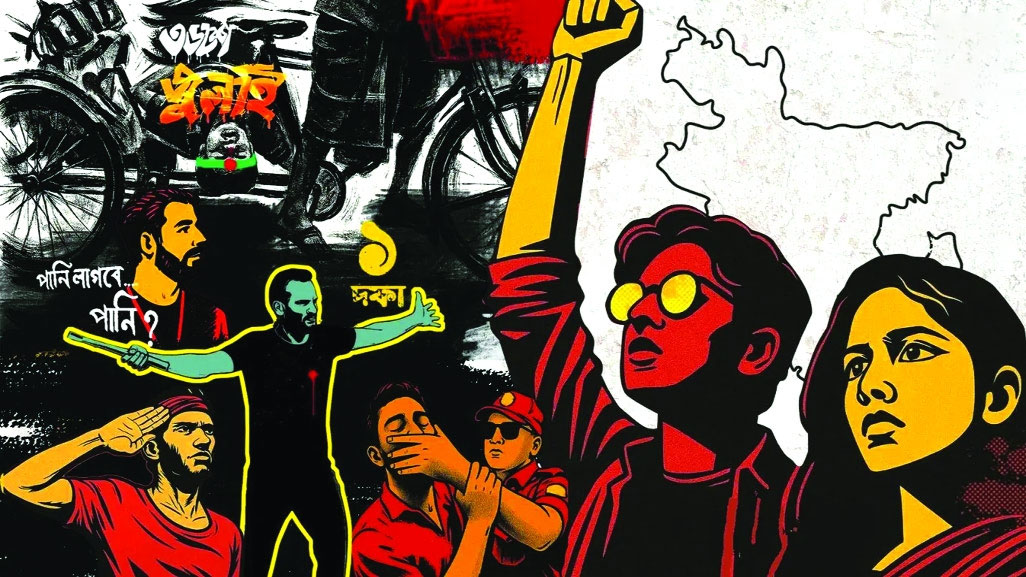
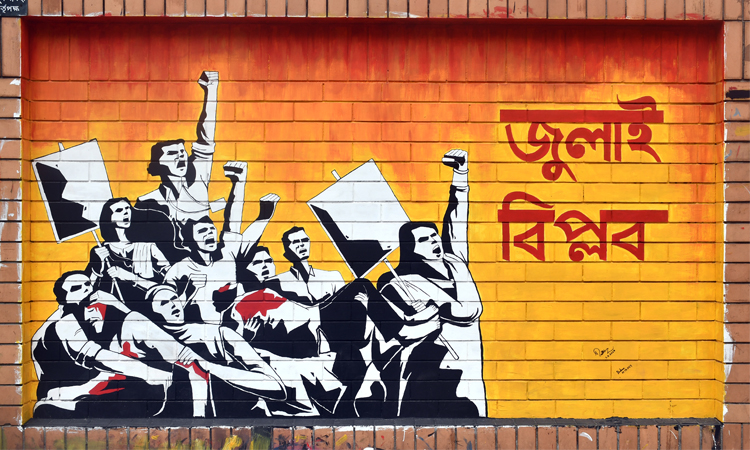
Addressing the young officers undergoing graduation at MIST, Brigadier General Shamsul Islam paid rich tributes to the sacrifices of 1971. He highlighted the declaration of independence by Shaheed President Ziaur Rahman and stated, “This country was not born as an ordinary state. It emerged through the unparalleled blood and sacrifices of lakhs of young boys and girls.” He also recognised the spirit of the July 2024 Mass Uprising, noting that the Armed Forces stood by the people on both occasions — in 1971 and in 2024. He called upon the officers to view 1971 and July 2024 not as contradictory events, but as complementary chapters in Bangladesh’s national journey.
The Defence Advisor warned that the nature of war has fundamentally changed. “The era of trenches and tanks is over,” he said. Modern warfare now encompasses cyber space, drones, electronic warfare, information operations, and psychological battles. “A country can be attacked without a formal declaration of war. Its financial systems, critical infrastructure, public opinion, and youth can be targeted through disinformation,” he added.
He stressed that technically proficient young officers are the need of the hour. “Officers must master both maps and machines, tactics and technology. The future battlefield demands multi-domain thinking,” he remarked.
Highlighting MIST’s strategic importance, the Defence Advisor said the institute should evolve beyond producing graduates into a hub of defence technology innovation. “We cannot buy everything from abroad. We must develop low-cost drones, secure communication systems, AI-assisted tools, cyber defence capabilities, and advanced command-and-control systems through our own resources,” he urged. He added that the government is giving high priority to indigenous defence research and industrialisation.
The Defence Advisor also spoke firmly against religious extremism, sectarianism, and forces trying to create division within the country. “Islam came to enlighten lives, not to darken them. Extremism is not strength — it is imbalance,” he said. He called upon the young officers to act as guardians of Bangladesh’s history and to resist any attempt to distort the sacrifices of 1971.
On the same day, Brigadier General Shamsul Islam also delivered a special lecture on nuclear security titled “Nuclear Security: National Responsibility Under International Commitment and Its Implications on National Security” at MIST’s Nuclear Security and Engineering Department. He described nuclear security as not merely a technical issue but a matter directly linked to national security, international obligations, and state responsibility. He praised the Bangladesh Army’s role in securing the Rooppur Nuclear Power Plant and called for enhanced preparedness against cyber threats, terrorism, and emergency situations.
After the lectures, the Defence Advisor visited various project displays by MIST students, including robotics and drone technologies, and praised their innovative spirit. MIST Commandant Major General Md. Hakimuzzaman, SGP, ndc, afwc, psc, thanked the Defence Advisor for his valuable guidance.
Analysts view the speech as a clear policy directive aimed at instilling strong nationalist spirit, technological excellence, and moral integrity among the next generation of military officers. By repeatedly highlighting the slogan “Bangladesh First”, the Defence Advisor has underscored the need for unbreakable bonds between the Armed Forces and the people of Bangladesh.
dhakadiaries
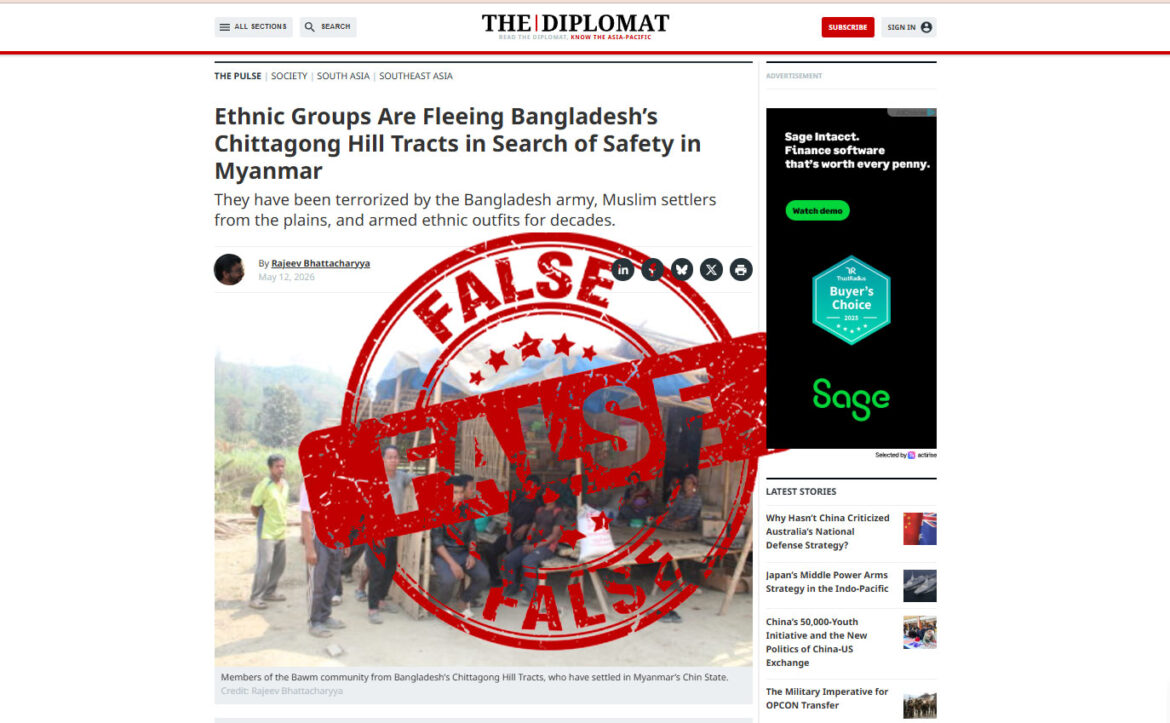
Beyond Simplistic Narratives: Understanding the Complex Realities of Bangladesh’s Chittagong Hill Tracts
Foreign media reports and commentary on Bangladesh’s Chittagong Hill Tracts (CHT) often present the situation in a one-sided and exaggerated manner. In many cases, the issue is framed as if the Bangladeshi state is systematically oppressing tribal or hill communities, forcing them to flee to Myanmar for safety. However, the reality is far more complex. The CHT is a sensitive region shaped by political tensions, armed groups, border security concerns, historical grievances, and regional instability. Any serious analysis must consider all of these factors instead of reducing the issue to a simple “state versus minorities” narrative.
A Region with Longstanding Security and Political Challenges
For many years, the CHT has faced problems related to land disputes, ethnic tensions, armed conflict, and cross-border criminal activities. These challenges cannot be blamed solely on the state or the military.
Several armed groups, including the Parbatya Chattagram Jana Samhati Samiti (JSS), United People’s Democratic Front (UPDF), and, more recently, the Kuki-Chin National Front (KNF), have been active in the region. Rivalries among these groups have led to violence, extortion, kidnappings, killings, and illegal arms activities. Ordinary people living in the hills- especially tribal communities- have often suffered because of these conflicts.
Many families in the hills have experienced fear and insecurity not only because of state actions, but also because of pressure and violence from armed groups. Therefore, presenting migration or displacement only as a result of “state oppression” creates a misleading and incomplete picture.
Questions About the “Safe Haven” Narrative in Myanmar
Some foreign reports have suggested that hill people are fleeing Bangladesh and going to Myanmar for safety. This claim raises important questions.
Myanmar itself has been facing severe internal conflict, ethnic violence, civil war, and military operations for years. The world has widely criticized Myanmar over the Rohingya crisis and other human rights abuses. Many parts of Myanmar remain dangerous due to fighting between the military and armed ethnic groups.
In this context, portraying Myanmar as a safe refuge appears questionable. In border areas, people sometimes temporarily cross the frontier for family connections, ethnic ties, trade, or local mobility patterns that have existed for generations. Such movement should not automatically be described as large-scale political exile or evidence of systematic persecution by Bangladesh.
The CHT border area is also linked to wider regional security concerns, including smuggling, armed movements, and cross-border militant activities.
Security Operations and the Role of the Bangladesh Army
Another issue often overlooked in international reporting is the role of armed groups and criminal networks operating in the hills.
The KNF, for example, has been accused by Bangladeshi authorities of involvement in bank robberies, armed training, kidnappings, extortion, and links with militant organizations. These are serious security concerns for any country.
Like every sovereign state, Bangladesh has the responsibility to maintain law and order, protect civilians, and secure its borders. The Bangladesh Army has largely been deployed in the CHT with a pacification and stabilization mandate aimed at maintaining peace, preventing armed violence, supporting civil administration, and protecting local communities from insecurity created by armed groups and criminal networks.
The Army has also played important non-combat roles in the hills, including medical support, disaster response, road construction, educational assistance, and humanitarian activities in remote areas where state services are limited.
Although various allegations are sometimes raised in foreign reports or advocacy campaigns, there are no widely established or independently proven findings showing a systematic policy of atrocities by the Bangladesh Army against tribal communities in the CHT. Individual complaints or allegations, if any, should be investigated properly through legal and institutional mechanisms. However, portraying the entire military presence as an occupying or oppressive force without clear evidence distorts the understanding of the situation.
At the same time, it is also important to recognize that ordinary civilians- including both tribal residents and Bengali settlers- have frequently been victims of violence carried out by armed groups operating in the region.
Development and State Presence in the Hills
Over the last two decades, Bangladesh has invested heavily in development projects in the CHT. Roads, bridges, schools, hospitals, electricity, and communication systems have expanded significantly in many remote hill areas.
Critics may argue that development alone cannot solve political grievances, and that is a fair point. But it is also inaccurate to describe the state only through a security lens while ignoring ongoing development and welfare efforts.
At the same time, issues related to land rights, political representation, and implementation of the 1997 CHT Peace Accord remain important challenges. These concerns should be addressed through dialogue, trust-building, and institutional reforms.
The Need for Balanced International Reporting
International media and analysts should approach the CHT issue with greater balance and caution. Selective reporting or emotional narratives can create misunderstandings and increase tensions rather than help foster peaceful solutions.
Both tribal communities and Bengali residents in the hills have experienced violence and insecurity over the years. A balanced analysis should recognize the suffering and concerns of all sides instead of presenting only one group as victims and the other as aggressors.
The CHT is also strategically important because of its location near the Bangladesh-Myanmar border. Therefore, the situation cannot be separated from broader regional security and geopolitical realities.
Conclusion
The situation in the Chittagong Hill Tracts is complex and sensitive. It involves historical grievances, security concerns, political disputes, armed groups, development challenges, and regional instability. Simplistic narratives that blame only one side do not help in understanding the real situation.
The long-term solution lies in peaceful dialogue, fair development, protection of rights, stronger trust between communities, and the rule of law. Human rights concerns should be examined responsibly, but security threats and armed violence must also be addressed realistically.
A balanced and fact-based approach is essential- not narratives that portray Bangladesh as an inherently oppressive or unstable state while ignoring the broader realities on the ground.
In the theatre of modern geopolitical conflict, the most dangerous weapon is rarely the one you can see. It does not arrive on a battlefield. It arrives quietly, dressed as journalism, carrying footnotes that lead nowhere and quotes attributed to no one. It lands in newsfeed, gets shared by well-meaning people, and slowly almost imperceptibly reshapes what a population believes about its own institutions.
Bangladesh is living through precisely this kind of assault right now. And one of its most active architects is an Indian journalist named Chandan Nandy.
On April 24, 2026, a piece surfaced in a Dhaka-based online outlet called Dinpatra registered at 120, Tejgaon Industrial Area, and edited by one Md. Shahabuddin Samrat making a remarkable set of claims. The report, drawing on Nandy’s analysis, alleged that the BNP government was actively working to curtail the Bangladesh military’s authority and operational scope. It suggested the ruling party lived in quiet fear of a coup. It painted senior military officers as increasingly reckless. It implied the armed forces, idle without a foreign war to fight, had turned their energies toward internal conspiracy.
Not one of these claims came with a named source. Not one carried verifiable evidence. And not one, it turns out, had any basis in reality.
Inquiries directed at military command channels and senior government officials produced a uniform response: none of this happened. The BNP government has taken no steps formal or informal to restrict the military’s scope. Prime Minister Tarique Rahman’s position is the opposite of what was claimed. His stated objective is for the Bangladesh Army to grow as a professional, self-sufficient force, operating within its own command structure, dedicated to defending the country’s sovereignty on its own terms.
So where did Nandy’s story come from?
The honest answer is: from nowhere. Because it describes nothing that exists.
A single fabricated story might be called negligence. A pattern of them demands a different name.
Earlier this year, Nandy published a report in Northeast News a platform that functions as one of India’s regional media vehicles for geopolitical messaging claiming that retired Bangladeshi military officer Rezzakul Haider Chowdhury had traveled to China between June 6 and 17 for the explicit purpose of destabilizing India’s northeastern states. The claim was vivid, specific, and alarming. It was also completely invented.
Bangladesh’s fact-checking organization Bangla Fact investigated the report and found that Nandy had originated the allegation with zero sourcing. No document. No official statement. No anonymous tip even loosely connected to reality. Chowdhury himself told daily Amar Desh plainly: after his release, he had not traveled to any foreign country. Period.
The story did not die there. It rarely does. The same baseless claim migrated into another Bangladeshi online platform, this time with an even more dramatic addition that Chowdhury had gone to China specifically to procure weapons for Bangladeshi militant groups, and that Indian intelligence had confirmed this. Again, not a shred of evidence accompanied the claim. Again, it spread.
This is not careless journalism. This is a repeatable method. Plant the story in one place. Let it travel to another. Add detail on the second pass. By the third retelling, it has acquired the false weight of repetition.
Western media analysts have a term for this approach: a firehose of falsehood. The strategy works not by convincing anyone of any single lie, but by flooding the information space so thoroughly that the machinery of verification cannot keep up.
To understand Nandy’s output, you have to understand the context that makes it useful to someone.
The fall of Sheikh Hasina in August 2024 closed a chapter in which India enjoyed extraordinary influence over Bangladeshi governance. That relationship built over years of careful cultivation, economic leverage, and quiet political management is now substantially diminished. The new administration in Dhaka is pursuing what can only be described as a genuinely independent foreign policy. That independence is most visible in the defense sector.
Bangladesh’s military has been modernizing at a pace and through channels that New Delhi did not plan for and cannot direct. Air defense systems, combat aircraft, drone capabilities all of this is being developed through partnerships that bypass India’s traditional sphere of influence. For a neighbor that spent years positioning itself as Bangladesh’s indispensable strategic partner, this is not a small development. It is a fundamental shift.
When conventional leverage fails, other tools get deployed. The goal of Nandy’s reporting if reporting is even the right word is not to inform. It is to destabilize. Create distrust between the military and the elected government. Convince soldiers that civilian leadership sees them as a threat. Convince the public that the armed forces are corrupt or directionless. If any of that takes hold, the country’s strongest and most disciplined institution becomes a source of internal friction rather than national cohesion.
That serves a very specific set of interests. And those interests are not Bangladeshi.
Nandy does not operate alone. What makes him effective to whatever extent he is is the distribution network around him.
Northeast News publishes the original claim. Outlets inside Bangladesh, presenting themselves as independent local media but editorially aligned with the remnants of the fallen Awami League, then carry that claim to domestic audiences. Dinpatra played this role in the April 24 episode. The architecture is neat: foreign origin gives the story a veneer of external credibility; domestic republication makes it feel like home-grown concern.
This is not a new playbook. It is how coordinated information operations have functioned for decades across multiple geopolitical contexts. The novelty here is only in the specific geography and the specific political moment.
There are basic requirements that journalism imposes on itself, not because of regulatory obligation but because of functional necessity. A claim needs a source. An allegation about a named individual requires that individual be contacted. A story about government policy should include some trace of the policy’s actual existence.
Nandy’s Bangladesh reporting fails every one of these tests, consistently.
That is not a coincidence. It is a design feature.
The outlets republishing his work without verification are complicit in a different way. They may not have originated the lies, but they gave them an audience they would not otherwise have reached. In the information ecosystem, distribution carries its own form of accountability.
Organizations like Bangla Fact are doing the necessary and underappreciated work of breaking this cycle. But one fact-checking body cannot absorb the full volume of manufactured content being directed at Bangladesh right now. The burden has to be shared by editors who ask harder questions before publishing, by readers who treat alarm-raising headlines with appropriate skepticism, and by civil society institutions willing to call coordinated disinformation by its actual name.
Bangladesh is at an inflection point. The political transition it is navigating, the foreign policy recalibration it is attempting, the military modernization it is undertaking none of these are secret. They are deliberate choices made by a government operating in a changed regional environment.
That environment includes neighbors who preferred the previous arrangement and are not reconciled to its end. In that context, information warfare is not a metaphor. It is a policy tool. And Chandan Nandy, whatever his own motivations, is one instrument of that tool.
The appropriate response is not outrageous. Outrage is what this kind of operation wants it generates noise, which is almost as useful as belief. The appropriate response is something colder and more durable: systematic exposure, rigorous verification, and the patient construction of an informed public that knows how to recognize a manufactured story when it arrives dressed as news.
The man selling stale goods in a crowded station relies on the crowd not looking too closely. The answer is to look closely. Every time. Without exception.
A recent wave of commentary from India-favored Awami League (AL) activists has intensified what they present as a counter-narrative to the July movement, with a clear focus on discrediting the military’s role and reshaping public memory of events. At the center of this effort lies an attempt to recast the mass uprising that led to the collapse of the deeply unpopular Sheikh Hasina-led AL government.
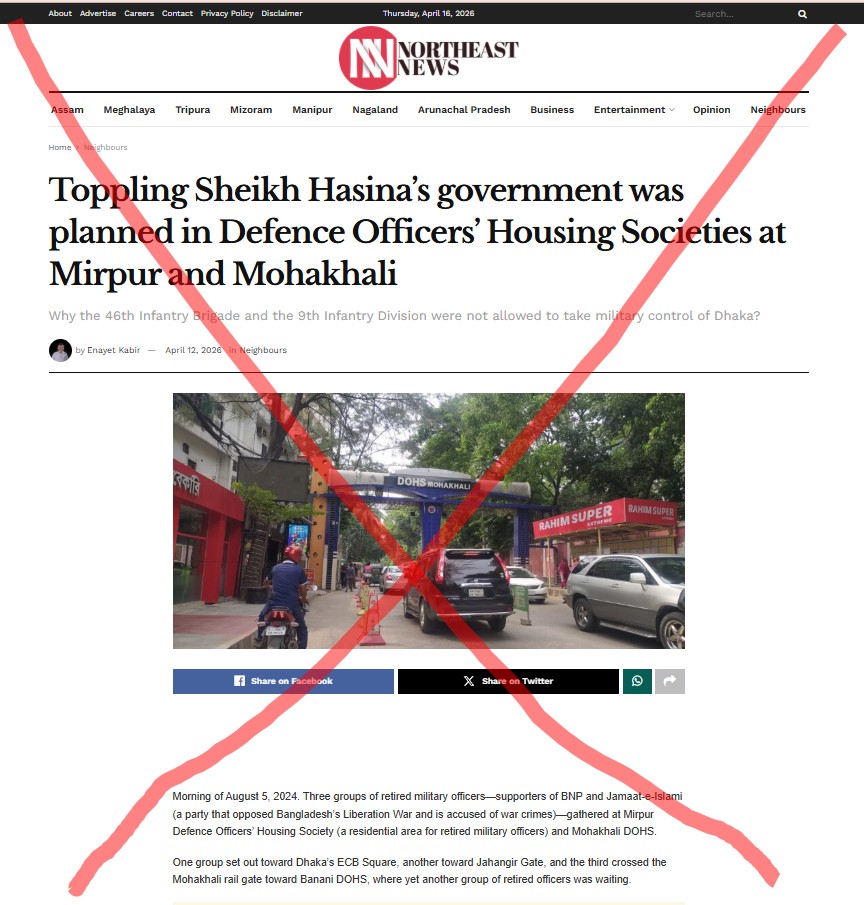
Within this framing, the political objective appears to extend beyond reinterpretation. It seeks not only to restore Sheikh Hasina’s political standing but also to rehabilitate the broader image of the Awami League. A central claim in this narrative reduces the turning point of 5 August to a single incident: the withdrawal of the Uttara barricade. This interpretation has been reinforced by an Indian outlet, Northeast News, which asserts that on the afternoon of 5 August, officials of the Special Security Force (SSF) were uncertain about the destination of the Prime Minister.
However, accounts from within the same sequence of events suggest a different understanding at the highest level of the state. Sheikh Hasina had reportedly already concluded that she had been betrayed. Approximately one hour before, she was informed that the curfew barricade in the Uttara area had been suddenly removed under the direction of Brigadier Rafiq of the Artillery Division. This development was interpreted as a decisive moment that effectively sealed the fate of the government.
Soon after, a public announcement emerged from Dhaka Cantonment indicating that Army Chief General Waker-Uz-Zaman would address the nation. In the context of unfolding political uncertainty, this was widely read as a clear indication of an imminent transfer of power.
The narrative advanced by Northeast News, however, does not appear isolated. It fits within a wider pattern of messaging, echoed across several Bengali-language platforms, which collectively attempt to shape public interpretation of the events in Bangladesh. In this broader discourse, reducing the complexity of the moment to a singular act of military betrayal risks stripping the episode of its political and social depth.
Such a reduction also overlooks what lay beyond the Uttara barricade. There was no empty space awaiting direction or orchestration. Instead, there was a vast convergence of citizens, students, and ordinary people whose trust in the political system had already eroded. The July movement of 2024 did not emerge abruptly; it was the outcome of accumulated grievances over time. Interpreting the collapse of the government solely through a military lens therefore excludes the agency of the population that shaped the streets.
At the same time, it is misleading to frame the military as an instrument designed to execute repression in the manner of authoritarian regimes. The armed forces of Bangladesh are neither extensions of any political party nor mechanisms of a declining regime. Their institutional mandate is grounded in safeguarding sovereignty, maintaining territorial integrity, and ensuring constitutional continuity along with public trust.
This raises a more fundamental question about political endurance: how long can a system remain stable when a significant portion of its population perceives itself as excluded from democratic participation? Can the mechanisms through which citizens were distanced from their voting rights simply be disregarded?
Despite securing a decisive mandate in 2008, the ruling establishment struggled to maintain public confidence in subsequent electoral cycles. The 2014 election proceeded without meaningful participation from opposition forces. The 2018 election was widely questioned amid allegations that ballot manipulation had occurred the night before polling. The 2024 election, in contrast, unfolded in an environment marked by the absence of genuine competition. Over time, these processes increasingly appeared disconnected from public trust and voter engagement.
This trajectory contributed to a growing perception of one-party dominance, which deeply affected public consciousness. Three consecutive national elections conducted under such conditions further reinforced doubts regarding the credibility of democratic practice.
Simultaneously, decision-making within the Awami League and the broader administrative structure became progressively centralized. Independent intellectual voices diminished, while authority became increasingly concentrated within a single leadership core. Although institutional structures remained formally intact, they gradually lost internal autonomy and accountability.
To disregard this trajectory or to reframe it through softened language that diminishes the record of the past seventeen years fails to reflect the lived political reality of Bangladesh. The central issue is not merely the removal of a barricade in Dhaka, but the conditions that made such a barricade necessary in the first place. A widening gap emerged between the Sheikh Hasina-led government and the public, shaped by political exclusion, contested elections, and weakening institutional independence.
Within this environment, student-led dissatisfaction driven by allegations of favoritism, coercive practices, and unchecked actions by partisan actors expanded into broader civic resistance. The perception of absent accountability intensified public frustration, eventually extending well beyond university campuses into wider society. These dynamics played a significantly greater role in shaping public sentiment than any isolated event on 5 August.
Ultimately, the removal of Sheikh Hasina and the fall of the Awami League government cannot be reduced to the lifting of a barricade or the decisions of individual military officers. It represents the culmination of a longer and more complex political trajectory.
The Uttara barricade, in this sense, was not the cause of Dhaka’s fall. It functioned instead as a visible moment within a longer process already set in motion by sustained political, institutional, and social strain under the AL administration. Distinguishing between symbolism and causation is essential to moving beyond simplified narratives and toward a more grounded understanding of events.
The Conspiracy That Wasn’t: Revisionist Narratives and the Political Rupture of August 2024 in Bangladesh
Following the August 2024 political transition in Bangladesh, a systematic conspiratorial discourse has gained circulation in certain media and political quarters, claiming that the downfall of the Sheikh Hasina government was not the result of a mass sociopolitical upheaval but of institutional manipulation by a small group of officials. This article offers a critical analysis of the internal logic, evidentiary basis, and political function of this narrative. Drawing on established paradigms of mass mobilization theory, institutional analysis, and media criticism, it argues that these revisionist framings are fundamentally inaccurate in their portrayal of the magnitude, authenticity, and historical course of the July Movement, and that they serve discernible partisan interests. The article further contextualizes this phenomenon within a broader pattern of post-authoritarian narrative reconstruction observable in comparative political settings.
Political transitions of significant magnitude seldom escape the gravitational force of conspiratorial reinterpretation. When established regimes fall particularly those that had invested considerable effort in projecting an image of stability and permanence the impulse among their remaining supporters to locate causation in betrayal, external interference, or elite manipulation rather than in popular rejection is both psychologically understandable and politically expedient. Bangladesh’s August 2024 transition is no exception.
What is now commonly referred to as the July Movement reached its culmination on 5 August 2024 with the departure of Prime Minister Sheikh Hasina, bringing to an end more than fifteen years of Awami League governance. Within weeks, a conspiratorial counter-narrative began spreading through sympathetic media outlets and political networks, asserting that the transition was not the product of genuine mass mobilization but the contrived outcome of a highly coordinated institutional conspiracy. This article subjects that narrative to rigorous critical examination.
The narrative under examination rests on several interlocking claims. At its center is the assertion that Sheikh Hasina’s political downfall was not caused by public anger over electoral manipulation, democratic erosion, and systemic corruption, but by a small, strategically placed group of officials who allegedly isolated her from political reality and organized her removal from within.
Central to this framing is the so-called “Chattogram nexus” an allegedly unified bloc of senior officials said to have concentrated influence around the Prime Minister in the period leading up to and following the 2024 general election. The individuals named within this structure include Principal Secretary Mohammad Kaykobad, NSI Director General Major General Mohammad Hossain Al Morshed, DGFI Director General Major General Hamidul Haque, Military Secretary Major General Kabir Ahmed, and Press Secretary Naimul Islam Khan. The narrative further claims that Sheikh Hasina, under the influence of her sister Sheikh Rehana and businessman Salman F Rahman, became excessively reliant on the Army Chief and the heads of key intelligence institutions, bypassing broader party consultation and political leadership structures.
The logical extension of this framing is to recast the quota reform movement the immediate catalyst for the July Movement not as an organic student mobilization with deep structural roots, but as a manipulated trigger that could have been neutralized through ordinary political engagement, had the Prime Minister not been insulated from political reality by those around her.
This narrative found direct expression in a report titled Bangladesh’s Unmasking Part 7, authored by Enayet Kabir widely identified as a former Awami League activist and published by the Indian media outlet Northeast News, an outlet that has drawn sustained criticism for promoting narratives hostile to the Bangladesh military while remaining consistently favorable toward the Awami League.
The role of specific media platforms in amplifying and legitimizing this narrative merits independent scrutiny. Northeast News, along with several aligned outlets, has demonstrated a consistent editorial pattern: portraying Bangladesh’s military as an institution primarily oriented toward protecting the Awami League rather than fulfilling its constitutional mandate in relation to the state, its sovereignty, and the people.
This framing carries significant analytical implications. By casting the military as a regime-protection apparatus rather than a state institution, such outlets simultaneously undermine any legitimate institutional role in the transition and create the interpretive conditions necessary for the conspiracy narrative to function. If the military’s institutional identity is defined solely by its relationship to the Awami League, then any divergence from Awami League interests becomes reframeable as betrayal or covert manipulation rather than the exercise of institutional integrity.
This reflects not incidental editorializing but a deliberate narrative architecture in which the factual record of the July Movement the breadth of participation, the documented use of state force against demonstrators, the organic expansion of the movement across social sectors is systematically subordinated to a scripted account of elite betrayal. Certain propagandists played a visibly biased role, overlooking both the state’s fundamental institutional dynamics and the intensity of mass political mobilization driven by accumulated anger against the Awami League regime.
The conspiratorial narrative’s most consequential analytical failure lies in its treatment or more precisely, its erasure of the public as a political actor.
The July Movement was not a narrow institutional event. It was a mass sociopolitical mobilization of extraordinary scale, involving university students, professionals, urban workers, and ordinary citizens across Bangladesh. The movement’s trajectory followed the recognizable pattern of authentic popular mobilization: it originated in a specific policy grievance the quota reform debate and expanded progressively as it resonated with pre-existing and widely shared frustrations regarding governance quality, democratic regression, and the abuse of state power.
This expansion is analytically decisive. Genuine mass movements grow through resonance, not through external orchestration. The broadening of the July Movement’s participation base across social sectors and geographic regions reflects a convergence of shared political experience rather than coordinated manipulation. To attribute this convergence to a hidden elite network is not political analysis it is the systematic denial of agency to millions of participants.
Political participation under conditions of authoritarian constraint carries substantial personal cost. Participants in the July Movement faced legal exposure, economic consequences, and acute physical danger, given the documented deployment of state force against demonstrators. The decision to participate under such conditions is not the product of external instruction. It is a response to perceived injustice one that mass movements across history have repeatedly demonstrated cannot be manufactured from outside.
Beyond the question of public agency, the conspiracy narrative also founders on the structural realities of how modern states function.
The claim that a small circle of officials however strategically positioned could collectively isolate a sitting prime minister from political reality and engineer a regime transition through covert coordination presupposes a degree of institutional linearity that does not reflect how governance actually operates. Modern state institutions, including military and intelligence agencies, function within constitutional, bureaucratic, and political constraints. While individuals may exert influence within their domains, they cannot unilaterally override the accumulated dynamics of national political life.
The Awami League’s political difficulties in 2024 were not sudden or manufactured. They were the product of a prolonged accumulation of structural fault lines: extensively documented concerns about electoral engineering, systemic corruption allegations, and the sustained use of force to constrain political opposition. These are matters of public record, documented by domestic civil society, international human rights organizations, and foreign governments. A conspiracy narrative that requires these structural realities to be set aside in favor of a story about personal miscalculation and elite betrayal is not engaging with the historical record it is evading it.
Narratives of this kind rarely emerge without purpose. By relocating causation from structural governance failures and mass public mobilization to elite conspiracy and institutional betrayal, the story being told here serves to rehabilitate the political record of the Awami League government while simultaneously casting doubt on the legitimacy of the July Movement and the transition it produced.
Post-authoritarian narrative reconstruction is not an unusual phenomenon. What distinguishes the Bangladeshi case is the speed and visibility with which this reconstruction has been attempted, and the specific media infrastructure through which it is being advanced.
The events of August 2024 cannot be meaningfully understood outside the broader course of governance, legitimacy, and public trust that preceded them. What this conspiratorial narrative ultimately fails to account for is the most consequential actor in the entire episode the public itself.
They are trying to cover up what really happened during the uprising in Bangladesh in July. The government that is still affected by it.
Something bad is happening across the border. History is being changed quietly. The tool being used is something that looks like journalism. It is not really journalism. The people doing this are from Northeast News, which is also known as nenews.in. It is not hard to figure out why they are doing this if you know where to look.
Let’s start with what happened. In July and August 2024 something big occurred in Bangladesh. The government, which is led by Hasina had been in power for fifteen years. They had control over everything. The courts, the press, the elections. They even made people disappear in the middle of the night. When the students started protesting in the streets the government did something. They started shooting at the students. Over 1,400 people were killed. Many more were. Had to go to the hospital. This was not a way to control the crowd. This was the government hurting its people.
Then something unexpected happened. The government lost power. It was not because of some generals or foreign countries getting involved. It was because the people of Bangladesh were tired of being afraid. This is the fact that Northeast News is trying to make people doubt.
The people who write for Northeast News like Enayat Kabir and Chandan Nandy have a way of writing. They say that some ranking officials were involved in a conspiracy. They say that the army was behind the uprising. They make it sound like they are investigating something. They are not really investigating. They are just creating an atmosphere, a fog of suspicion. They do not have any evidence, like documents or recordings. They just have sources who are always right.
When you look at the specifics their claims do not make sense. For example, they said that the former police chief was arrested by the army but that is not true. He was actually arrested by the police else. The army was not involved. Someone just added that to the story. Then there is the story about General Akbar, who was said to be involved in the uprising. But he was actually abroad at the time so he could not have been involved.
Then there is Ziaul Ahsan, a former major general who is facing charges of crimes against humanity. Northeast News is trying to make him look like a victim. The court has not found him to be a victim. The evidence does not show that he is a victim. This tells you something about whose interests Northeast News really serving.
There is one part of the story that Northeast News is trying to hide because it shows that their whole narrative is wrong. In the hours of the government Hasina’s inner circle asked the army chief to keep shooting at the protesters. They wanted to create a situation where India would have to intervene. That would allow Hasina to stay in power. The army chief said no the army would not fire on its own citizens. The military stood down. That destroyed the whole plan. Without the army’s guns Hasina had nothing left to govern with.
This is the thing that hurts the most for the people who’re still loyal to Hasina. Because if the army stood with the people, then everything else follows. The uprising was real the mandate was genuine. The regime that fell deserved to fall. That means that the fifteen years of authoritarian rule the disappeared people, the rigged elections, the shot students. All of that cannot be justified by a good story told in a foreign outlet.
Instead, there is a pipeline of false information. Stories are written on Northeast News, translated into Bengali and published in outlets like Dinpatra, Daily Times, Dainik Sangbad Sutra and Ajker Kantho Digital. From there they spread to media through people like Nabanita Chowdhury, Masuda Bhatti Nijhum Majumdar and other regional pages. The same false claim appears in six places in twenty-four hours. By the time it is refuted it has already done its job. It has contaminated the conversation.
The Awami League was banned in May 2025. The ban became law in April 2026. There is no way for them to come back to power through elections. What they are doing now is an information war and it runs on an idea: if you cannot change what happened make people uncertain about it so that accountability becomes complicated. Every fabricated story, every invented timeline, every phantom source points away, from one fact: a government tortured and killed its way through fifteen years of power and when its own people finally said enough it ordered the army to keep shooting and was refused. That refusal is the story. Everything Northeast News produces is an attempt to make you look else.
The students who were killed in the streets of Dhaka in July 2024 did not die for a conspiracy theory. They died for an idea: that a government should answer to its people, not the other way around. The army at the moment agreed with them. Northeast News has not forgiven either of them. That unforgiveness is the honest thing they have ever published.
As Narratives Multiply, July Becomes a Battlefield of Legitimacy
A discernible and highly coordinated effort is widely alleged to be underway to recalibrate the narrative surrounding the July uprising an effort that, if left unexamined, risks reshaping public memory and altering the political meaning of the events.
From this perspective, the deposed Awami League, in alleged alignment with actors from a neighboring country, is not only contesting interpretations of July but is actively seeking to dilute its foundational character while repositioning itself within the political landscape.
At the core of this emerging narrative struggle is a deliberate attempt to redefine the nature of the uprising itself. Terms such as “military-engineered intervention,” “extremist mobilization,” and “covert conspiracy” are increasingly circulating in public discourse. Critics argue that these are not neutral descriptions but political framing devices designed to generate doubt, fragment consensus, and weaken the moral and historical legitimacy of what many view as a people-driven mass uprising.
Such reinterpretations stand in stark contrast to accounts of the human toll. Approximately 1,400 people are reported to have lost their lives students, workers, and ordinary citizens across society. Thousands more were injured, with many suffering permanent disability. Supporters of the uprising argue that this was not the outcome of a hidden conspiracy, but rather the result of a governing authority taking a confrontational stance against mass public mobilization.
Serious allegations continue to persist regarding the methods employed during the crackdown. It is claimed that state machinery including police forces and ruling party affiliates such as the Chhatra League was mobilized in a coordinated manner. There are also allegations of involvement by foreign intelligence-linked elements, as well as the use of hired armed operatives operating alongside law enforcement. If substantiated, such claims would suggest a level of organized force beyond conventional state response.
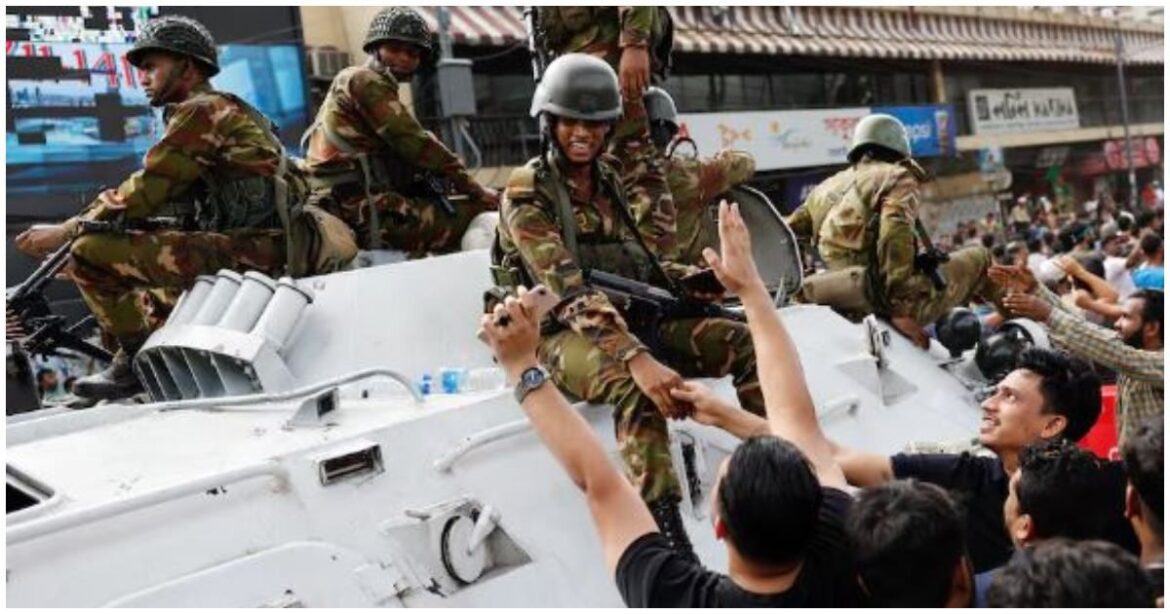
Within competing narratives, the role of the military is also interpreted differently. One view frames the military not as an initiating force but as a stabilizing institution that intervened during a moment of acute national volatility. In this account, its actions are described as helping contain escalation, prevent further bloodshed, and avert a broader civil conflict. Even during periods of unrest including reported attacks on police installations, it is said to have maintained order, secured key infrastructure, and in some cases provided protection to vulnerable personnel.
From this perspective, responsibility for the violence is attributed not to the military institution or the civilian movement itself, but to an authoritarian political structure, its domestic enforcement apparatus, and alleged external collaborators.
Attention has now shifted to the broader political landscape. The Awami League, though no longer in power, is widely perceived in this interpretation as pursuing a structured pathway toward political re-entry. Through financial resources accumulated over years, international networks, and influence operations, it is alleged that efforts are being made to construct an alternative version of events in which accountability is reframed and responsibility redistributed.
Allegations of involvement by India’s external intelligence agency, RAW, further introduce a geopolitical dimension to the dispute. At the same time, claims persist that financial resources are being deployed across media platforms, advocacy networks, and digital ecosystems in order to influence public opinion domestically and internationally.
Compounding these dynamics, current opposition political forces are described by critics as prioritizing short-term political gains over long-term national stability. In this view, an intense focus on weakening the government may inadvertently create conditions that allow previously displaced actors to regain political relevance.
Additionally, certain media platforms and individual commentators are accused of amplifying revised narratives through sustained repetition, with suggestions of external or financial incentives shaping parts of the discourse.
For those described as politically displaced or fugitive actors, the stakes are existential. Political rehabilitation, in this framing, depends not only on time or circumstance but on the successful reinterpretation of July itself transforming accountability into ambiguity and revising established perceptions of responsibility.
Ultimately, the struggle over July is no longer confined to historical interpretation. It has become a broader contest over legitimacy, accountability, and the future configuration of political power.
A Constructed Conspiracy: How the August 2024 Narrative Ignores Evidence, Context, and Political Reality
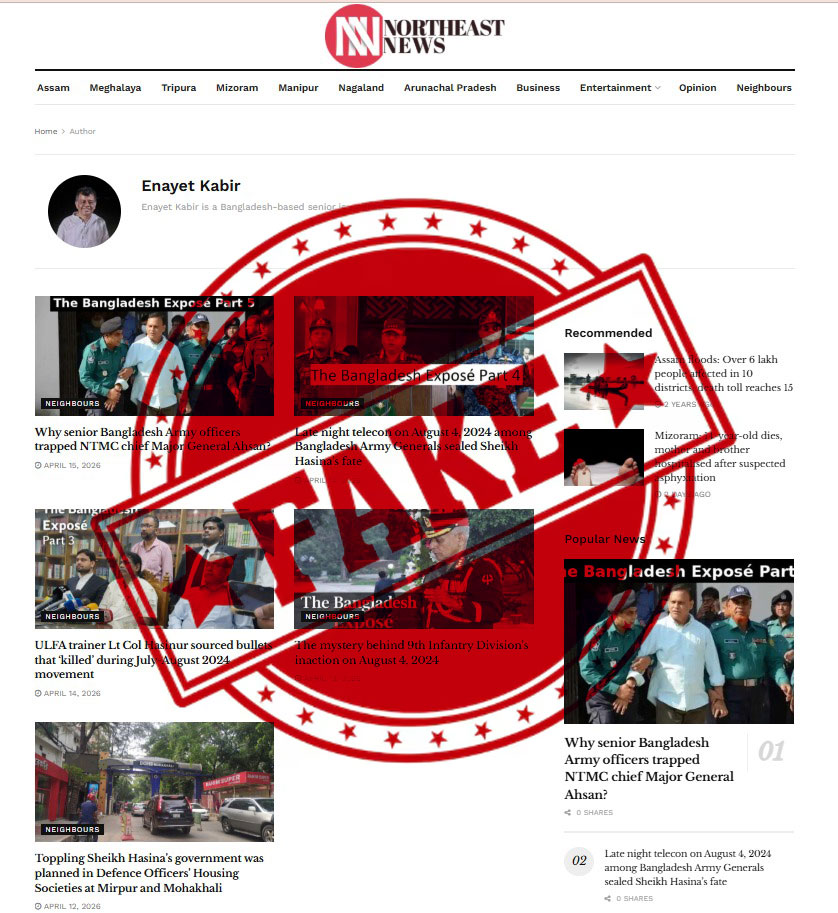
The Indian news outlet NorthEast News published article titled “Late night telecon on August 4, 2024 among Bangladesh Army Generals sealed Sheikh Hasina’s fate”, by Enayet Kabir on April 14, 2026, presents itself with a pretension as an insider account of a decisive moment in Bangladesh’s recent political history. But in reality, it functions less as an investigation and more as a constructed narrative designed to reduce a complex political rupture into a single institutional conspiracy. This kind of simplification, in the form of a movie script, is very reductive and misleading.
This appeared at a moment when Bangladesh’s political course is being intensely trying to take a practical political course for the people’s betterment. And, also examined both domestically and internationally, the responsibility of serious analysis is to engage with complexity, evidence, and context. This report fails on all three counts in any meaningful sense.
Narrative Without Verifiability
Beyond question, a defining weakness of the article lies in its complete reliance on unnamed sources and unverifiable claims. The statement, “Hours before Sheikh Hasina was packed off in a helicopter, on her way to Delhi, Army chief Gen Waker-uz-Zaman gave false assurances to her – situation under control,” reflects the broader pattern of dramatic reconstruction that runs throughout the piece.
Alleged late night teleconferences and internal military dynamics are presented without documentary backing, recorded communication, or on record testimony. This absence is not a minor journalistic gap. It fundamentally undermines the credibility of the entire narrative.
Serious investigative reporting requires triangulation of evidence and demands that claims of this scale be supported by verifiable material. Instead, what emerges here is a narrative designed to appear authoritative while remaining largely insulated from scrutiny. The structure resembles intelligence fiction more than institutional analysis, in effect an emotional diary that appears to advocate a clean portrayal of Sheikh Hasina and the Awami League.
The Systematic Removal of Political Context
More significant than the absence of evidence is the deliberate removal of political context. The article treats the fall of Sheikh Hasina’s government as an isolated event, detached from the broader trajectory of governance over the preceding years. It makes no effort to engage with public sentiment, examine the role of political opposition, or acknowledge the structural tensions that had been building within the system.
Governments do not collapse in a vacuum. They lose legitimacy over time through a combination of political decisions, institutional conduct, and public response. By excluding these realities, the report constructs an artificial narrative in which a single institutional actor appears decisive.
This is not analysis. It is selective storytelling.
But why did they publish it? Answer lies here:
In the entire writeup, there is no mention of any wrongdoing by the Awami League government during its long 16 years in power. There is no discussion of how public dissatisfaction and anger gradually built up against the Hasina regime. It also fails to address allegations of election manipulation aimed at marginalizing the opposition and engineering controlled elections under continued state power.
In the name of Mujib ideology and the glorification of the 1971 Liberation War, the Awami League government is widely accused of suppressing political opposition. Over time, individuals with significant local influence, including MPs and ministers, allegedly operated with unchecked brutal authority in their respective areas. These developments contributed to growing public frustration, ultimately leading large segments of the population to take to the streets demanding the ouster of the government, a widely documented phase in Bangladesh’s recent political history.
However, The NorthEast News and the respective writer Enayet Kabir appear to adopt a denialist position, presenting a narrative that fully shields the Hasina government. The fall of the regime is instead framed primarily as the outcome of a military conspiracy, as if there was no mass public uprising and no nationwide mobilization of citizens. This portrayal effectively ignores the scale and significance of the July uprising, reducing it to an alleged institutional plot.
Indeed, the overall construction of the report appears to obscure the political realities and controversies surrounding Sheikh Hasina’s leadership and her administration. The framing appears to align, whether directly or indirectly, with a broader narrative that serves the strategic interests of the Indian state, rather than offering an objective account centered on the people of Bangladesh.
From this perspective, the implication is that India continues to provide political support and refuge to Sheikh Hasina and senior figures within her political circle, despite multiple allegations against them. In this context, narratives that emphasize military conspiracy over political causation may serve to shape external perception, portraying Awami League leaders as victims of military institutional plotting rather than subjects of political accountability.
This raises an important question regarding the motivations of the contributor, Enayet Kabir. In political analysis, understanding the perspective and background of the writer is essential to interpreting the framing of the argument. Enayet Kabir has previously been associated with the Awami League student wing, the Bangladesh Chhatra League. He also studied in Moscow during the Soviet era, a period that may have influenced his ideological outlook. During the Awami League’s tenure in power, he is believed to have benefited in various ways.
According to fact checks, Enayet Kabir has never been established as a verified journalistic identity but is instead described as an Awami League activist and an associate of Indian journalist Chandan Nandy, who is on record for publishing contested and fictitious narratives about the Bangladesh military in Northeast News.
It is also notable that Enayet Kabir’ elder brother, filmmaker and architect Enamul Karim Nirjhar, has had professional and personal connections within circles close to Sheikh Hasina, including involvement in designing and constructing her private residence, Sudha Sadan, in Dhanmondi Road 5. Taken together, these factors suggest a broader network of proximity to the Awami League leadership. On a personal level, Enayet Kabir remains active on social media in support of efforts aimed at rehabilitating the Awami League politically.
While such background does not automatically invalidate an argument, it does require that the work be evaluated with greater critical attention, especially when evidentiary support is lacking.
Thus, in the absence of transparency and methodological rigor, perspective risks becoming bias, and narrative risks becoming advocacy.
Connecting to this aspect, one of the most consequential distortions in the report is its implicit denial of mass political participation. The events of July and August were marked by visible, widespread public mobilization across multiple cities and social strata. This was not an episode confined to elite circles or institutional maneuvering. By reducing the outcome to a military driven scenario, the article effectively erases the role of ordinary citizens. This is not simply an analytical oversight. It reflects a deliberate narrative choice to replace public agency with institutional conspiracy. In doing so, it diminishes the political weight of popular mobilization and reframes it as secondary, if not irrelevant.
Internal Contradictions of the Coup Thesis
The central claim of an indirect military intervention collapses under its own internal inconsistencies. Coordinated military actions follow clear and recognizable patterns of control, consolidation, and communication. They are defined by rapid stabilization of key institutions and a visible chain of command.
What the article describes is the opposite. It presents a picture of disorder, fragmented authority, and exposed state structures. Administrative coherence appears weakened rather than reinforced. Institutional vulnerability is highlighted instead of control being asserted. These are not the features of a calculated takeover. They are the markers of systemic breakdown.
This contradiction leads to a fundamental question. If the military was orchestrating events with precision, why does the outcome reflect a loss of control rather than its consolidation?
Selective Attribution of Responsibility
Another critical limitation of the article is its asymmetrical assignment of responsibility. The focus remains overwhelmingly on alleged military decisions while the actions and policies of the government itself are left largely unexamined. There is no serious attempt to interrogate governance choices, crisis management, or political strategy during the period in question.
This selective approach is not analytically neutral. It functions to redirect accountability away from political leadership and toward institutional actors. In doing so, it narrows the field of inquiry and shapes the reader’s perception in a predetermined direction.
Conclusion: Beyond a Single Night Explanation
Reducing the fall of Sheikh Hasina’s government to a single alleged late-night teleconference is not serious analysis. It is a deliberate oversimplification of a complex political rupture.
Political change of this scale does not occur in one night, and it is never driven by a single room, a single call, or a single institution. It is the outcome of accumulated pressure, shifting public sentiment, and a gradual erosion of political legitimacy. To ignore these forces is to ignore political reality itself.
Any narrative that replaces this broader context with a neat conspiracy does not clarify events. It distorts them.
A credible understanding of August 2024 requires engagement with the full political landscape, not selective fragments of it. Until that standard is met, such narratives remain what they are, constructed interpretations rather than reliable accounts of reality.
Exposing the Propaganda of Northeast News: A Bangladesh-Bashing, RAW-Backed, Awami League-Funded Outlet
Northeast News, an Indian website notorious for its consistent anti-Bangladesh stance, has once again peddled fabricated narratives against Bangladesh. The portal, widely regarded as operating in the interest of India’s RAW and now functioning as a paid propaganda arm of the Awami League, continues its smear campaign against the July–August 2024 mass uprising.
Enayet Kabir (believed by many to be a pseudonym or close associate of Chandan Nandi) has claimed in a recent article that “senior Bangladeshi army officers trapped NTMC chief Major General Ziaul Ahsan.” This is a completely fabricated and malicious story designed to distort facts and undermine Bangladesh’s democratic transition.
Accountability, Not a ‘Trap’
Major General Ziaul Ahsan was one of the most controversial figures of the Sheikh Hasina era. He served for years in the intelligence wing of the Rapid Action Battalion (RAB), a force widely accused of enforced disappearances, extrajudicial killings, and torture. Later, as head of the National Telecommunication Monitoring Centre (NTMC), he occupied one of the most sensitive surveillance positions in the country.
Following the fall of the Hasina regime on August 6, 2024, he was forced into retirement and subsequently arrested on serious charges including murder, enforced disappearance, and corruption. This is not a “trap” or a conspiracy to seize phone recordings. It is simply a process of accountability for alleged grave crimes committed during the previous authoritarian rule.
July 2024: A Mass Uprising, Not an Army Coup
The July–August 2024 mass uprising claimed over 1,400 lives, with thousands more injured and permanently disabled. According to UN reports, the majority of those killed died from gunfire by state forces — police, RAB, ruling party activists, and alleged snipers.
This was not merely a student movement. It was a full-scale people’s uprising against a regime that had turned its weapons against its own citizens. The Hasina government unleashed unprecedented repression, with credible allegations of external support in the brutal crackdown.
The Bangladesh Army did not participate in the mass killing. Senior officers, including Army Chief General Waker-uz-Zaman, reportedly refused to issue orders for lethal force against unarmed civilians. As a result, Hasina was forced to flee the country, and Bangladesh was saved from what could have become a full-blown civil war.
Instead, the army:
- Protected police stations from mob attacks
- Provided shelter to police personnel inside cantonments
- Helped prevent the situation from escalating into nationwide armed conflict
This is the undeniable reality.
What the Awami League Is Doing Now
The Awami League, under Sheikh Hasina’s leadership, is now desperately trying to whitewash 15 years of alleged authoritarianism, corruption, enforced disappearances, extrajudicial killings, and political repression. With alleged backing from external actors, they are aggressively pushing conspiracy theories to reframe the July uprising as an “army coup,” a “militant agenda,” or a “foreign plot.”
Outlets like Northeast News are actively serving this propaganda machinery. Their clear objective is to delegitimize the sacrifices of the Bangladeshi people and portray the popular uprising as illegitimate.
The Jamaat–NCP Factor
At the same time, overstatements and unnecessary political posturing by groups like Jamaat-e-Islami and the National Citizen Party (NCP) are providing the Awami League with ammunition to push the “Islamist/militant agenda” narrative. Such actions only strengthen the hands of the anti-July forces and their propaganda network.
The Way Forward
This is the time for all patriotic forces to unite against the remnants of authoritarianism and disinformation.
Those who truly respect the martyrs of July–August 2024 must stand firmly together.
July 2024 was a people’s uprising. The Bangladesh Army stood with the people and helped prevent a national catastrophe. Holding figures like Major General Ziaul Ahsan accountable is not a conspiracy — it is a necessary step toward justice and reform.
Reject the propaganda of Northeast News. Honor the blood of the martyrs. Stand united against authoritarianism and foreign-backed disinformation.
Northeast News has long positioned itself as an anti-Bangladesh platform, consistently working against Bangladesh’s sovereignty and national interest while advancing RAW’s agenda and now openly serving as a mouthpiece for the fallen Awami League regime. It is high time such paid propaganda outlets are exposed and their malicious narratives countered with facts and truth.
Bangladeshi Lieutenant General Minhazul Alam Appointed UNFICYP Force Commander in Cyprus
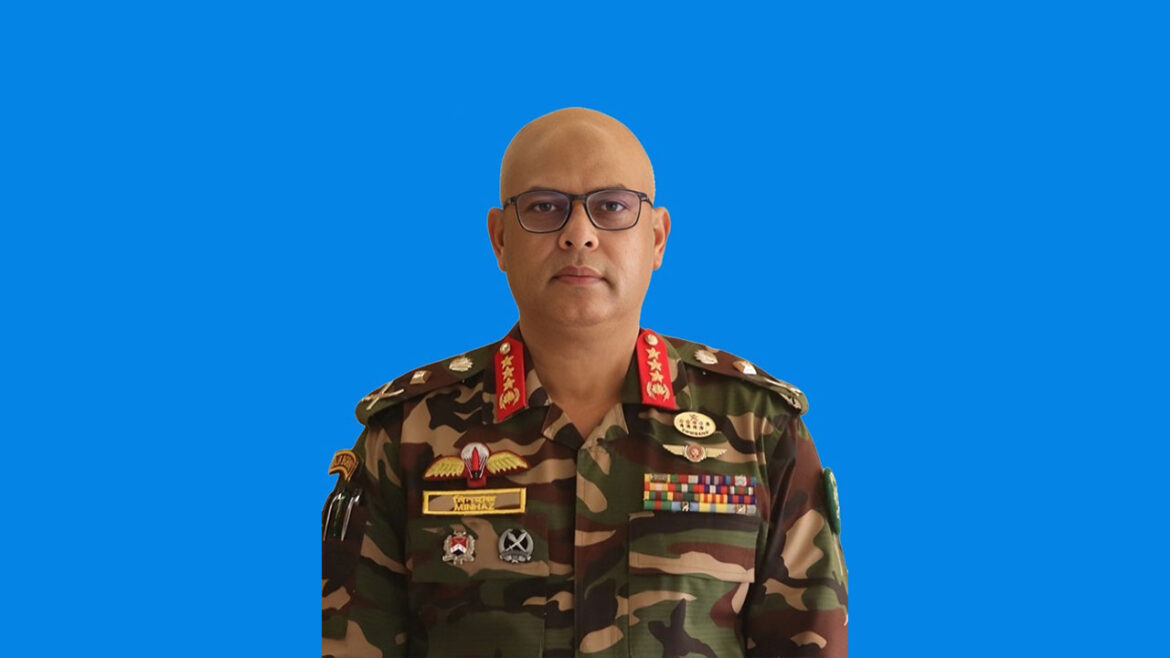
Dhaka, April 9, 2026 — United Nations Secretary-General António Guterres has appointed Lieutenant General Mohammad Asadullah Minhazul Alam of Bangladesh as the new Force Commander of the United Nations Peacekeeping Force in Cyprus (UNFICYP).
He succeeds Major General Erdenebat Batsuuri of Mongolia. The Secretary-General expressed deep appreciation for Batsuuri’s dedication and service during his tenure.
Lieutenant General Minhazul Alam brings over three decades of leadership and command experience in the Bangladesh Army. He most recently served as General Officer Commanding (GOC) at the Army Training and Doctrine Command. Prior to that, he held the position of GOC of the 10 Infantry Division and Area Commander of Cox’s Bazar from 2024 to 2026. He also served as Commandant of the Defence Services Command and Staff College in 2024.
Throughout his career, he has held a wide range of command and staff appointments across infantry formations. His experience includes leadership roles in counterterrorism operations, internal security, disaster response, and intelligence-based operations.
Lieutenant General Minhazul Alam has also served in United Nations peacekeeping missions. He was Sector Commander in the United Nations Multidimensional Integrated Stabilization Mission in the Central African Republic (MINUSCA) from 2020 to 2021. Earlier, he served as a Military Observer in the United Nations Transitional Administration in East Timor (UNTAET) between 1999 and 2000.
Academically, he holds a PhD in International Relations from Jahangirnagar University, Bangladesh. He also earned a Master of Science in National Security Strategy from the National Defense University in Washington, D.C., a master’s degree in Defense Studies from the National University of Bangladesh, and an MBA from the Royal University of Dhaka.
In addition to his native Bengali, Lieutenant General Minhazul Alam is fluent in English.
UNFICYP, established in 1964, is one of the United Nations’ longest-running peacekeeping missions, tasked with maintaining stability and preventing a recurrence of fighting between communities in Cyprus.