Following the August 2024 political transition in Bangladesh, a systematic conspiratorial discourse has gained circulation in certain media and political quarters, claiming that the downfall of the Sheikh Hasina government was not the result of a mass sociopolitical upheaval but of institutional manipulation by a small group of officials. This article offers a critical analysis of the internal logic, evidentiary basis, and political function of this narrative. Drawing on established paradigms of mass mobilization theory, institutional analysis, and media criticism, it argues that these revisionist framings are fundamentally inaccurate in their portrayal of the magnitude, authenticity, and historical course of the July Movement, and that they serve discernible partisan interests. The article further contextualizes this phenomenon within a broader pattern of post-authoritarian narrative reconstruction observable in comparative political settings.
Political transitions of significant magnitude seldom escape the gravitational force of conspiratorial reinterpretation. When established regimes fall particularly those that had invested considerable effort in projecting an image of stability and permanence the impulse among their remaining supporters to locate causation in betrayal, external interference, or elite manipulation rather than in popular rejection is both psychologically understandable and politically expedient. Bangladesh’s August 2024 transition is no exception.
What is now commonly referred to as the July Movement reached its culmination on 5 August 2024 with the departure of Prime Minister Sheikh Hasina, bringing to an end more than fifteen years of Awami League governance. Within weeks, a conspiratorial counter-narrative began spreading through sympathetic media outlets and political networks, asserting that the transition was not the product of genuine mass mobilization but the contrived outcome of a highly coordinated institutional conspiracy. This article subjects that narrative to rigorous critical examination.
The narrative under examination rests on several interlocking claims. At its center is the assertion that Sheikh Hasina’s political downfall was not caused by public anger over electoral manipulation, democratic erosion, and systemic corruption, but by a small, strategically placed group of officials who allegedly isolated her from political reality and organized her removal from within.
Central to this framing is the so-called “Chattogram nexus” an allegedly unified bloc of senior officials said to have concentrated influence around the Prime Minister in the period leading up to and following the 2024 general election. The individuals named within this structure include Principal Secretary Mohammad Kaykobad, NSI Director General Major General Mohammad Hossain Al Morshed, DGFI Director General Major General Hamidul Haque, Military Secretary Major General Kabir Ahmed, and Press Secretary Naimul Islam Khan. The narrative further claims that Sheikh Hasina, under the influence of her sister Sheikh Rehana and businessman Salman F Rahman, became excessively reliant on the Army Chief and the heads of key intelligence institutions, bypassing broader party consultation and political leadership structures.
The logical extension of this framing is to recast the quota reform movement the immediate catalyst for the July Movement not as an organic student mobilization with deep structural roots, but as a manipulated trigger that could have been neutralized through ordinary political engagement, had the Prime Minister not been insulated from political reality by those around her.
This narrative found direct expression in a report titled Bangladesh’s Unmasking Part 7, authored by Enayet Kabir widely identified as a former Awami League activist and published by the Indian media outlet Northeast News, an outlet that has drawn sustained criticism for promoting narratives hostile to the Bangladesh military while remaining consistently favorable toward the Awami League.
The role of specific media platforms in amplifying and legitimizing this narrative merits independent scrutiny. Northeast News, along with several aligned outlets, has demonstrated a consistent editorial pattern: portraying Bangladesh’s military as an institution primarily oriented toward protecting the Awami League rather than fulfilling its constitutional mandate in relation to the state, its sovereignty, and the people.
This framing carries significant analytical implications. By casting the military as a regime-protection apparatus rather than a state institution, such outlets simultaneously undermine any legitimate institutional role in the transition and create the interpretive conditions necessary for the conspiracy narrative to function. If the military’s institutional identity is defined solely by its relationship to the Awami League, then any divergence from Awami League interests becomes reframeable as betrayal or covert manipulation rather than the exercise of institutional integrity.
This reflects not incidental editorializing but a deliberate narrative architecture in which the factual record of the July Movement the breadth of participation, the documented use of state force against demonstrators, the organic expansion of the movement across social sectors is systematically subordinated to a scripted account of elite betrayal. Certain propagandists played a visibly biased role, overlooking both the state’s fundamental institutional dynamics and the intensity of mass political mobilization driven by accumulated anger against the Awami League regime.
The conspiratorial narrative’s most consequential analytical failure lies in its treatment or more precisely, its erasure of the public as a political actor.
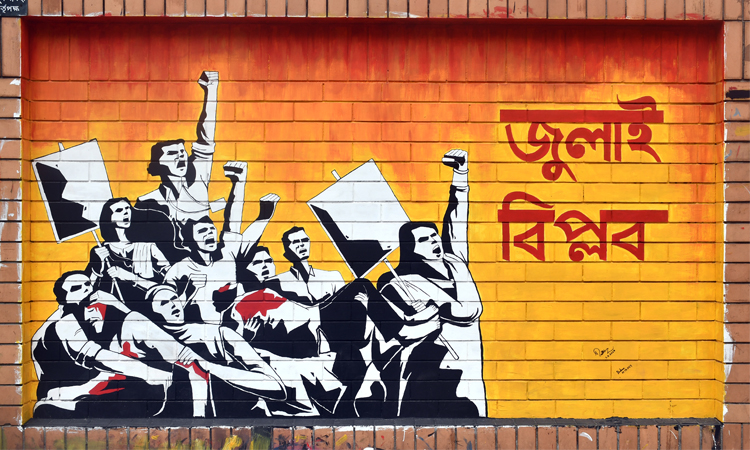
The July Movement was not a narrow institutional event. It was a mass sociopolitical mobilization of extraordinary scale, involving university students, professionals, urban workers, and ordinary citizens across Bangladesh. The movement’s trajectory followed the recognizable pattern of authentic popular mobilization: it originated in a specific policy grievance the quota reform debate and expanded progressively as it resonated with pre-existing and widely shared frustrations regarding governance quality, democratic regression, and the abuse of state power.
This expansion is analytically decisive. Genuine mass movements grow through resonance, not through external orchestration. The broadening of the July Movement’s participation base across social sectors and geographic regions reflects a convergence of shared political experience rather than coordinated manipulation. To attribute this convergence to a hidden elite network is not political analysis it is the systematic denial of agency to millions of participants.
Political participation under conditions of authoritarian constraint carries substantial personal cost. Participants in the July Movement faced legal exposure, economic consequences, and acute physical danger, given the documented deployment of state force against demonstrators. The decision to participate under such conditions is not the product of external instruction. It is a response to perceived injustice one that mass movements across history have repeatedly demonstrated cannot be manufactured from outside.
Beyond the question of public agency, the conspiracy narrative also founders on the structural realities of how modern states function.
The claim that a small circle of officials however strategically positioned could collectively isolate a sitting prime minister from political reality and engineer a regime transition through covert coordination presupposes a degree of institutional linearity that does not reflect how governance actually operates. Modern state institutions, including military and intelligence agencies, function within constitutional, bureaucratic, and political constraints. While individuals may exert influence within their domains, they cannot unilaterally override the accumulated dynamics of national political life.
The Awami League’s political difficulties in 2024 were not sudden or manufactured. They were the product of a prolonged accumulation of structural fault lines: extensively documented concerns about electoral engineering, systemic corruption allegations, and the sustained use of force to constrain political opposition. These are matters of public record, documented by domestic civil society, international human rights organizations, and foreign governments. A conspiracy narrative that requires these structural realities to be set aside in favor of a story about personal miscalculation and elite betrayal is not engaging with the historical record it is evading it.
Narratives of this kind rarely emerge without purpose. By relocating causation from structural governance failures and mass public mobilization to elite conspiracy and institutional betrayal, the story being told here serves to rehabilitate the political record of the Awami League government while simultaneously casting doubt on the legitimacy of the July Movement and the transition it produced.
Post-authoritarian narrative reconstruction is not an unusual phenomenon. What distinguishes the Bangladeshi case is the speed and visibility with which this reconstruction has been attempted, and the specific media infrastructure through which it is being advanced.
The events of August 2024 cannot be meaningfully understood outside the broader course of governance, legitimacy, and public trust that preceded them. What this conspiratorial narrative ultimately fails to account for is the most consequential actor in the entire episode the public itself.
National Parlament Election 2026
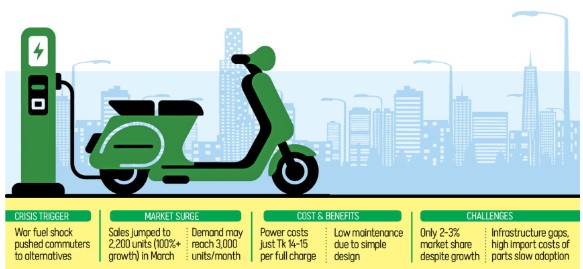
E-Bike Demand Rises in Dhaka as Fuel Crisis Drives Shift in Urban Transport
In the congested streets of Dhaka, daily commuting has become increasingly difficult due to heavy traffic and parking challenges. The recent fuel crisis, triggered by the ongoing conflict involving the United States, Israel and Iran, has further worsened the situation, pushing many vehicle owners to look for alternative transport options.
Mohammad Emrul Kayes, a Supreme Court lawyer, recently purchased an electric motorcycle (e-bike) from Runner Motors Limited. He said the decision was not meant to replace his car or petrol-run bike but to solve everyday problems related to fuel availability.
“For me, it was about avoiding the hassle of long queues at fuel stations,” he said, adding that uncertainty around refueling pushed him toward a more convenient solution.
He described the e-bike as “quick, simple, and stress-free,” reflecting a growing shift in urban mobility during the crisis.
Industry data shows a sharp rise in e-bike sales since the fuel shortage began. Monthly sales increased from around 800–1,000 units to nearly 2,200 units in March—more than double the usual figure. If the trend continues, sales could reach 3,000 units, according to market insiders.
Several companies, including Walton, PRAN-RFL Group, and Runner, are expanding their presence in the growing electric vehicle (EV) market.
Nazrul Islam, managing director of Runner Group, emphasized the importance of shifting away from fossil fuels. He said e-bikes offer clear advantages, including lower operating and maintenance costs.
Runner currently offers 12 models of Yadea-branded e-bikes, priced between Tk 90,000 and Tk 315,000. Islam noted that households using solar power can operate these vehicles at minimal cost compared to fuel-based alternatives.
He also explained that e-bikes have simpler structures, using only a motor and battery, which reduces maintenance needs significantly.
Despite the benefits, adoption remains relatively low, with annual sales ranging from 12,000 to 16,000 units—just 2 to 3 percent of the overall motorcycle market.
Concerns about charging infrastructure, battery life, and travel range still exist. However, industry leaders say these issues are gradually improving. Charging an e-bike costs around Tk 14–15 and can be done overnight, similar to charging a mobile phone.
At Walton, sales of TAKYON e-bikes surged by up to 85 percent during the March fuel shortage, said Md Touhidur Rahman Rad, chief business officer of Walton Digi-Tech Industries Limited.
He added that e-bikes can travel between 80 and 130 kilometers on a single charge, depending on the model.
Meanwhile, Kamruzzaman Kamal of PRAN-RFL Group said sales of their RYDO e-bikes rose by about 60 percent during the crisis. He highlighted the need for supportive policies, noting that high import duties on parts increase production costs, while cheaper imported finished products create pricing challenges.
He also stressed the importance of developing charging infrastructure to support wider adoption.
As fuel uncertainty continues, e-bikes are emerging as a practical and cost-effective solution for urban transport in Bangladesh.
Source: The Daily Star
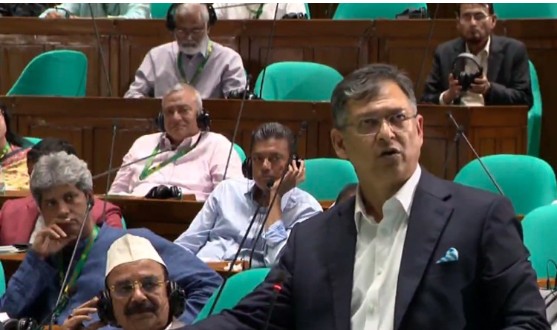
Home Minister Salahuddin Ahmed said the government will implement the July National Charter in line with the constitution, stressing that the constitution remains the only basis for fulfilling people’s aspirations.
“Everything, including the formation of the government, parliament and lawmakers, has taken place according to the constitution. So it cannot be ignored in the name of implementing the July National Charter,” he said.
He made the remarks while taking part in a discussion on an adjournment motion in the Jatiya Sangsad, with Speaker Hafiz Uddin Ahmed in the chair. The motion was scheduled to discuss how the July National Charter will be implemented.
The motion was originally placed on April 1 by ruling party lawmaker Zainul Abdin Farroque from Noakhali-2.
Calling the July National Charter (Constitutional Reform) Implementation Order, 2025 a “legislative fraud” and “colorable legislation,” the home minister said that although 33 political parties approved the charter, the order did not reflect all agreed points.
Speaking on behalf of the leader of the house, he said there is no need to rewrite the constitution. Instead, the people’s mandate can be implemented through necessary amendments.
Describing the charter as a historic document, he proposed forming a special parliamentary committee with representatives from all political parties to recommend constitutional changes.
Referring to the Fifth Amendment, he questioned the opposition’s position, noting that the amendment introduced during the rule of Ziaur Rahman was later declared void.
Law, Justice and Parliamentary Affairs Minister Md Asaduzzaman also spoke, urging all sides not to politicize the issue. He said the charter itself provides guidance for implementation and warned against passing laws that may exceed constitutional limits.
Opposition leader Shafiqur Rahman called on parliament not to adopt the adjournment motion, noting that a similar motion had earlier been raised without result.
Several lawmakers—including Gazi Enamul Huq, Akhter Hossen, Nazibur Rahman, Mir Mohammad Helal Uddin and Andaleev Rahman—also took part in the discussion.
Speaker Hafiz Uddin Ahmed said this is a rare event in parliamentary history, as it is the first time in 53 years that an adjournment motion from a treasury bench member has been accepted for discussion.
Earlier, on March 30, independent MP Sheikh Mujibur Rahman Iqbal had raised a similar motion, which is still pending.
While presenting the motion, Zainul Abdin Farroque said the July National Charter is the result of the July-August movement and years of struggle, calling it a roadmap for the nation’s future.
The Speaker approved the motion under Rule 65(2) and scheduled a two-hour discussion on April 5, 2026, as the final agenda item of the day.
Spontaneous Voter Turnout Shows National Victory: Election Commissioner
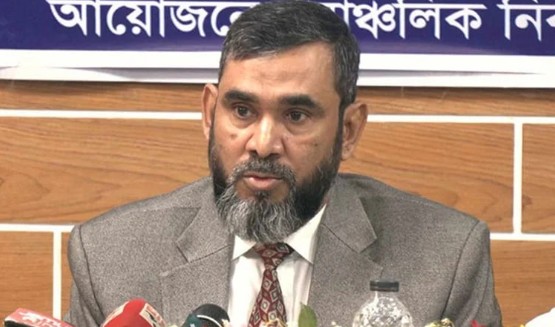
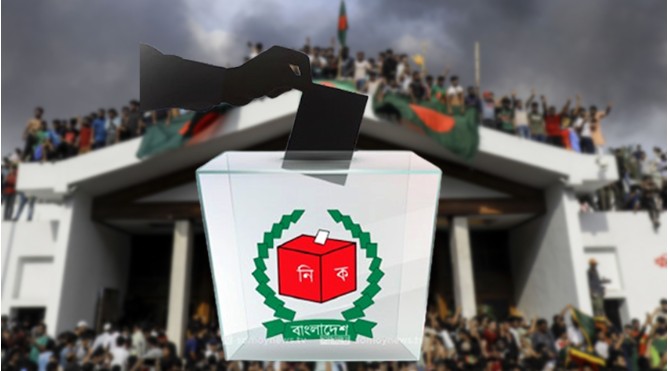
Election Commissioner Abul Fazal Md Sanaullah on Thursday said the massive and spontaneous participation of voters in the 13th Jatiya Sangsad Election proves that “we are ultimately victorious as a nation.”
He made the remarks while speaking at the closing announcement of the official results at 11:00am at the Election Building in Agargaon.
Expressing gratitude to citizens, he said the Election Commission had one core pledge — to deliver a neutral election.
“We tried our best to uphold that commitment. We are deeply grateful to the people of the country for their spontaneous participation in this large national exercise,” he said.
The commissioner added that the EC viewed the election not just as a duty, but as a sacred trust. Referring to earlier concerns about the polls, he noted that public fears and doubts were dispelled by the strong voter turnout.
He also voiced hope that Bangladesh’s democratic journey remains on course, saying:
“May this election set a standard and inspire even better elections in the future.”
EC Secretariat Senior Secretary Akhtar Ahmed, along with other Election Commission officials, was present at the briefing.
BNP Urges Restraint, Calls for Nationwide Prayers Instead of Celebrations
The Bangladesh Nationalist Party (BNP) has called on its leaders and supporters to show restraint and avoid public celebrations after its victory in the 13th National Parliamentary Election.
In a notice issued on Thursday, BNP Chairman Tarique Rahman directed party leaders and activists to arrange special prayers across the country after Jum’a prayers on Friday.
He also instructed party members not to hold any victory rallies, processions, or public gatherings anywhere in the country.
The party said the move reflects respect for democratic values and aims to maintain peace and stability during the post-election period.
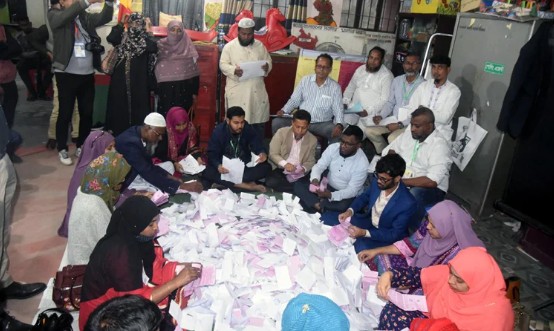
Counting of votes began this afternoon after polling in the 13th National Parliamentary Election and the referendum ended peacefully at 4:30pm.
Election Commission (EC) Senior Secretary Akhtar Ahmed said that voter turnout stood at around 48 percent nationwide as of 2:00pm.
Voting started at 7:30am across 42,779 polling centres in 299 constituencies. A total of 12,77,11,793 voters were registered, including 6,48,25,361 men, 6,28,85,200 women, and 1,232 third-gender voters.
Top leaders of major political parties cast their votes in the morning. BNP Chairman Tarique Rahman voted at Gulshan Model High School and College around 9:30am, while Bangladesh Jamaat-e-Islami Ameer Dr Shafiqur Rahman voted at Monipur High School and College.
Witnesses reported tight security at polling centres in the capital and other parts of the country. Polling was held in 299 out of 300 constituencies, as voting in Sherpur-3 was cancelled following the death of a candidate.
According to EC sources, nearly 900,000 law enforcement personnel were deployed to maintain order and prevent violence. In addition, 2,098 executive magistrates and 657 judicial magistrates were assigned election duties. The magistrates began their responsibilities on Tuesday for a five-day period.
The election mainly saw competition between the Bangladesh Nationalist Party (BNP) and Bangladesh Jamaat-e-Islami, and is expected to mark the end of the 18-month tenure of the interim government led by Professor Muhammad Yunus.
Earlier, Akhtar Ahmed said 50 political parties contested the polls, with 2,028 candidates, including 273 independents. BNP fielded the highest number of candidates at 291. A total of 83 female candidates were in the race.
The EC said around 800,000 election officials were engaged in polling duties. They included 69 returning officers, 598 assistant returning officers, 42,779 presiding officers, 247,482 assistant presiding officers, and 495,964 polling officers. About 15,000 officials handled postal voting.
Security deployment included 103,000 army personnel, 8,500 navy and air force members, 37,453 Border Guard Bangladesh (BGB) troops, and 3,585 Coast Guard members. The number of police personnel stood at 187,603, while 9,349 RAB members were deployed. The largest force came from Ansar, with 567,868 members.
Election monitoring was conducted by 55,454 domestic observers from 81 local organisations. The number of foreign observers was 394. Nearly 200 foreign journalists arrived in Bangladesh to cover the election and referendum.
Among international observers, 80 represented global organisations, while others came from different countries, including independent European observers.
Chief Adviser Yunus Hails Peaceful Completion of Election and Referendum
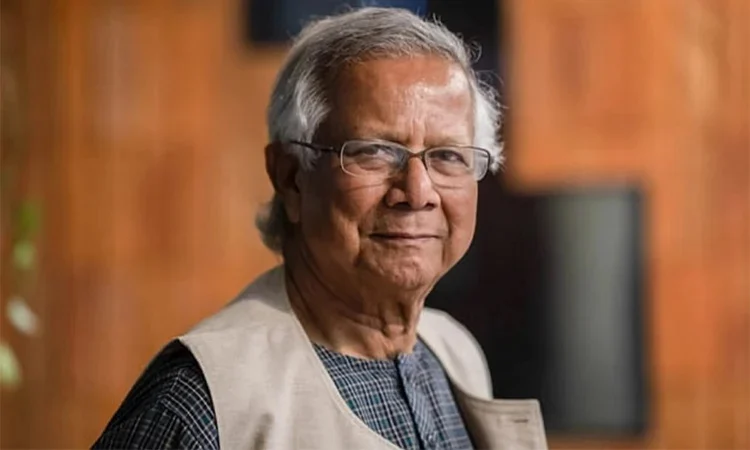
Chief Adviser Professor Muhammad Yunus today congratulated and thanked the nation after voting in the 13th National Parliamentary Election and the referendum on the July National Charter ended peacefully.
In a statement issued by his press wing after polling closed at 4:30pm, Prof Yunus described the election as peaceful, orderly and festive.
“The spontaneous participation of voters, the responsible conduct of political parties, the restraint shown by candidates and the professionalism of all institutions involved have shown that our commitment to democracy remains strong,” he said.
He said citizens had played an active role in shaping the country’s future by exercising their constitutional rights.
The Chief Adviser expressed special thanks to the Election Commission, law enforcement agencies, armed forces, civil administration, observers, media personnel, and all officials involved in conducting the polls.
“This massive democratic event was completed because of their dedication and hard work,” he added.
Prof Yunus urged political parties and candidates to maintain democratic values after the results are announced.
“Differences of opinion will remain, but in the national interest we must stay united with tolerance and mutual respect,” he said.
He added that Bangladesh had once again demonstrated that the people are the ultimate source of power.
“We will move forward together to build an accountable, inclusive and justice-based state,” he said.
Calling the election “a moment of joy and celebration,” Prof Yunus said it marked “the beginning of an unprecedented journey for a new Bangladesh.”
He also described the polls as the most peaceful and festive in the country’s history.
“If this continuity is maintained, our democracy will reach new heights,” he said.
Prof Yunus concluded by calling on all citizens to work together to strengthen democracy.
Bangladesh Heads for First Competitive Election Since 2009 After Hasina’s Ouster
After years of elections marked by boycotts and crackdowns on the opposition, Bangladesh is heading into what many observers call its first truly competitive national election since 2009.
The vote on February 12 comes after the removal of former prime minister Sheikh Hasina in a 2024 uprising. Her party, the Awami League, is now banned, reversing the political balance that dominated the country for 15 years, according to a Reuters report.
Young activists who played a key role in toppling Hasina say the election offers a real choice for voters in the Muslim-majority nation of about 175 million people.
The Bangladesh Nationalist Party (BNP) is widely expected to win the election, though it faces a strong challenge from a coalition led by Jamaat-e-Islami. A new political party driven by Gen-Z activists has aligned with Jamaat after failing to turn its street movement into broad electoral support.
BNP acting chairman Tarique Rahman told Reuters that his party, which is contesting 292 of the 300 parliamentary seats, is confident of winning enough seats to form a government.
Analysts say a clear outcome is crucial to restore stability after months of unrest following Hasina’s ouster, which disrupted major sectors such as garments, Bangladesh’s largest export industry.
“This election matters because a divided result could prolong uncertainty,” said Parvez Karim Abbasi, executive director of the Centre for Governance Studies in Dhaka. He added that young voters, who make up about one-quarter of the electorate, could play a decisive role.
Across the country, election posters and banners now feature BNP’s paddy sheaf symbol and Jamaat’s scales, a sharp contrast to past polls dominated by the Awami League’s boat symbol.
Opinion polls suggest Jamaat may achieve its strongest-ever electoral showing, even if it does not win outright.
Regional Stakes: China and India
The election result is also expected to shape Bangladesh’s foreign relations. Analysts say China’s influence has grown since Hasina, seen as close to India, fled to New Delhi, where she remains.
While India’s influence appears to be declining, the BNP is viewed as relatively more comfortable with New Delhi than Jamaat. Analysts say a Jamaat-led government could move closer to Pakistan, though Jamaat insists it is not aligned with any country.
BNP leader Tarique Rahman has said his party would pursue friendly relations with all nations that serve Bangladesh’s interests.
Economy and Voter Concerns
Bangladesh faces high inflation, low foreign reserves and slowing investment. Since 2022, it has sought major external financing, including funds from the IMF and World Bank.
A recent survey of voters found that corruption is the top concern, followed by inflation. Analysts say Jamaat’s reputation for cleaner politics has helped its appeal more than its religious ideology.
Despite the competition, BNP’s Tarique Rahman remains the frontrunner to lead the next government. If the Jamaat-led alliance wins, its chief Shafiqur Rahman could emerge as prime minister.
For first-time voters like 21-year-old Mohammad Rakib, the priority is simple.
“People couldn’t vote freely before,” he said. “I hope whoever wins will let people speak freely and vote without fear.”
Source: https://www.observerbd.com/news/565529
The Election Commission (EC) has imposed a ban on outsiders entering electoral areas to ensure a free, neutral and peaceful 13th National Parliament election and referendum scheduled for February 12.
Under the decision, only voters of the concerned constituency, local residents, election officials and individuals authorised by the EC will be allowed to stay in the area.
The restriction will remain in force from 7:30am on February 10 to 4:30pm on February 13, according to a notification issued on Sunday.
The order was signed by Md Shahidul Islam, Senior Assistant Secretary of the EC Secretariat.
The EC said the move aims to prevent undue influence and maintain a calm voting environment before, during and after polling.
The notification also instructed the relevant authorities to take necessary steps to enforce the decision.
All metropolitan police commissioners, deputy commissioners and superintendents of police have been directed to implement the ban strictly.
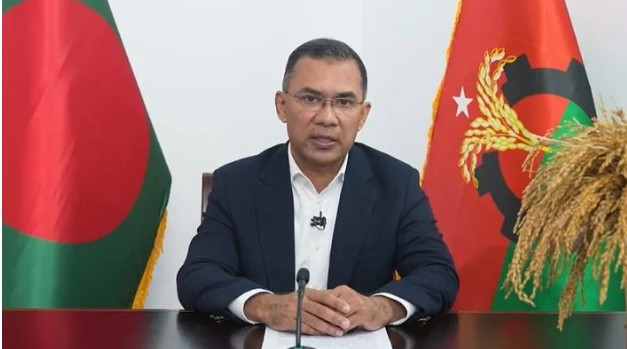
BNP Chairman Tarique Rahman on Tuesday urged voters to cast their ballots in favour of the party’s election symbol, the paddy sheaf, in the February 12 national election, saying its victory would mean the victory of Bangladesh.
He made the call in a televised address to the nation on the eve of the 13th Jatiya Sangsad Election and Referendum–2026.
“February 12 is the day to restore people’s rights in the state and government,” Tarique Rahman said, appealing to students, workers, farmers, professionals, and women to vote for the paddy sheaf.
He said Bangladesh belongs to people of all faiths and beliefs. “Religion is personal, and the state belongs to all. Every citizen must feel safe,” he said, adding that the country has never accepted dictatorship, extremism or authoritarian rule.
Referring to BNP’s past leadership, Tarique Rahman said President Ziaur Rahman worked to build a self-reliant Bangladesh, while former prime minister Khaleda Zia stood firm for national interests despite repression.
He said BNP, if voted to power, would work to build a safe, prosperous and democratic Bangladesh, admitting that past governments may have made mistakes but promising to learn from them.
Tarique Rahman pledged strict action against corruption, restoration of the rule of law and full accountability of the government to the people. “There is no alternative to controlling corruption and ensuring justice,” he said.
On youth employment, he said BNP aims to create 10 million jobs at home and abroad through economic reforms, investment and skills development. He announced plans for free training in technical skills, freelancing and outsourcing, as well as temporary financial allowances for educated unemployed youths.
Highlighting expatriate welfare, he said BNP plans to introduce an Expatriate Card to ensure dignity, protection and facilities for migrant workers and to provide easy loans for overseas employment.
He also announced plans to introduce a Family Card for every household, issued in the name of the female head of the family. In the first phase, low-income families will receive Tk 2,500 per month or equivalent food support.
To protect farmers, he said BNP will introduce a Farmer Card to ensure fair prices, financial assistance and access to modern agricultural information.
On healthcare, Tarique Rahman said BNP plans to recruit 100,000 healthcare workers, mostly women, to provide primary health services at the grassroots level.
He also said BNP would support the ICT sector, including artificial intelligence, freelancing and outsourcing, to make Bangladesh a regional technology hub.
Addressing constitutional issues, he said BNP would reinsert the phrase “full faith and belief in Almighty Allah” into the Constitution if elected.
Concluding his speech, Tarique Rahman said justice, accountability and public welfare would be the core principles of a future BNP government.