

There is a particular kind of diplomatic cynicism that does not announce itself. It arrives quietly, at the border, in the dead of night, dressed not as hostility but as bureaucratic necessity. What India is doing along its frontier with Bangladesh right now fits that description precisely.
The Border Security Force has been attempting to push undocumented individuals into Bangladeshi territory across more than ten locations at once. From Jhenaidah in the south to Sylhet in the east to Panchagarh in the north, the pattern is too coordinated, too simultaneous, to be dismissed as isolated incidents of poor judgment by personnel on the ground. This is policy. The only question worth asking is whose.
West Bengal’s chief minister has provided part of the answer, publicly confirming that thousands excluded under the Citizenship Amendment Act have already been forced across, with hundreds more in holding facilities awaiting the same fate. India’s own officials, in other words, are not even pretending this is anything other than what it is, a deliberate transfer of unwanted populations across an international border without documentation, without consent, without legal basis.
Bangladesh has responded with restraint that, frankly, India does not deserve. Over a dozen formal protests have been filed. The Home Minister has asked, with considerable diplomatic patience, that India simply follow the procedures that already exist. The Border Guard has turned back every attempt. A bilateral meeting of senior border officials has already taken place. None of it has made any difference. The push-ins continue.
This matters beyond the immediate humanitarian concern, though that alone should be sufficient. It matters because it is happening at precisely the moment when both governments were publicly committed to a reset. The collapse of Sheikh Hasina’s government in 2024 left relations in a difficult place. The BNP’s election victory earlier this year created an opening. Ministerial visits followed. Water-sharing talks, long frozen were back under discussion. The language from both capitals was, for once, conciliatory.
Against that backdrop, the border incidents are not a coincidence. They are a message. Analysts who have described the push-ins as leverage ahead of high-stakes negotiations are not being uncharitable toward India. They are simply reading the situation as it is. The timing, the scale, and the continuation of push-ins even after diplomatic engagement has taken place all point in the same direction.
Some have suggested this reflects a division within the Indian state rather than a unified strategy that West Bengal’s newly elected BJP government and the BSF are operating with a degree of autonomy that New Delhi’s central government does not fully endorse. That interpretation, while possible, offers cold comfort. If India cannot control what its own border force does, that is a governance failure of the first order. If it can but chooses not to, that is something worse.
What is not in doubt is the effect. Every push-in attempt that Bangladesh repels is another data point in an emerging portrait of a neighbor that speaks the language of partnership while acting on entirely different instincts. Bangladesh has extended goodwill. It has opened channels. It has shown, repeatedly, that it is willing to work within established frameworks to manage a relationship that carries enormous consequence for both countries.
India’s response has been to keep crossing the line.
A new chapter, both governments said. But a new chapter requires both parties to turn the page. Right now, only one of them is trying.
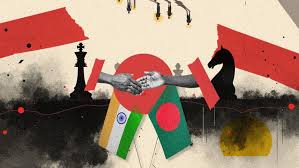
Push-In Crisis Straining Bangladesh-India Relations
74
