

The global order is undergoing a structural realignment, and as the Indo-Pacific emerges as the focal point of this transformation, Bangladesh finds itself at a critical strategic junction. Positioned at the apex of the Bay of Bengal, our nation is transitioning from a peripheral observer into a pivotal nexus between the dense markets of South Asia and the expansive trade corridors of Southeast Asia. For the administration of Prime Minister Tarique Rahman, the imperative is to synthesize our geographic endowment with a sophisticated diplomatic architecture, one that fosters national prosperity while consciously resisting the reductive pull of binary geopolitical alignments.
Our foundational foreign policy doctrine of “Friendship to all, malice toward none” is frequently misinterpreted as a vestige of defensive passivity. In practice, however, it represents a highly calibrated paradigm of strategic autonomy. In an era where competing superpowers demand zero-sum loyalty, our capacity to maintain constructive, independent relationships with diverse global capitals is not a diplomatic weakness; it is our most potent strategic asset. Choosing sides would be an act of structural self-sabotage. To jeopardize our industrial supply lines with China, the essential consumer markets of the West, or the logistical synergy with India would be to forfeit the very stability required to uplift our 170 million citizens.
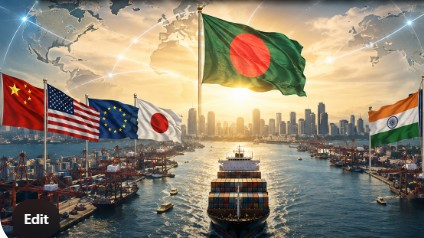
Our trajectory must therefore be defined by the transformation of our territory into an indispensable hub for peaceful commerce. By ensuring that our ports and transit routes remain open, transparent, and geared toward regional integration rather than containment, we create a vested, tangible interest for all global powers in our continued stability. This approach allows us to leverage Japan’s “Big-B” industrial development initiatives, China’s infrastructural capital, and India’s regional logistical frameworks as complementary forces for growth. We are not merely a participant in the global economy; we are an essential bridge.
The path forward demands a rigorous institutional upgrade. To maximize our leverage, we must enhance our domestic regulatory and logistical frameworks, ensuring that our nation possesses the requisite capacity to absorb and optimize complex international investments. By embedding our bilateral relationships within multilateral frameworks, we can collectively negotiate for regional stability and dilute the external pressure of any single dominant power. The message from Dhaka must remain unwavering: we are a land of vast economic opportunity, a bridge between civilizations, and a steadfast proponent of sovereign equality. Our destiny is defined not by the frictions of global power, but by our commitment to sustainable development and a vision of the Bay of Bengal as a space for shared prosperity.
“Friendship to All”: Bangladesh Rejects Binary Alliances, Aims for Strategic Autonomy
8
