

Bangladesh is sweating through an asphyxiating heatwave while its national power grid is held hostage by a corporate shell game. Eight-to-ten-hour rolling blackouts have crippled rural districts, kitchen stoves sit cold from dead gas pressure, CNG pumps are bone-dry, and textile factories are forced to lock their gates for hours on end. This is not a routine summer crunch; it is a calculated strangulation of the country’s energy supply, executed from across the border while Dhaka’s regulators are left begging for answers.
For twenty-three straight days, Adani Power has slashed its output from the Godda plant in Jharkhand to a fraction of its commitment. On August 7, the transmission line at Bheramara hummed with 1,453 megawatts. By the next morning, production mysteriously cratered to 790 megawatts and has hovered in the gutter ever since. The Power Development Board has fired off three formal warnings this month. Adani’s response is a rotating cycle of laughable excuses; soggy coal, broken rail tracks, followed by empty promises of full restoration, a brief token bump, and another deliberate shutdown. When cornered for comment, Adani’s headquarters simply plays dead, ignoring emails entirely.
The real outrage is that Bangladesh is being bled blind with its own money while being locked out of the kitchen. Every other power plant feeding the national grid sits on domestic soil, fully open to audits and engineering checks. Godda sits in India, completely untouchable. PDB officials cannot cross the border to verify if a single ton of coal is actually wet or if the plant is simply hoarding capacity. Yet the cash keeps flowing: Bangladesh wired Adani over ninety million dollars last month alone, leaving zero arrears. Dhaka is paying top dollar for a black-box operation, forced to swallow whatever unverified fairy tales the conglomerate decides to cable across the border.
The timing of this supply choke is violently suspicious. The generation crash came precisely two days after ousted autocrat Sheikh Hasina staged defiant press appearances from Indian soil, instantly poisoning bilateral tempers. While bureaucrats tiptoe around diplomacy, the optics are glaring. This is the toxic legacy of the infamous, corrupt deal carved out by the fallen Awami League regime, a predatory twenty-five-year death warrant that a national inquiry committee estimate will rob Bangladesh of over six billion dollars, all while an international arbitrator sits on an active coal-pricing dispute.
To make matters worse, domestic generation is simultaneously melting down. National demand has blown past 16,000 megawatts while supply caps out near 13,000, creating a Sunday peak deficit touching 3,600 megawatts. Coal units across the country are dropping like flies: Payra is running at less than half capacity due to unit failures, SS Power halved its output after a midnight crash, and Matarbari, Rampal, RNPL, and Barisal are all wheezing under mechanical breakdowns and maintenance halts. The finance ministry just dumped a desperate 30 billion taka into emergency oil purchases just to keep the lights flickering.
Stripped of diplomatic varnish, the reality is brutal. A predatory, unauditable foreign contract signed by a corrupt regime has given a single corporate syndicate the power to throw sixteen million people into darkness at will. Bangladesh is paying the bills, absorbing the blow, and being denied even the right to check the meter.
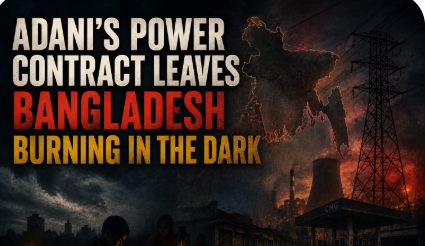
Adani’s Power Contract Leaves Bangladesh Burning in the Dark
46

previous post