

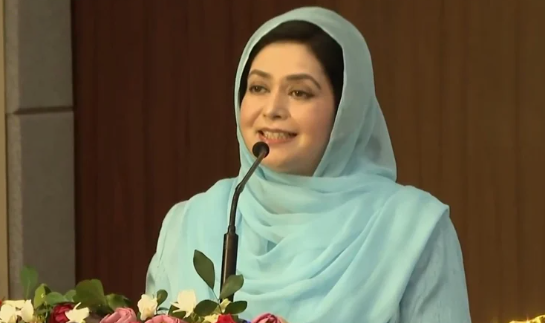
Dr Zubaida Rahman has called for a coordinated nationwide programme to raise awareness about osteoporosis, expand screening and ensure proper treatment for people affected by the disease.
Describing osteoporosis as a “silent” disease, she said it weakens bones, making them thin and porous and significantly increasing the risk of sudden fractures. The condition can disrupt normal life and limit people’s ability to perform everyday activities.
Dr Zubaida, vice-president of the Ziaur Rahman Foundation and wife of Prime Minister Tarique Rahman, made the remarks as the chief guest at a scientific seminar titled “Osteoporosis: A Preventable Epidemic” at Bangladesh Medical University’s Super Specialised Hospital in Dhaka. The Doctors Association of Bangladesh (DAB) organised the event to mark World Osteoporosis Day.
She said a large number of people in Bangladesh suffer from bone fractures and long-term complications caused by osteoporosis, underscoring the need for effective preventive and treatment measures.
According to statistics from 2025 cited by Dr Zubaida, an estimated 60 lakh people in Bangladesh were affected by osteoporosis, and the number could be higher. She noted that older women accounted for a significant proportion of those affected.
Citing research on women aged 45 to 80 in north-central Bangladesh, she said the study found osteoporosis in 40 percent of participants and osteopenia in 43.5 percent. More than 83 percent showed deficiencies in bone density.
Another hospital-based study involving women aged 46 to 65 in urban areas found osteoporosis in 41.8 percent of participants and osteopenia in 40.7 percent, she said.
Dr Zubaida stressed that more research and regular screening were necessary to determine the actual prevalence of the disease in Bangladesh. She added that preventive measures targeting girls and young women could significantly reduce future cases and related complications.
To strengthen prevention efforts, she proposed forming an Osteoporosis Society to coordinate awareness programmes across all 64 districts, ensuring wider access to information, screening and treatment.
She said doctors could play a vital role in educating the public about risk factors and ensuring that affected patients receive appropriate care. The country’s 100,000 frontline health workers could also help spread awareness nationwide.
Dr Zubaida proposed observing an annual Osteoporosis Awareness Month featuring public campaigns, rallies and educational events. She also called for seminars for physicians at district and specialised hospitals to introduce modern diagnostic methods.
Emphasising the importance of nutrition, she highlighted the need to address vitamin D deficiency, low bone mineral density and inadequate calcium intake during childhood. She urged medical professionals and educators to lead public awareness initiatives on these issues.
She also called for screening camps to assess bone mineral density and regular community-based screening services. In areas where bone density measurement facilities are unavailable, she highlighted the use of the Fracture Risk Assessment Tool (FRAX) to estimate the risk of bone fractures.
Dr Zubaida said a coordinated national effort was essential to reduce the impact of osteoporosis, improve public awareness and ensure access to treatment.
The seminar was chaired by DAB President Professor Dr Harun Al Rashid and addressed, among others, by BNP Standing Committee member and DAB chief adviser Professor Dr Farhad Halim Donar and lawmaker Dr Abdus Salam.
The programme included a question-and-answer session, a panel discussion and a quiz. World Osteoporosis Day is observed annually on October 20 to raise awareness about the disease and its associated fracture risks.
